As time passes, Russia becoming ‘increasingly doomed to defeat’, Analyst Akia Barbakadze

Author
Frontnews Georgia
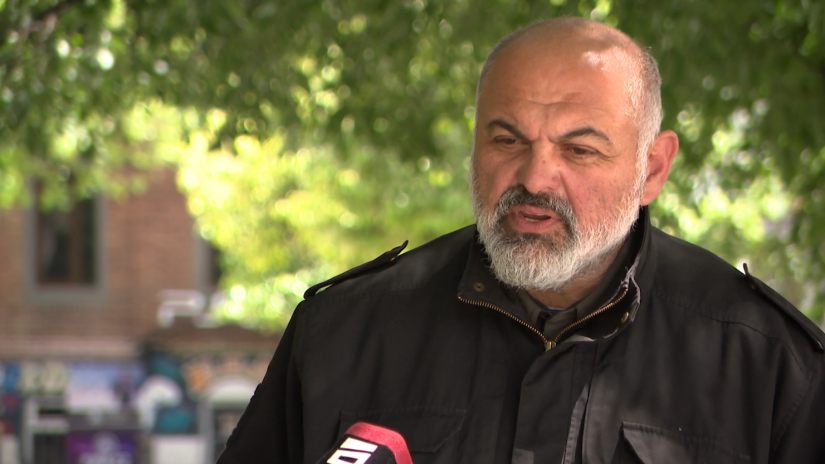
The Kremlin's activation of informal backchannel communications is linked to the difficult situation on the front line and what military analyst Akia Barbakadze describes as the "virtual reality" created by Vladimir Putin. In an interview with Front News, Barbakadze argues that Moscow is not currently considering strategic compromises and believes Roman Abramovich's mission was likely limited to securing specific local guarantees.
He claims the Kremlin has failed to achieve its military objectives, is technologically lagging behind Ukraine, and is attempting to maintain the appearance of battlefield superiority through costly "meat grinder" tactics that rely heavily on manpower. Against this backdrop, growing European support and Ukraine's disruption of Russian logistics deep behind the front lines are creating conditions for a large-scale Ukrainian counteroffensive.
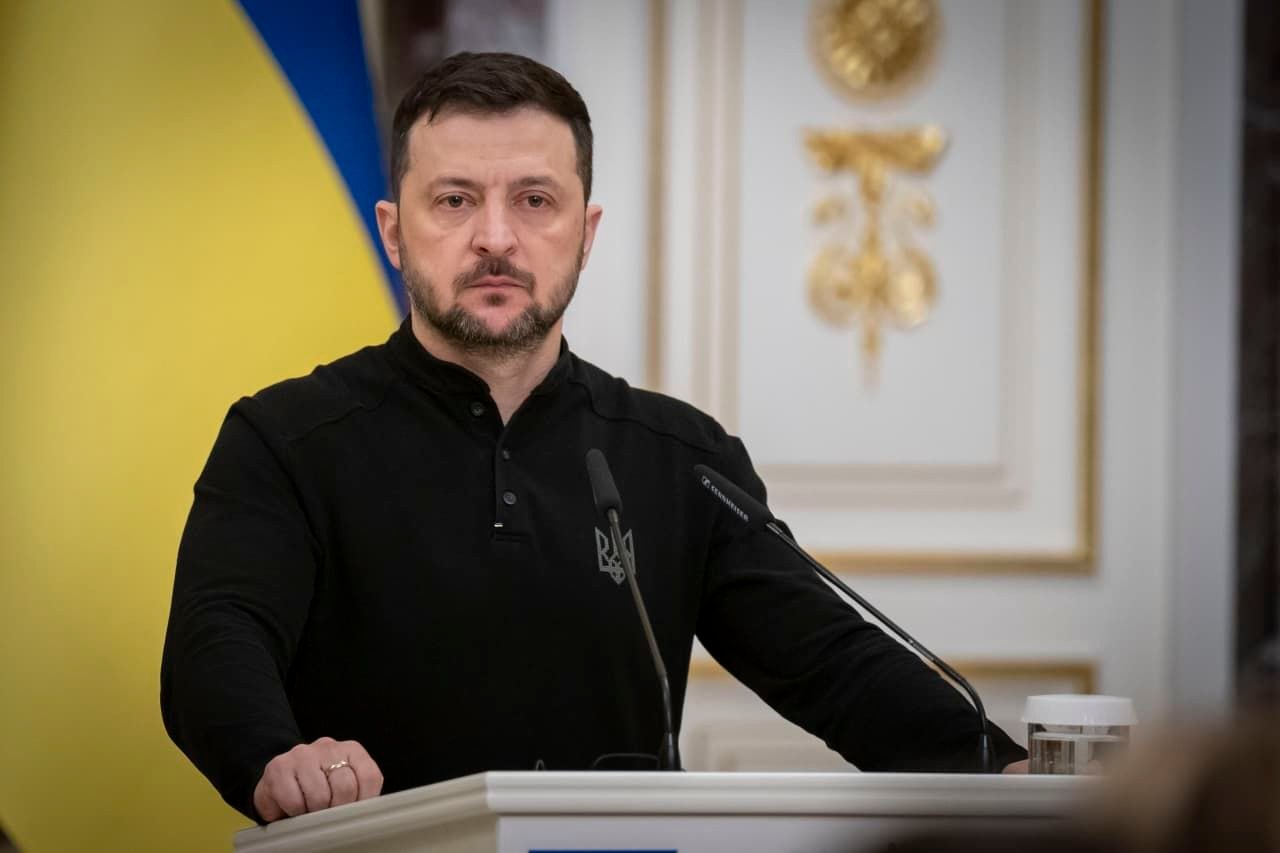
Q. Details have emerged about a secret meeting in Kyiv between Volodymyr Zelenskyy and Roman Abramovich, who reportedly arrived carrying messages from Putin. In your view, what does the Kremlin's use of such unofficial backchannel communications suggest when Moscow publicly rules out compromises?
A. I believe the meeting was local and tactical in nature. Putin likely wanted to secure certain guarantees. For example, before the May 9 celebrations, he reportedly sought assurances through Donald Trump, and Zelenskyy publicly stated that Ukraine would not strike Red Square during the Victory Day parade.
Something similar appears to have happened regarding St. Petersburg. If you look closely, Ukrainian forces conducted attacks both before and after the event, but not while Putin was delivering his speech. In my opinion, this was a localized arrangement, which is why Abramovich traveled to Kyiv.
It is possible that some form of prisoner exchange or another understanding was reached in return. We do not know the details, so we can only speak in terms of probabilities. However, the idea that Putin was using Abramovich to negotiate a long-term peace agreement or even a temporary ceasefire with Zelenskyy seems unlikely to me.
Q. Why do you think that is? Does Putin not understand the difficulties he is facing, or is he simply trying to maximize his bargaining position?
A. Putin's perception of reality is fundamentally different. He does not want to confront the actual situation on the battlefield. He genuinely appears to believe that Russian forces are advancing everywhere along the front.
I think this is a virtual reality that Putin has created for himself. His primary objective is to emerge from this war as a winner at any cost. Imperial thinking does not allow for the possibility of defeat.
We can look at the Vietnam War, where the United States ultimately acknowledged failure and withdrew. Russia, however, is not an empire that easily recognizes such realities. Historically, Russia has rarely understood when it was time to exit a conflict.
Q. If Putin is unwilling to negotiate, what options does he realistically have on the battlefield? Does Russia still possess the resources to launch major offensives?
A. Russia still has the capacity to absorb enormous casualties. The question is how long it can sustain this "meat grinder" approach.
History provides many examples. During World War II, the Soviet Union suffered immense losses. We have seen similar patterns in Russia's wars against Japan, Turkey, and others. Russian successes and failures have often come at the cost of tremendous human sacrifice.
Russian strategic thinking remains focused on preserving and expanding imperial influence. Anything less is viewed as defeat. Historically, a ruler who loses a war in Russia risks losing everything. Russian history teaches that when a tsar loses a war, he is often removed.
Putin is a product of the security establishment. The problem is that much of Russia's former KGB elite thinks the same way he does. Some of them may even be dissatisfied with Putin - not because the war happened, but because they believe he failed to kill more Ukrainians, destroy more cities, and achieve the objectives he originally declared.
After all, he announced the goals of "denazification" and "demilitarization" of Ukraine. In reality, Russia has failed to achieve any of its major military objectives.
I would go further: as time passes, Russia is becoming increasingly doomed to defeat. Technologically, Russia is falling behind Ukraine. Its only significant advantage remains manpower, and it uses this to create the impression that it still holds the initiative on the battlefield.
Over the past month, Ukraine has dramatically increased the effectiveness of its drone operations, severely disrupting Russian logistics both in occupied territories and deep inside Russia itself.
We are witnessing successful Ukrainian operations 1,500 - 2,000 kilometers behind Russian lines. These attacks are not limited to oil refineries; they target logistics networks, disrupt military supply chains, and complicate operational troop movements.
If this trend continues and circumstances do not fundamentally change, Ukraine's successes will grow while Russia's vulnerabilities become increasingly visible. Assuming Western military assistance continues without interruption, everything suggests that Ukraine could achieve a major breakthrough, either toward Mariupol or in the direction of Crimea.
Q. Negotiations involving the United States, Ukraine, and Russia, which began earlier this year, were effectively paused due to escalating tensions surrounding Iran. How concerned should Ukraine be about losing Western military and financial priority as international attention shifts to the Middle East?
A. The likelihood of that happening is very low.
Ukraine is now being supplied primarily by European countries, and this theater of conflict is increasingly viewed as Europe's responsibility. There are no indications that European governments intend to reduce their support.
On the contrary, beyond previously allocated funding, Europe has approved an additional €70 billion in assistance. We also saw the leaders of France, Germany, the United Kingdom, and Ukraine meet and adopt a five-point plan.
The plan includes strengthening deliveries of ballistic and cruise missiles, expanding joint defense production with Ukraine, and offering Russia negotiations on a temporary ceasefire along the current line of contact.
Since Putin has already rejected that proposal, Zelenskyy effectively has a freer hand to conduct further and potentially more extensive military operations.
Q. Ukraine, the United Kingdom, Germany, and France have identified the current front line as the starting point for peace negotiations. From a military perspective, how sustainable is this position for Ukraine? Do you see a risk of a long-term frozen conflict?
A. Russian offensives are proving ineffective. The primary thing Russia continues to do is strike civilian targets, which is prohibited under international conventions and constitutes a war crime.
On the battlefield itself, Russia is achieving very little. For more than a month, Russian forces have been losing territory they previously controlled. There are already documented cases of Russian soldiers abandoning positions and retreating.
The Ukrainian military is superior not only in terms of weapons and equipment but also in command structures and military thinking. Ukrainian forces demonstrate significantly greater creativity and adaptability than the Russian military machine, and that difference is becoming increasingly evident.
Russia is attempting to compensate through missile strikes against civilian infrastructure, hoping to inflict suffering and pressure Ukraine through civilian casualties.
Ukraine, by contrast, focuses on military and economically significant infrastructure, particularly facilities linked to defense production. Unlike Russia, Ukraine does not deliberately target ordinary civilian infrastructure.
For Russia, maintaining control over such a vast and increasingly vulnerable front line is becoming a major challenge.
Q. Looking ahead, do you believe there is a realistic possibility that the war could end or that a ceasefire could be achieved by the end of 2026?
A. No one can answer that question with certainty.
Events could unfold in a way that causes everything to collapse in a single day, or the situation could remain largely unchanged for another year. Without access to precise intelligence indicators, forecasting such outcomes is extremely difficult.
We rely primarily on open-source information, which means we do not know the full extent of Russia's economic resilience or the internal condition of its armed forces. We can only make informed assessments based on observable trends.
However, one fact is clear: Russia has failed to achieve its objectives and has spent years either stalled in place or retreating. That alone tells us a great deal about the trajectory of this war.
By Elza Paposhvili
Tags:
Akia Barbakadze