Georgia spends too little on healthcare, public health expert Gamkrelidze

Author
Frontnews Georgia
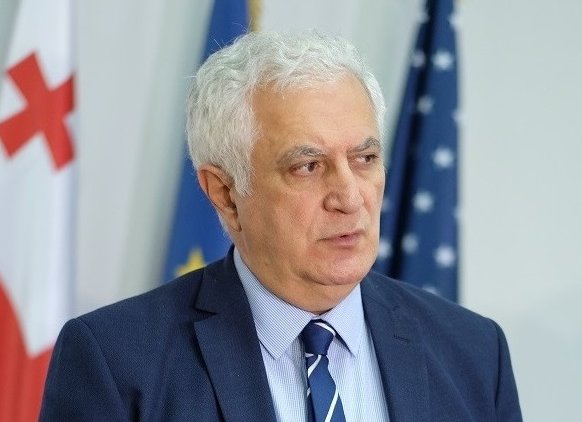
Healthcare spending is a key indicator of whether a country treats health as a national priority, physician and public health expert Amiran Gamkrelidze has said.
Speaking about challenges facing Georgia's healthcare system on Thursday, Gamkrelidze argued that examining how much the state allocates to healthcare from the national budget, and what share of total public spending it represents, provides a clear measure of the government's priorities.
"When you look at how much a country spends on healthcare from the state budget and what percentage of the budget is allocated to healthcare, you can immediately judge whether healthcare is truly a priority for that country," he said.
Gamkrelidze also highlighted what he described as a growing imbalance between the number of doctors and nurses in Georgia.
"One of our biggest mistakes was failing to pay sufficient attention to nurses. Today we have a very poor doctor-to-nurse ratio. Internationally, the accepted standard is for several nurses to work alongside each doctor, but in Georgia there are actually fewer nurses than doctors. This is a critical situation, and many of our most experienced nurses are leaving the country," he said.
He added that Georgia currently has more doctors than the healthcare system requires, while workforce planning remains inadequate.
"There are too many medical schools, and despite some progress, quality has not been properly regulated. There is no long-term vision for how the healthcare workforce should develop or how many doctors the country actually needs," he said.
Gamkrelidze also warned that many physicians, particularly in the regions, work at several healthcare facilities simultaneously because of shortages in critical specialties such as intensive care and anaesthesiology, which he said could affect the quality of care.
He stressed that doctors must continually update their knowledge, noting that diagnostic and treatment methods evolve every few years.
Looking ahead, Gamkrelidze said prevention, personalised medicine and digital technologies would be the three pillars of modern healthcare.
He also said artificial intelligence could significantly improve differential diagnosis and clinical analysis but argued it would not replace the human relationship between doctors and patients.
Tags: