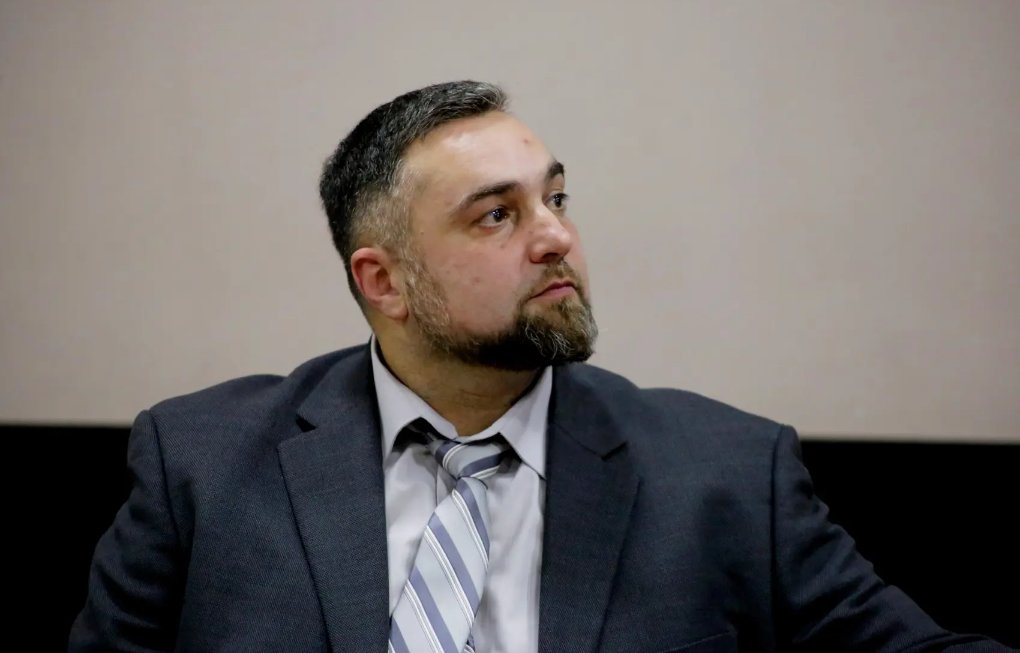
Archil Gamzardia: visit of Ecumenical Patriarch is very important factor, it is step in terms of church politics

Author
Frontnews Georgia
The authority of the Patriarch, which for decades served as a key pillar of stability for the Georgian state and society, places the country before new challenges in a transitional period. In an interview with Front News, Doctor of Political Philosophy Archil Gamzardia discusses the political and spiritual vacuum that may follow the end of Ilia II’s era.
The expert focuses on the deficit of legitimacy within the political spectrum, possible changes in foreign policy and internal dynamics within the church hierarchy. According to Gamzardia, the process of electing a new Patriarch will not be free from external political or business influences, while the involvement of the Ecumenical Patriarch goes beyond a purely spiritual format and carries an important geopolitical message.
Q. What changes in Georgia’s religious and secular life after the death of Ilia II? He was a highly influential figure both among clergy and in political life. He is a historical figure whose replacement will be a serious challenge for the future Patriarch. What reality does the country face now?
A. It must be said that over the past decades, the Patriarch was the only stable figure for the state and citizens, with high authority and trust. Accordingly, his activities were not limited to a narrow religious sphere, his influence and name were significant in all directions. This included both ecclesiastical and value-based influence, shaping the consciousness of the population and political figures. The Patriarch was the only person who legitimised every government. What he said, whom he supported or recognised, had a major impact on society. Therefore, his influence was comprehensive.
Not only his direct involvement, but even his name was used by influential individuals to gain public trust. Now that this is no longer possible, although the “shadow” of the Patriarch will remain influential for a long time, the main challenge will be in domestic politics. People will no longer have the Patriarch as a key source of legitimacy. As he had already been less actively involved in recent years, this is one of the reasons for the broader legitimacy problem in the political space. Filling this deficit will become even more difficult.
Thus, politicians and clergy will now have to earn public trust themselves, since standing alongside the Patriarch will no longer automatically grant them credibility. In foreign policy, the Patriarch followed a very soft line. He tried to remain correct even toward hostile states, while still adhering to Georgia’s Euro-integration framework. With a new Patriarch, it may become a major challenge how and in what form the country’s foreign course will be shaped.
Q. Let me follow up on that. We know that his locum tenens, Metropolitan Shio, who cannot automatically become Patriarch, is a controversial figure with opponents both in the clergy and in society. Do you expect attempts, both within the Church and the Government, to promote their own candidates?
A. The entire episcopate was formed in the post-Soviet and Soviet space. Their main language was Russian and much of their literature was translated from it. The factor of the Ecumenical Patriarch is also complex, there are people who oppose him. After the church division related to Ukraine, where Russian and Greek churches distanced themselves, Georgian bishops have to navigate this confrontation. Therefore, I doubt the Georgian episcopate has the same level of vision, education and balancing ability that Ilia II had. They tend to have more “traditional,” Soviet-style inclinations and connections, with communication and values largely derived from the Russian Church.
In this regard, Metropolitan Shio does not create the impression that his vision could match the complexity, balance, or European orientation of the Patriarch. Therefore, the prospects for a Western-oriented Patriarch seem limited. Another issue is whether the new Patriarch will have the same level of authority and influence. There may be some inertia, but Ilia II combined many forms of influence that were not strictly part of the Patriarch’s formal powers, they stemmed from his personality. The new Patriarch will likely not have that advantage.
As for Metropolitan Shio, it is highly debatable whether he will become Patriarch. There are 39 active bishops and it is unlikely that all votes will easily align in favour of one candidate. The visit of the Ecumenical Patriarch is a very important factor. It is not just a visit to offer condolences, it is a step in church politics. Although Russia is also sending a delegation, they will not be able to stand together during the service, so the Ecumenical Patriarch will have an advantage. This is an interesting development, especially if it leads to further consequences.
Q. Bishop Mikael mentioned that a will of the Patriarch exists but is “mysterious.” Do you think such a will could name a successor?
A. A will, aside from general guidance or an address to society and clergy, could potentially include naming a locum tenens. The Patriarch appointed such a figure during his lifetime. However, this does not mean automatic succession, it is an advantage, but not a guarantee. The role of the locum tenens is to manage the Church when the Patriarch is unable to do so.
Metropolitan Shio’s role in this regard has been somewhat unusual. Only recently did the Synod reaffirm his position, granting him legitimacy. It is unclear why this had not been formalised earlier. As for the will, it could be unpredictable if it names someone else, but I personally do not expect that. I do not think it will drastically change the situation.
Q. Besides Metropolitan Shio, who else could be considered as a candidate for Patriarch? Could figures like Metropolitan Dimitri be named?
A. It is difficult to say, as the decision lies with the bishops. Public recognition does not necessarily mean suitability for the Patriarchate. It would not surprise me if a less-known bishop is chosen. Popular figures are often approached cautiously. Internal dynamics differ significantly from what is visible publicly. The Church will choose a candidate acceptable within its internal structure, which may not align with public expectations.
Q. Should we also consider political influence? Do you expect Government involvement or support for specific candidates?
A. I cannot imagine that today’s episcopate would be allowed to make such a decision entirely free from external influence. That would be very naive. Each of them is subject to various external influences - governmental, ecclesiastical, or business-related. Many factors affect their decisions. Most of the episcopate is positively aligned with the current Government, with only a few exceptions. Therefore, it is likely that multiple candidates exist and different groups will compete to promote their influence.
What we see on the surface hides much more underneath. There are many types of influence at play. It would be unrealistic to assume there will be no interference. Every government in Georgia has maintained close relations with the Patriarchate. At times, the government was influenced by the Church, and at other times, the Church was influenced by the government.
Despite outwardly warm and cooperative relations, there has always been tension between secular and religious authorities. Therefore, no one should have the illusion that there will be no attempts to influence the selection of the new Patriarch.
Tags:
Archil Gamzardia