Archil Gamzardia: there is no ethical framework for competition, cooperation in Georgian politics

Author
Frontnews Georgia
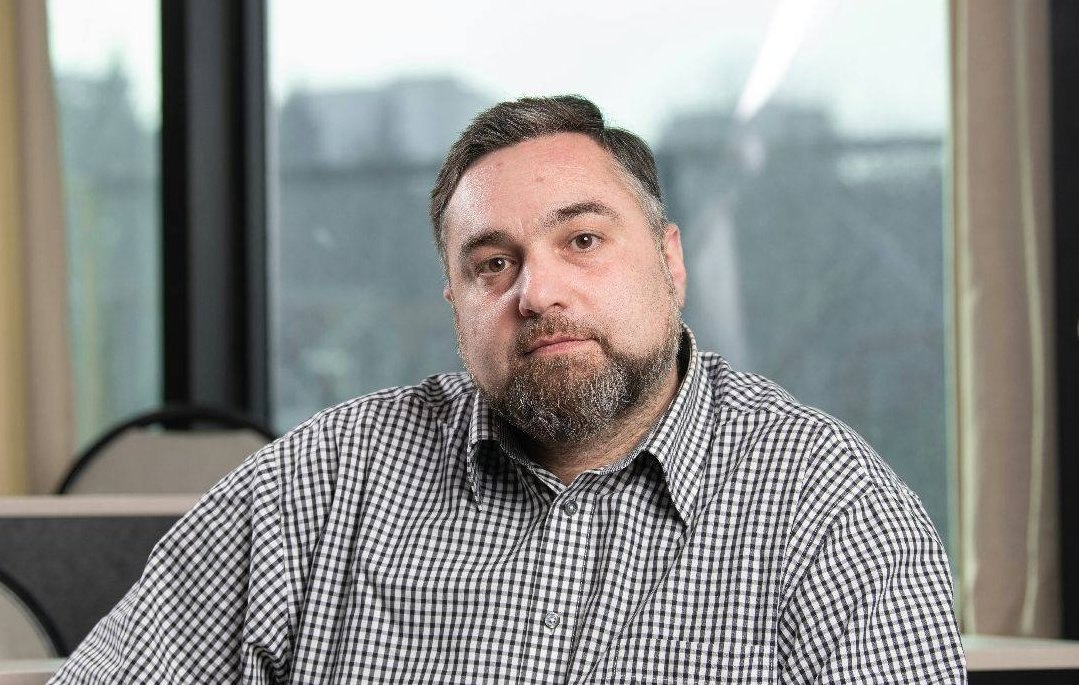
In an interview with Front News, Doctor of Political Philosophy Archil Gamzardia analyzes the dynamics currently unfolding in Georgia’s political field - including the fragility of opposition alliances, the political “complexes” associated with affiliation with the United National Movement, and the ruling party’s strategy.
The expert discusses the deficit of political culture and what he describes as the “legislative reserves” that the ruling team appears to be preparing in order to curb any potential rise in opposition ratings.
The interview also addresses the recent cases in which analysts were summoned for questioning by Georgia’s State Security Service. Gamzardia claims these actions resemble attempts to limit critical opinion rather than a genuine effort to obtain information.
How do you assess the alliance of nine parties, where the first cracks have already appeared? Following the public dispute between Tamar Chergoleishvili and Petre Tsiskarishvili, the authorities were given grounds to speak about the opposition’s inability to cooperate and the absurdity of such alliances. How do you evaluate this alliance?
In principle, I view alliances of this kind negatively even at a theoretical level. However, I do see a potential positive element: perhaps such coalitions could eventually lead to the formation of a certain culture of political relations.
In Georgia, there is no framework for competition and cooperation. Political actors interact with each other in an entirely chaotic manner, and we lack any ethical framework for political competition. In reality, such frameworks are often a crucial factor in political processes.
If this alliance manages to develop a competitive framework and some ethical norms, I would view that positively. Admittedly, this has never happened before, yet each time I still hold that expectation.
In fact, during this recent dispute we saw a good precedent: the confrontation did not escalate but was instead contained. This is a rare occurrence. Perhaps political actors were unable to easily control themselves or their relations with each other, yet the conflict did not deepen.
Otherwise, I do not see these alliances as meaningful in any other context. They would become interesting to me only if these political actors formed around a single electoral list. There must be a single brand. In theory, the unification of so many parties is contradictory unless they are placed within a unified political framework.
However, do you think this gives the authorities more grounds to label everyone as the United National Movement? The government already argues that these are parties that once split from the UNM and are now returning. If, as the National Movement claims, everyone ultimately unites under its list, what would this change politically? What would it add to today’s political life that was not there before? Wouldn’t it simply give the authorities more leverage to portray them all as the UNM?
Let’s start with this: many years have passed, and a certain portion of the former United National Movement is already part of the current government and administration. Following that logic, one might say the government itself never really changed, because many former UNM figures are now comfortably positioned within it.
I say this somewhat ironically, of course. But even aside from that, many new faces have appeared within the opposition. Yes, there are also familiar figures from the past, but there are many new ones as well.
This essentially reflects the fact that the UNM was unable to establish durable internal party independence in the past, and therefore fragmented into several parts. If this space can even nominally create conditions for internal democracy at the party level, that is not necessarily a bad thing.
In fact, I think the ruling Georgian Dream party sees the potential of this alliance more clearly than others do.
Generally speaking, Georgian politics is deeply affected by complexes. One may agree with [former President] Mikheil Saakashvili on certain issues and with [ruling Georgian Dream party founder and honorary chair] Bidzina Ivanishvili on others. Everyone may have some positive aspects. Yet political actors are often reluctant to acknowledge this, fearing they might appear affiliated with someone.
As a result, political groups behave inadequately because they are constantly trying to avoid being associated with anyone. The opposition itself often finds itself in contradiction both with the previous government and the current one. Naturally, this creates a dysfunctional political environment.
Could these “complexes” explain why [ex-PM and For Georgia opposition founder] Giorgi Gakharia’s party and Lelo refused to join the alliance? What do you think motivated their decision?
I cannot say exactly what motivated them, but I consider such a decision entirely normal. In general, I support the development of clear political identities.
This is precisely why I often oppose pseudo-unity. Political identity is frequently concealed behind political deals. I believe political identities should ultimately be tested and validated by the political marketplace.
If certain groups prefer to stand independently and establish themselves on their own, that is perfectly acceptable. If they are capable of self-development, that may also become a meaningful factor.
However, the last elections demonstrated that these actors possess limited resources. As a result, political “cartels” circulate between several alliances. If I recall correctly, we had about three such alliances in 2024.
Now the landscape may narrow further or remain divided among several groups. The decisive factor here is not so much technical strategy but the creation of real political content.
In Georgia, there is an assumption that political content is unnecessary - that slogans and a technocratic approach will suffice. The idea is that since the government is unpopular, simply creating institutional or technical frameworks will be enough to win.
I believe voters actually need something quite different from purely technical factors.
Prime Minister Irakli Kobakhidze recently said that the government may revise the list submitted to the Constitutional Court requesting the banning of certain parties. What do you think is behind this statement? Is the government seriously considering such a move? That list has been sitting on the shelf for quite some time.
I think the government is trying to stockpile tools in advance - much like we store semi-prepared food for the winter.
Their attempt is to create legislative leverage as a kind of reserve.
Although 2024 showed that the opposition electorate is relatively small, the opposition still received a notable number of votes. This was not due to the opposition’s success but rather the “achievement” of the government itself. People did not necessarily want to vote for the opposition, but their frustration with the authorities led them to support them anyway.
Therefore, the authorities are creating reserves. If opposition ratings begin to rise unexpectedly, they may activate these mechanisms.
For now, they may be allowing the situation to develop freely - letting the “weeds grow,” so to speak. But the moment they sense that control is slipping away, they could activate this lever.
Recently the authorities summoned several individuals for questioning after they spoke about Iran’s influence in Georgia. The opposition described this as intimidation and persecution of free speech. How do you assess the actions of the State Security Service?
I have somewhat strict views on this matter. On the one hand, if someone makes a statement containing information that could be important, it may be reasonable for the authorities to examine it. If I possess information that the government does not, the purpose of questioning would be to obtain and use that information. That in itself is not unhealthy.
However, I find it difficult to believe that people such as [political analyst] Gia Khukhashvili or myself possess information that the government does not already know.
If I believed that our government was motivated by genuine democratic interests, I would consider such questioning normal - perhaps an attempt to gather additional information and increase credibility.
But if we consider the nature of the current government’s exercise of power, the situation appears different. It looks more like an attempt to discourage individuals from expressing their opinions, so that these views do not create discomfort for the authorities.
Unfortunately, the character of our government does not allow for the more benign interpretation.
By Elza Paposhvili
Tags:
Archil Gamzardia