Deputy Justice Minister: freedom of expression on social media must not come at expense of others’ rights

Author
Frontnews Georgia
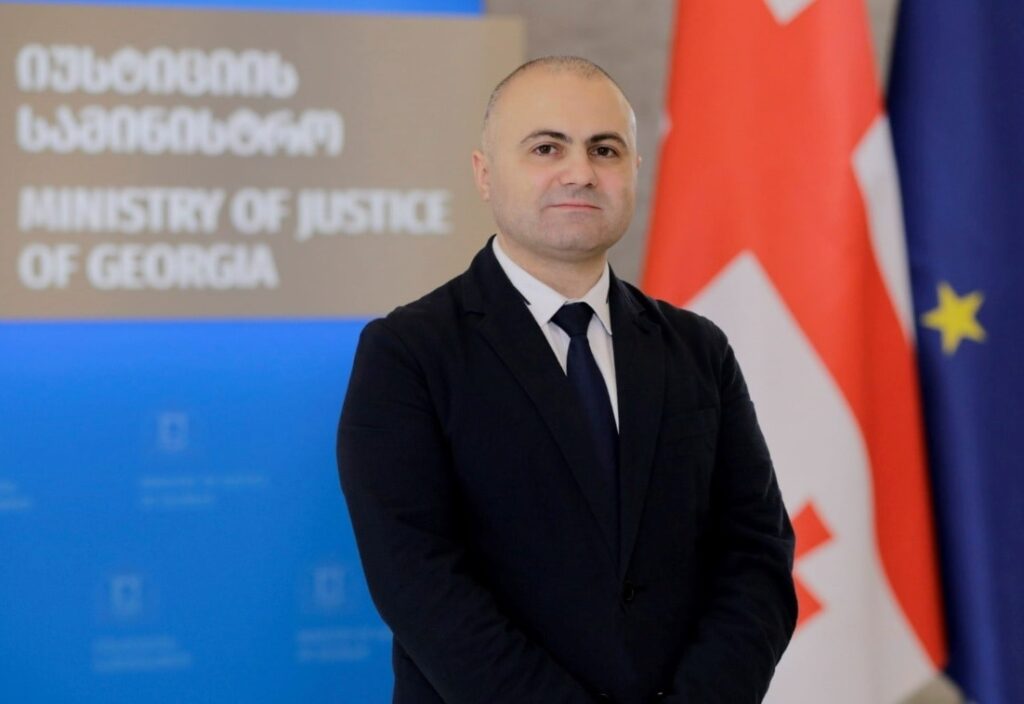
Georgia’s First Deputy Minister of Justice Beka Dzamashvili on Tuesday said freedom of expression on social media should not be exercised at the expense of violating the rights of others, while commenting on a recent ruling of the European Court of Human Rights in the case Miladze vs Georgia, which found no violation in relation to the complaint.
The case concerned the fine imposed on Georgian civil activist Irakli Miladze over a video published on TikTok.
Dzamashvili said the court had made it clear that the state has a legitimate right to protect public servants, including political officials, from attacks.
“The European Court very clearly said in its decision today that the state has a legitimate right to protect public servants, including those holding political office, from attacks,” he said.
According to him, the ruling establishes a balance between freedom of expression and other human rights.
“Freedom of expression cannot be absolute when it comes to specific individuals — public servants or political officials — in a way that allows anyone to insult, threaten, or use hate speech in public space. Such forms of expression are inadmissible under the European Court’s practice,” Dzamashvili said.
He also stressed that online expression can carry even greater risks than offline communication, giving the state grounds to regulate harmful conduct more strictly.
Dzamashvili added that the Court did not accept the applicant’s argument that administrative liability for petty hooliganism should not apply in digital spaces.
He said the ruling would help establish a broader European standard, according to which insulting or humiliating behaviour online is treated similarly to such actions in physical public space.
“The Court has clearly stated that if a person insults, humiliates or expresses aggression towards another person, this form of expression is treated the same as in physical space. Accordingly, such behaviour in virtual space will also be punishable under administrative law,” he said.
At the same time, he noted that critical speech remains protected, but when criticism turns into humiliation, intimidation or insult, the state has the right to respond.
Dzamashvili also described as “an interesting coincidence” the timing of the Strasbourg Court’s ruling with an initiative by the Interior Ministry to create a new department tasked with monitoring hate speech and aggressive communication online.
He said the ruling confirmed that such regulation is compatible with the European Convention on Human Rights.
“Social media is a means that enables people to exercise freedom of expression, but because it reaches a wide audience, the risks of violating others’ rights are higher if expression is misused,” he added.
Tags:
Beka Dzamashvili