Giorgi Antadze: I expect certain positions regarding Georgia to emerge during year

Author
Frontnews Georgia
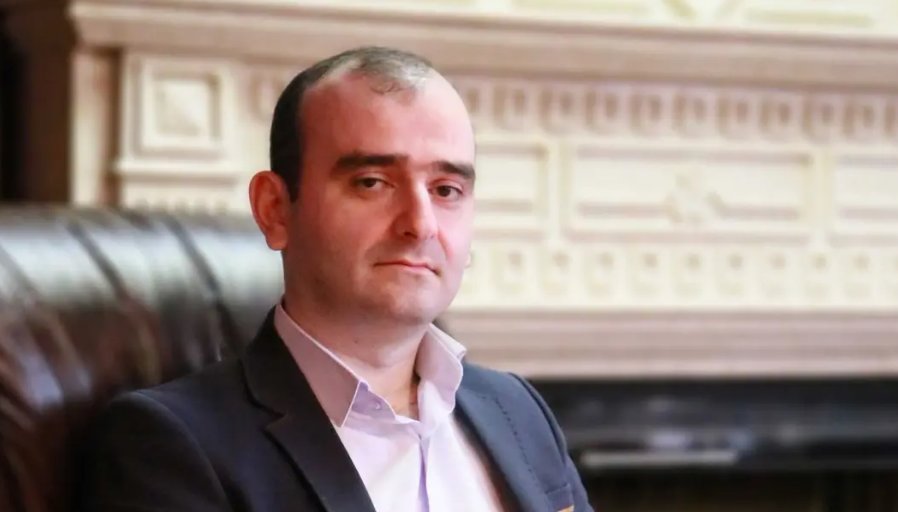
The escalation in the Middle East reaching a critical threshold and expectations of a possible US military strike against Iran have become the main challenge to regional security. How real is the threat of a large-scale war, what strategic interests drive Washington and what role could Georgia assume amid this geopolitical turbulence? Giorgi Antadze, a researcher at Geocase specialising in defence, security and international politics, spoke about these issues in an interview with Front News. The expert assesses both Iran’s possible response steps and the prospects of restarting Georgia–US relations “from a clean slate,” as well as messages voiced by Russia regarding political dialogue.
Q. Over the past few days, tensions in the Middle East have reached a critical threshold. Western media outlets, including CNN and Axios, are spreading information indicating that US President Donald Trump is closer than ever to deciding to launch a large-scale military operation against Iran. The situation is so acute that European leaders, in particular Polish Prime Minister Donald Tusk, are urging their citizens to leave Iran immediately. In your view, is there a risk that the United States could strike Iran in the coming days?
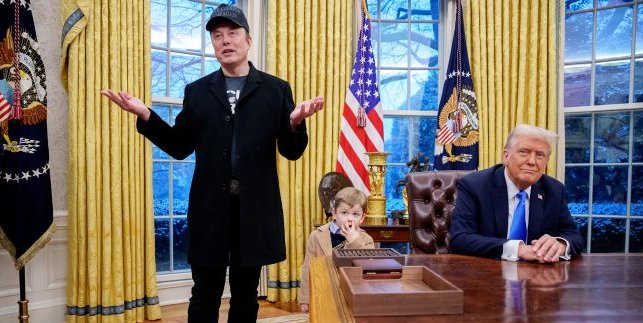
A. I think a US strike on Iran will definitely happen. The reason is that alongside the failed negotiations, this has already become a matter of US prestige. For Donald Trump personally, it has become a matter of responsibility, because he said he would force Iran to assume certain obligations and that Iran would make concessions. The fact is that at this stage Iran is not ready to agree to US demands. Therefore, if Trump’s words are not fulfilled, it will be perceived as his and America’s weakness. Accordingly, he is forced, because of the failure of these negotiations, to make the Iranian side pay in this way.
The strike will definitely be carried out, but what will be important here is what objectives the United States may pursue as a result of these strikes. Will it be only a strike to save face and push the regime toward concessions, or will America try to prepare the ground for changing this regime? These are the questions that exist at this stage. In other words, what will happen after the US strikes Iran and in what direction events may develop. Even in negotiations it was difficult to imagine their rapprochement. The United States already held a radical position and is demanding that Iran stop its nuclear programme. It also demands the cessation of funding Iranian actors on a regional scale, which for Iran essentially means a strategic retreat. Therefore, the chances of an agreement are very small.
Q. However, we know Iran itself is issuing threats and says that if the US strikes Iran, the war will turn into a regional war and take on a large-scale character. There will be attacks on American bases and Tehran will not sit idly by. In your opinion, what response might Iran give the United States? Israel suggests Iran may be using delays to complete its nuclear programme.
A. This once again will depend on the objectives of the United States. If this escalation is large and large-scale in nature, then any kind of response from Iran is expected. Of course, there is a probability that all this will develop into a large-scale escalation. Using the forces it has in the region, Iran may complicate the situation, complicate shipments and threaten the Strait of Hormuz; create problems for oil transportation and the movement of other vessels; target American ships. Therefore, everything will again depend on what scale and strength of strikes the United States carries out and how long these strikes will last. It is expected that Iran will try to cause maximum damage to the United States and its citizens.
Q. In this regional turbulence, where at any moment there is a possibility of a US strike on Iran, how should Georgia prepare? Is there a possibility that the United States might need to use Georgian territory even for intelligence purposes? We know that recently the Georgian authorities held high-level meetings with a US delegation. Also, the visit of State Security Service head Mamuka Mdinaradze to Washington. Could the Iran issue have been discussed at these meetings?
A. In my opinion, when our close regional neighbour is involved in any conflict, Georgia should try to maintain a moderate position, especially under current conditions. Accordingly, I do not expect sharp statements or reactions from our Government. However, I am sure that during the visit of the State Security Service head to the United States there would have been discussion about what expectations America has from the Georgian side in case of escalation with Iran. For example, tightening certain security measures, including border regulations. If the escalation is large-scale and leads to refugee movements from Iran, Georgia may be one of the countries facing this flow. The United States will try to ensure that even undesirable individuals do not move freely and unnoticed.
On the other hand, Georgia may also be used for indirect military purposes. We saw several visits by American military-transport aircraft whose exact function is unknown, though Georgian airspace may be used for intelligence purposes. Therefore, there are issues and topics regarding which America will have interest toward Georgia. However, I will again say that, in general - not only with Georgia but also with other countries in the wider region - Georgia’s involvement in the context of a conflict with Iran will mainly depend on what the US objective is.
Q. I would now like to continue on the US topic regarding Georgia. According to [Georgian] Prime Minister [Irakli Kobakhidze], after the meeting with [US Secretary of State] Marco Rubio there is optimism about restarting the strategic partnership “from a clean slate.” In your opinion, what objective preconditions exist today in Washington for a qualitative renewal of relations to become reality?
A. The fact is that even after one year, the new US administration still has not formed a concrete position regarding Georgia. However, within the Congress and Senate we have heard many statements, including within the Helsinki Commission and so on. Accordingly, I expect that during the year certain positions regarding Georgia will emerge, the reflection of which should be the appointment of the US ambassador to Georgia.
However, what conditions will be set by the United States for resetting these relations will be important. Will democratic backsliding in Georgia be significant in the discussion about restoring relations with the United States? I think for America, for which these values are important, the resolution of these problematic issues may indeed be set as a condition by Washington for renewing relations.
Q. I also want to ask about Russia’s recent activity. In recent days, several statements have been made by Russian officials saying the Georgian Government should start political dialogue with Russia. Tbilisi responded that the issue of restoring territorial integrity must be discussed first. In your opinion, is there any resource for the Kremlin to make any concessions regarding Georgia’s occupied territories?
A. I think these statements from Russia toward the Georgian authorities indicate a certain trend; among them, it is also a form of pressure on the [ruling] Georgian Dream [party]. We periodically receive praise from various speakers, however it seems that discussions about Georgia’s neutrality still do not satisfy them. Certain processes related to opening discussion on this topic in Georgia may serve to test public opinion.
I think Russia will definitely try to periodically put the issues of the occupied territories and the railway back on the agenda. However, the Georgian side is in a deadlock position in this regard. In the absence of diplomatic relations, it is difficult to imagine what kind of opening of relations can be discussed. It is also difficult to talk about what the precondition for such talks would be. Therefore, I think Georgian Dream will have great difficulty, even if it wishes, offering Georgian society convincing reasons for opening relations and dialogue with Russia that would not cause public outrage. In the general mood, even among Georgian Dream voters, Russia is seen as the enemy and occupier of our country. Taking these sentiments into account, including in the context of its own supporters, is something Georgian Dream has to do. Therefore, whether it will be able to achieve any change by introducing neutrality rhetoric will become clear in the near future.
Tags:
Giorgi Antadze