Zelenskyy’s consent to elections suggests he may be under far greater pressure than is visible from outside, expert Giorgi Antadze

Author
Frontnews Georgia
Despite some progress in peace talks over the war in Ukraine, negotiations remain stalled on two crucial points - territorial concessions and security guarantees. Statements by Western optimists - such as Keith Kellogg - claiming that efforts to resolve the conflict are “in the last 10 meters” became the central theme of our discussion with international security expert Giorgi Antadze.
In an interview with Front News, Antadze stresses that Ukraine cannot accept any form of territorial concession, especially the transfer of a fortified Donbas, without credible, tangible international guarantees that would prevent eastern Ukraine from being left vulnerable.
– Peace negotiations in the Ukraine war have made some progress, but remain stuck on territorial concessions and security guarantees. How do you assess statements by Western optimists (e.g., Keith Kellogg) that efforts to resolve the conflict are “in the last 10 meters”? Is it realistic to expect Ukraine to withdraw from Donbas without solid, “hand-in-hand” international guarantees?
Antadze: Without security guarantees, there is no chance Ukrainians will agree to anything. The most problematic issue still under negotiation is Donbas. Russia is demanding the transfer of a fortified Donbas, to which Ukraine is categorically opposed, because such a move would effectively amount to surrendering eastern Ukrainian territories. If Russian aggression were to resume, eastern Ukraine would be left defenseless if that fortified zone were handed over. Therefore, the demands and guarantees must be formulated in a way that gives Ukraine a strong sense of security. Otherwise, it is difficult to imagine that Trump will receive any response from the Ukrainians by Christmas.
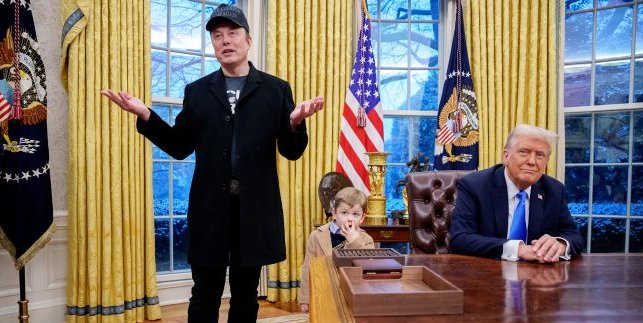
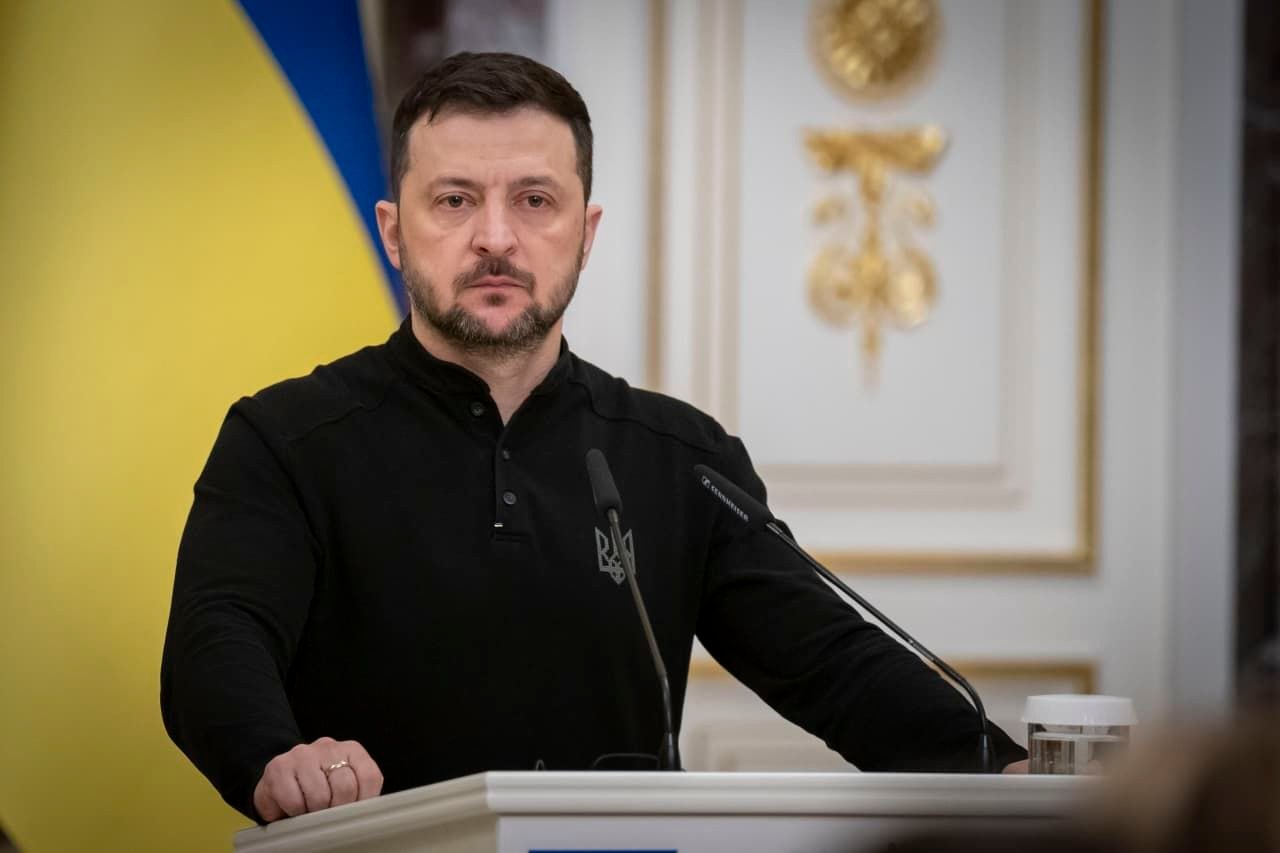
– Another core issue in the talks has become Ukraine’s elections. Donald Trump openly criticized Kyiv for corruption and is increasing pressure on the Ukrainian leadership. Under this pressure, Ukraine presented Washington its own version of the peace plan, with amendments. In an interview with Politico, Trump said the time had come for Ukraine to hold elections. Zelenskyy responded that he is always ready for them. Why has the election issue become relevant alongside the negotiations? Is Zelenskyy’s “yes” the result of pressure?
Antadze: Yes, Zelensky’s consent is highly suspicious and confirms concerns that he may be under serious pressure from the United States. The sudden re-emergence of corruption accusations is clearly being used as a pressure tool. It is unimaginable for a country at war to hold elections. There is no precedent for this anywhere in the world. Zelenskyy’s willingness to hold elections means he may be under far greater pressure than is visible from the outside.
What we can infer is that corruption allegations are being placed in front of him as leverage - likely the key reason he feels forced to agree to elections. He might proceed with elections if the peace plan becomes acceptable to Ukraine. Otherwise, I find it very hard to believe Zelenskyy will fully agree.
– Western sources often name three potential alternatives to Zelenskyy: Valerii Zaluzhnyi (former Commander-in-Chief of Ukraine’s Armed Forces), Rustem Umerov (former Defense Minister), and former adviser Oleksiy Arestovych, who openly states his presidential ambitions and heavily criticizes Zelenskyy. Do you think these three figures are acceptable and discussable for both the US and Russia?
Antadze: Yes, I believe Moscow also supports the idea of elections - they want Zelenskyy removed more than anyone. Several candidates have already emerged in the information space, both from Zelenskyy’s inner circle and the opposition.
As you mentioned, the three names most widely discussed are: Zaluzhnyi, the former Chief of General Staff, currently in the UK; Arestovych, formerly Zelensky’s adviser and Umerov, who is actively involved in the current negotiations.
What matters is the content of these negotiations. Naturally, Zelenskyy will remain the scapegoat: if anything goes wrong in the peace process, he will be the one blamed in the end.
– I’d like to touch on Donald Trump’s confrontation with what he calls the EU’s “bureaucracy.” Josep Borrell stated that Trump has “declared a political war” on Europe because he supports a Europe made up of “patriotic, sovereign nations” and criticizes Brussels’ “political correctness.” How do you view the long-term impact of this on transatlantic relations?
Antadze: This means that in the US - Europe relations, bilateral ties between Washington and individual European states will come to the forefront. Under the previous US administration, the EU was considered a primary actor; under Trump, this will become more fragmented. We also saw Trump’s warning that if Europe doesn’t rethink certain policies - including on migration - it will face serious identity issues. The implication is that uncontrolled migration threatens Europe’s cohesion. Therefore, Trump naturally gravitates toward right-wing European forces whose worldview aligns more closely with his own.
– How realistic is it that US support will accelerate the rise of conservative/right-wing opposition forces in Europe?
Antadze: Yes, this is entirely possible - and not solely due to Trump’s support. Various internal issues in Europe already create conditions for right-wing forces to rise.
In major European countries, however, this trend is unlikely to take an extreme form because democratic processes are strong and public sentiment is harder to manipulate.
Nonetheless, choosing populist and right-wing parties has become a growing global trend.
– The confrontation between the Georgian government and the United Kingdom has escalated into a diplomatic crisis. Georgian authorities describe the actions of the UK ambassador and the BBC report as a “hybrid operation” and “interference in a sovereign country.” What geopolitical or domestic political reasons do you see behind this escalation to such a critical point?
Antadze: This is simply a continuation of the confrontational line the ruling Georgian Dream party has maintained toward the West for the past two years. Apart from the United States, the government is in some form of diplomatic conflict with nearly everyone.
It appears they expect something from the new US administration - perhaps a reset. This is not impossible.
As for key European countries, as long as this government remains in power, it is unrealistic to expect relations with the EU to return to a cooperative mode. Given the authoritarian steps we are witnessing, ties with Europe will remain tense.
– Tbilisi has rejected Moscow’s plan to build a new customs terminal in occupied Abkhazia near the Enguri Bridge and to activate transit routes. Georgia sent a message to the Kremlin: any cargo heading to Russia via Abkhazia will not pass, and recognition of the so-called ‘state border’ is out of the question. What kind of signal is Georgian Dream sending here, given opposition accusations that the government is pro-Russian?
Antadze: I do not believe Georgian Dream’s relationship with the Kremlin has in any way deteriorated. This is the same pattern of communication we’ve seen for years.
The Abkhazia issue is highly sensitive - politically and economically. I don’t think, given public attitudes and sentiment in Georgia, the government would dare openly talk about restoring relations with Russia. They know such a move would trigger an extremely negative public reaction. They understand society is not yet “prepared,” from their perspective, for such a shift.
So the Georgian Dream is simply not ready to take that risk at this stage.
More broadly, regarding Russia, we should wait for the end of the war in Ukraine and for US policy toward Georgia to become more clearly defined. Only then will it be possible to speak about future prospects in Georgia–Russia relations. It is even possible the Georgian Dream itself is waiting for these developments.
By Elza Paposhvili
Tags:
Giorgi Antadze