Analyst Inalishvili says Crimea isolation could trigger major shifts inside Russia

Author
Frontnews Georgia
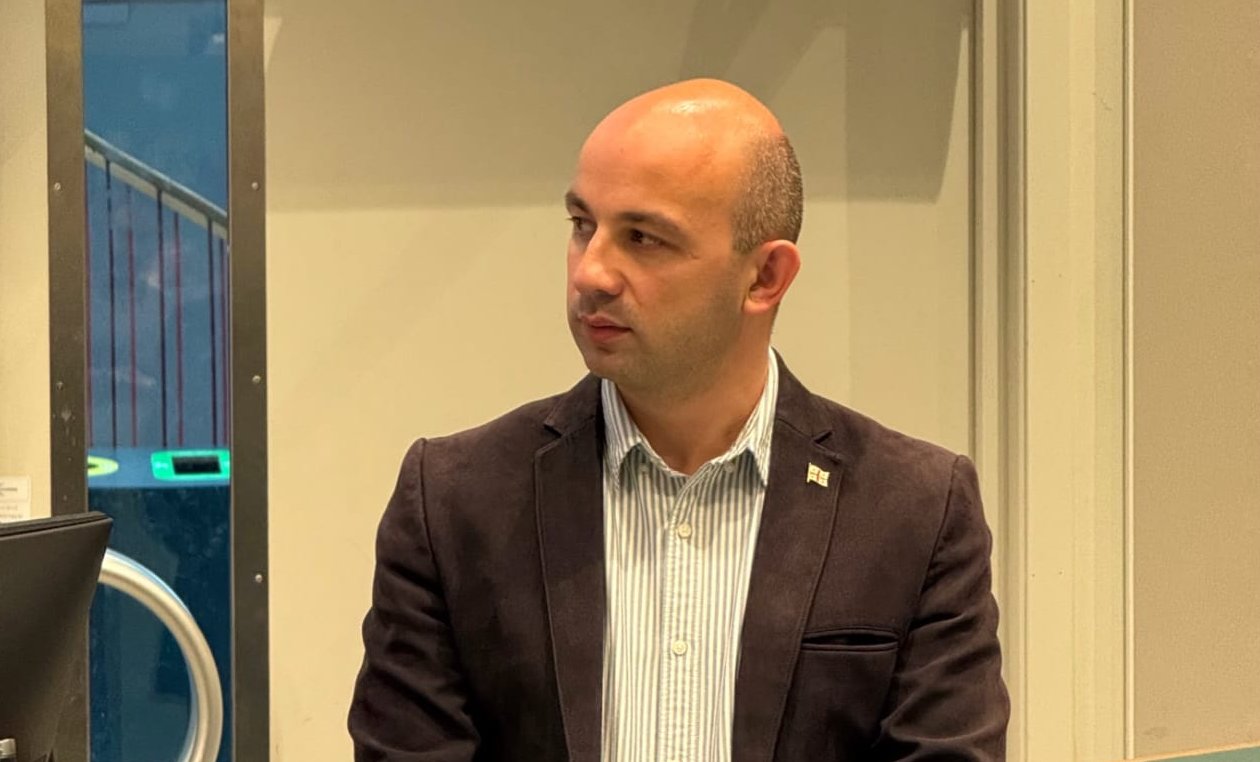
The long-range strikes carried out by Ukraine inside Russian territory, a sharp increase in drone production and the growing logistical isolation of the Crimean peninsula are reshaping both the frontline dynamics and the potential trajectory of future negotiations, international relations specialist Giorgi Inalishvili told Front News.
Asked whether Ukraine is moving closer to a full blockade of Crimea and how this affects Russia’s military logistics, Inalishvili said drone warfare has become a decisive factor in the conflict.
Q. What military advantage do Ukraine’s precision strikes inside Russia provide and how do they affect the frontline?
A. We see that for years now Ukraine has been gradually achieving military-technological progress and, naturally, it is being assisted in this by Western partners, military experts and specialists. However, it should be noted that one of the most important military-technological advances is the so-called drones. They operate at both short and long range. The art of warfare has changed and now everything has shifted to technological innovations, including in the field of drones.
In this regard, Ukraine has managed to develop to the point where it now produces more than four million drones per year, which is a major advantage compared to Russia. However, to say that Ukraine surpasses Russia in every respect would be difficult and would not be correct. Despite financial, economic and military problems, Russia still has the ability to stabilise the situation – at least not to retreat. I am talking about the frontline.
At this stage, the situation on the frontline remains unchanged and there has been no noticeable progress over the past two months. However, the Russians have made certain advances by capturing small settlements, which, as a rule, do not indicate any strategic progress. At this stage, the situation on the frontline is frozen. The only thing happening now is that Ukraine is managing to bring under fire all the important supply facilities from which the Russians supply the occupied territories.
Q. A state of emergency has been declared in Crimea and Sevastopol. In your analysis, how close is Ukraine to the complete logistical isolation of Crimea and how does this change the peninsula's role as the main supply hub for the Russian army?
A. We know that there are two routes connecting the peninsula: the occupied Mariupol, Kherson and Zaporizhzhia regional land corridor and the Kerch Bridge. The Ukrainian army bombed this bridge twice, which affected Crimea's sustainability to such an extent that it can no longer meet the Russian army's supply needs. In other words, the Crimean Bridge has long since ceased to have sufficient capacity in terms of logistics.
Therefore, the only serious route through which Russia can supply its army and collaborators is the land route. Although it passes through occupied territory, the Ukrainians have also managed to create problems for the Russians there using drones. These roads are being attacked and convoys travelling from Russia towards Crimea are regularly bombed by Ukraine. Drivers transporting cargo along this route are already avoiding movement in the area. In other words, Ukraine has created serious logistical problems in this direction.
However, it is still difficult to say that they have achieved a complete blockade. But if the situation continues like this and Ukraine maintains these intensive strikes, Crimea may indeed become an isolated island and this summer be cut off from its main supply bases. It will truly find itself in a situation where all logistical connections with Crimea are severed. In Sevastopol, the largest city in Crimea, electricity is already being supplied according to a schedule, petrol is no longer available in the city and the population that had moved there is leaving the Crimean Peninsula in large numbers.
Q. How do you assess Russia's internal political and economic resilience? Are there signs of confrontation among the elites or economic exhaustion, despite the regime outwardly maintaining stability?
A. In general, it is very difficult to analyse a situation when we have very limited information from inside the country. In reality, what Russia can do and has always done well is filter and control information. It continues to do so to this day. Unfortunately, we do not have full access to speak precisely about what is happening in Russia and can only discuss assumptions.
It is obvious that Russia has economic problems. There are certain restrictions, including on petrol, followed by restrictions on products, rising prices and so on. The existence of economic problems is a fact. However, whether these problems are serious enough to create significant public sentiment against [Russian President Vladimir] Putin's regime and lead to a change in opinion is difficult for me to imagine. I do not think the situation has reached that point yet.
As for possible changes – if the situation in Crimea continues like this and it is cut off from Russian supply lines, then many things may change in Russia. Crimea is Russia's greatest military achievement; for it, the peninsula is something "sacred". If Ukraine touches this "sacred" place and the moment comes when Kyiv lands troops and captures Crimea, this will be a complete catastrophe personally for Putin and his military elite. In that case, we may witness serious changes in the political and military leadership, which could become the precondition for unrest and even an uprising inside the country.
Q. The shortage of manpower remains one of the most acute problems for both countries. Which side will this crisis become more critical for this year and how will it affect the length of the frontline?
A. Naturally, both sides have a manpower problem. Moreover, considering population size, Ukraine is significantly behind Russia in this regard. However, Ukrainians are trying to replace this human resource with technological innovations. For example, the drone warfare currently underway requires fewer human resources, they physically no longer need as many people on the frontline and drones are capable of destroying more enemy forces. However, it is impossible to replace manpower completely.
As for Russia, although it has an advantage in terms of population, the question is how possible it will be to mobilise these people. Against the backdrop of growing dissatisfaction, Russia may find it difficult to mobilise the population. Whereas previously this could be achieved in exchange for several rubles, now the amount will have to increase. If two years ago people went to war for one million rubles, this will no longer be enough and more will be needed. However, where Putin will get these funds is another question.
Many also say that such mobilisation may indeed take place in the autumn, but the question is who will train these people. Most of the specialists capable of doing this have already been sent to the frontline – some have been killed, while others are no longer able to perform their duties. Russia also has a serious shortage of trainers. In addition, another issue remains on the agenda: even if these people are trained, they will need weapons. Under sanctions, this problem is also becoming increasingly evident.
Q. How do Ukraine's recent tactical successes (strikes on Russian territory) change Kyiv's bargaining position in potential negotiations and how realistic is it that the Kremlin will reduce its maximalist demands because of this pressure?
A. As for Kyiv's current advantage and its perception in the West, at this stage we see that Kyiv's stronger position in negotiations is needed and it is already receiving support. Ukraine's behaviour has also become much bolder recently. We saw the ultimatum to [Belarusian President Alexander] Lukashenko, which led to the removal of those radio stations from the border; we also see active operations in Moscow and Crimea. All this indicates that Kyiv is trying to secure stronger positions ahead of possible negotiations. I think Ukraine is taking serious steps in this direction and therefore has the opportunity to appear stronger in these negotiations.
There has been talk of negotiations since the beginning of the war, but for the parties to sit down, they must begin discussions from a specific point. Russia, in this case, openly states that it wants negotiations to start from the Istanbul meeting held at the beginning of 2022. This would effectively mean Ukraine's capitulation.
Of course, the Ukrainian side will not agree to this – if it had wanted to, it would have done so long ago and would not have continued fighting. Therefore, I do not think negotiations will begin until something changes on the frontline.
Tags:
Giorgi Inalishvili