Ruling party must learn from Hungary, opposition lacks will to produce new leadership, Analyst Koberidze

Author
Frontnews Georgia
The remarkable political rise of Péter Magyar in Hungary, and the shaking of Viktor Orbán’s long-entrenched political system, have created a new geopolitical reality in Europe.
How did a former insider manage to mobilize public support? Why did the “pardon scandal” prove fatal for Fidesz? And what impact will the shift in the balance of power in Budapest have on Tbilisi, Brussels, and Washington?
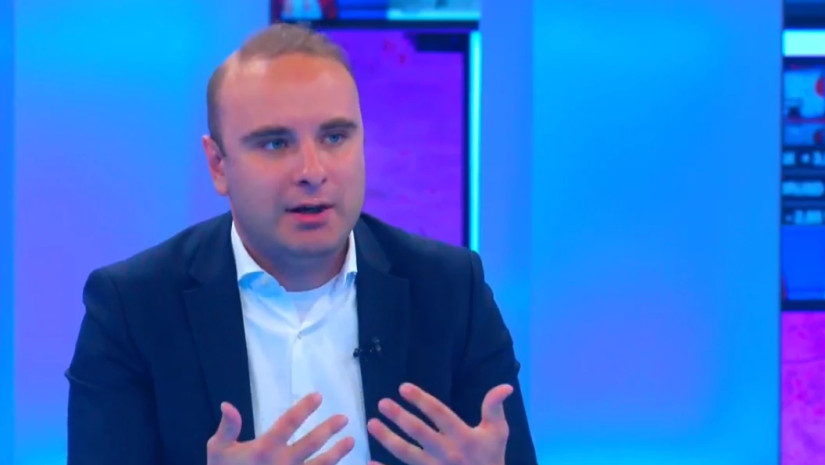
In an interview with Front News, international relations analyst Giorgi Koberidze discusses in detail the end of Hungary’s “Trojan Horse” era, the emergence of new standards in opposition leadership, and the risks that Georgian Dream may face as its key European ally weakens.
Q. How did Péter Magyar - himself a former insider - manage to defeat Viktor Orbán? What were the key mistakes and corruption scandals (such as the pardon scandal) through which Magyar exposed the regime?
A. Magyar is, first and foremost, a highly charismatic leader with excellent communication skills. Crucially, he did not position himself as a reactive figure responding to Orbán’s agenda. Instead, he set the political tone himself.
He introduced into public discourse the issues he believed genuinely concerned Hungarian society, accurately capturing public sentiment and becoming its primary voice.
Another important factor is the personal cost of his political engagement. He even sacrificed his private life - confronting his own spouse, who served as Hungary’s Minister of Justice. In doing so, he exposed the Orbán government not only for corruption but also for shielding individuals involved in pedophilia-related crimes.
This was a powerful political statement. In the eyes of the public, he emerged as a leader willing to sacrifice even his family for politics, the country, and its people.
Perhaps most significantly, Magyar managed either to consolidate or politically eclipse all existing parties. Those who aligned with him remained loyal to the end, while those who did not effectively disappeared from the political landscape.
In effect, nearly all politically relevant actors in Hungary coalesced around his leadership.
Some commentators argued that Hungary was never truly an autocracy. This is inaccurate. During the election period, Magyar faced threats from organized groups (titushky), risks of detention, and significant obstruction in conducting his campaign.
The political environment was highly repressive.
The decisive turning point, however, came when Orbán realized that even at his own rallies, he was being openly criticized - reminiscent of Nicolae Ceaușescu’s final days in Romania. He perceived this as a serious threat and ultimately failed to resist it. Even a constitutional majority proved insufficient once confronted with a critical mass of public discontent.
Q. Hungary has long blocked military aid to Ukraine and its EU accession process. With Orbán gone, how realistic is it that the EU will regain unity and accelerate decision-making?
A. This election will undoubtedly have consequences for Europe. While figures like Robert Fico and Andrej Babiš remain, they are not as radical in their foreign policy orientation as Orbán was.
Orbán effectively built his later political career around Russia - something neither Fico nor Babiš has done to the same extent. This does not mean they will not attempt to obstruct certain processes, but the phenomenon of “Orbanization” will no longer define European politics.
Orbán was often referred to as Russia’s “Trojan Horse.” That level of rigidity and obstructionism will now diminish.
Magyar is a conservative and does not strongly support open-border policies. Therefore, internal EU debates will continue on various issues. However, he is not a Russian proxy.
As a result, the overall trajectory will improve. Magyar’s victory may serve as a significant catalyst for democratic processes globally.
Q. Beyond Russia, Orbán was also considered a key ally of Donald Trump in Europe. Does his defeat signal a weakening of American (specifically Trumpist) influence in Europe, or is it more a demonstration of Russia’s declining influence?
What Vladimir Putin thinks effectively defines Russia’s position. In contrast, what Donald Trump thinks does not define the entirety of the United States.
Trump’s personal policy preferences and broader US foreign policy are not identical.
While Trump undeniably influences policy, the US system allows for engagement with a wide range of actors. Orbán’s loss may be a personal setback for Trump, but it does not fundamentally alter US–Europe relations.
In fact, one could argue that a flexible, cohesive Europe is more beneficial for US strategic interests than a fragmented one dependent on the preferences of a single political figure.
Magyar, as a political phenomenon, is likely to be seen as a legitimate and constructive partner by future US administrations. That said, Trump’s broader political standing is unlikely to suffer significantly - he has simply lost a close ally in power.
Q. What impact will these developments have on Georgia, given that the Georgian government viewed Hungary as a key lobbyist and strategic partner? Has Tbilisi lost an important pillar in Brussels?
A. Magyar is unlikely to obstruct the EU’s current policy toward Georgia. On the contrary, it is likely that EU processes concerning Georgia will accelerate compared to the Orbán era.
Q. Does this mean it will now be easier for the EU to impose specific sanctions (financial or personal) on the Georgian government, without Hungary acting as a blocking force?
Yes, it will become easier. Hungary will no longer serve as a barrier.
As for Georgian Dream, it should draw a simple conclusion from Hungary’s example:
Fear-based narratives - whether about war or moral decay - do not work in the long term.
Instead of relying on support from marginal political actors, it would be more rational to reposition itself as a normal, pragmatic political force.
Hoping for political shifts elsewhere - whether the rise of Marine Le Pen in France, changes in Germany, or alignment with Giorgia Meloni - is not a sustainable strategy.
A more viable path would be to stop fear-based messaging and allow democratic processes to function freely within the country.
Q. How realistic is it that a “Hungarian scenario” - a breakthrough like Magyar’s - could be replicated in Georgia? Is the opposition ready for grassroots mobilization?
A. Unfortunately, the Georgian opposition is not prepared for such a scenario.
To be direct: today, there is no figure in Georgia whom the public would open their door to - and that was precisely Magyar’s strength.
He started small - holding gatherings of just 20 people, particularly in eastern Hungary, where Orbán’s influence was strongest. Gradually, he captured public attention.
He is an excellent speaker and an intelligent individual who, through simplicity and eloquence, managed to unite the country.
No comparable figure currently exists in Georgia. The opposition landscape is deeply fragmented and politically disorganized - to a catastrophic degree.
There are so many political actors that each one has limited visibility and influence.
Unless they unite under a single platform - as Magyar’s movement did - meaningful results are unlikely.
It is also important that Magyar was a new political face. While such new figures do exist in Georgia, the opposition space itself is closed and resistant to renewal.
There is a lack of political will within the opposition to identify and elevate such a leader.
By Elza Paposhvili
Tags:
Giorgi Koberidze