Giorgi Tumasyan: Pashinyan has real chance of securing constitutional majority

Author
Frontnews Georgia
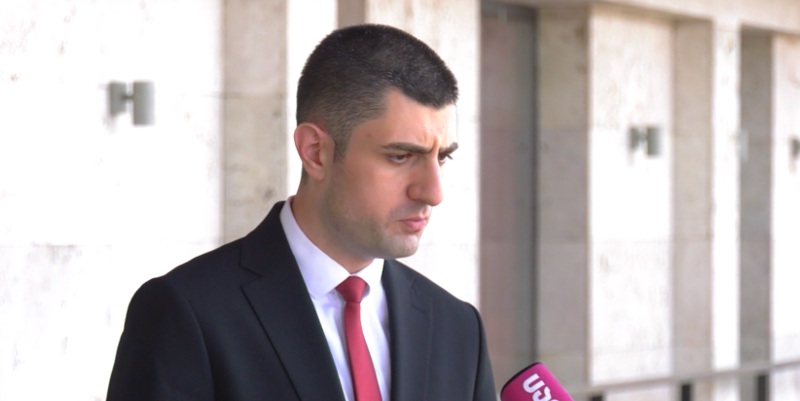
Armenia is awaiting parliamentary elections on Sunday that could prove historic not only for the country's foreign policy direction but also for the security architecture of the entire South Caucasus. In an interview with Front News, international relations specialist Giorgi Tumasyan discussed the election campaign, unprecedented economic and political pressure from the Kremlin, the risks of military escalation and the implications for Georgia. According to his analysis, developments in Yerevan will have a direct impact on Georgia, as Nikol Pashinyan remains the only pillar of a democratic and pro-European course in the South Caucasus today.
Q. Polls show that Nikol Pashinyan's Civil Contract party is leading, although its rating has fallen sharply compared with the previous election, while the share of undecided voters has reached 44 per cent. In your view, will Pashinyan be able to secure a governing majority on his own, or is Armenia facing the prospect of a coalition government?
A. I think Pashinyan has a real chance of securing a constitutional majority, which means more than 67 per cent of the vote. The basis for this assumption is that it is unlikely that undecided voters will move towards the opposition. They may choose not to participate in the election at all, but if they do vote, the majority will still support the government. Moreover, the economic and political pressure exerted by Russia in recent months has had the opposite effect within Armenian society, generating an anti-Russian reaction.
Q. Pashinyan's election concept of a "Real Armenia" without Karabakh, as well as his open confrontation with the Church, has caused significant divisions in public opinion. How effective is this strategy and to what extent are the pro-Russian opposition forces of Karapetyan, Kocharyan and Tsarukyan using these issues to manipulate voters?
A. As far as Karabakh is concerned, the opposition has no real alternative to offer. They cannot openly support taking the country into war, nor can they challenge the current reality with a practical plan. As for the Church issue, Pashinyan is not confronting the institution itself; he is confronting the current leadership of the Church. The Catholicos already has very low approval ratings in Armenia, so this process does not create serious political problems for Pashinyan. Therefore, I do not expect these issues to have any significant negative impact on the ruling party's campaign or ratings.
Q. Pressure from Moscow is unprecedented. Members of the Eurasian Economic Union have demanded that Yerevan hold a referendum on choosing between the European Union and the Eurasian bloc, while Putin has openly threatened the country with a "Ukrainian scenario" and economic blockade. How real is the risk of military or economic escalation if the pro-Western course prevails in the election?
A. Russian pressure on Armenia's elections and government remains in an active phase. This is reflected both in economic pressure and in aggressive public statements. In addition, tens of thousands of Armenian citizens have reportedly been organised and sent from Russia to participate in the elections, as the pro-Russian opposition forces are coordinated and directed directly from Moscow.
If Pashinyan wins, a further intensification of the economic blockade is certainly possible. At present, Moscow is mainly creating obstacles for Armenian agricultural exports, but in the future the issue could extend to natural gas supplies, given that 85 per cent of Armenia's gas supply depends on Russia. Other strategic resources, including petrol, diesel and wheat, much of which is imported from Russia, could also come under threat. At the same time, these tensions could affect Armenian citizens living in Russia.
Q. How do you assess Pashinyan's response that holding such a referendum at this stage is "theoretical" and illogical? Is this an attempt by Yerevan not to provoke the Kremlin further before the election, despite the clear support it has received from the West, including from the Trump administration and through Marco Rubio's visit?
A. Pashinyan is conducting a cautious diplomatic process and, naturally, is trying to balance this difficult situation as much as possible in Armenia's national interest. It is extremely difficult for Armenia to confront Russian aggression alone, but Yerevan has no intention of falling into Moscow's provocations. This is precisely why the government maintains relatively soft rhetoric towards the Kremlin. Pashinyan is doing everything possible to ensure that existing tensions are not aggravated further through a balanced policy.
Q. What kind of message was Marco Rubio's visit from the United States in this difficult situation? What can Washington do for Armenia now to ensure that Russian pressure does not become even more severe if Pashinyan wins? What kind of support does he currently have from the West? Is there a risk that the Kremlin could provoke internal confrontation?
A. It is entirely possible that Russia will become more active in terms of internal destabilisation. For example, it may activate a scenario in which the opposition refuses to recognise the election results and attempts to organise mass unrest. It cannot be ruled out that the Kremlin could even supply weapons to radical groups through its military base in Gyumri. Russian propagandists have openly discussed the idea that a so-called "special operation" in Armenia would not be a bad idea.
The likelihood of direct military escalation remains low at this stage, but given Russia's unpredictable nature, nothing can be ruled out completely. Open threats are coming from Moscow that Armenia is following "Ukraine's path", which creates serious security risks. In any case, the Russian military bases on Armenian territory represent one of the country's greatest threats. However, I believe that if Pashinyan wins, his team will not back down.
Q. Tbilisi and Yerevan have developed an unprecedentedly close strategic partnership in recent years, and Pashinyan has openly supported Georgia's European integration. From Georgia's perspective, whose victory would be preferable and what would change for Georgia if pro-Russian revanchist forces come to power in Armenia?
A. If we are talking about Georgia's long-term national interests and the will of the Georgian people, then, of course, Tbilisi would benefit from a victory by Nikol Pashinyan. However, if we look at the issue through the prism of the ruling Georgian Dream party, Pashinyan remaining in power may not necessarily be advantageous for them.
Today, Pashinyan is the only leader in the South Caucasus pursuing a clearly democratic and pro-European course. If he wins, Western attention and engagement in the South Caucasus region will become even more active.
The pro-Russian opposition in Armenia claims to support friendship with Georgia, but at the same time openly lobbies for the reopening of the Abkhazia railway, presenting it as though a behind-the-scenes agreement between Tbilisi and Moscow has already been reached. Given that Georgian Dream today portrays European institutions as hostile, a victory for the pro-Russian opposition in Armenia would likely be far more "comfortable" politically for the ruling party.
However, I repeat that for Georgia and its population, and for a stable European future, it is vitally important that Pashinyan and his team remain at the helm of Armenia.
Tags:
Giorgi Tumasyan