Education Minister unveils higher education reform linking university quotas to ‘labor market demand’

Author
Frontnews Georgia
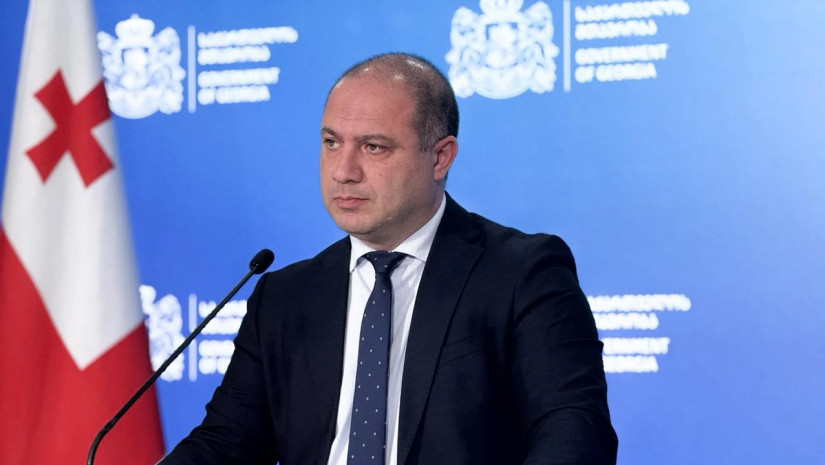
Georgia’s Minister of Education, Givi Mikanadze, on Thursday unveiled a new model that will allocate student admission quotas at state universities based on labor market demand and institutional specialization.
Presenting the government-approved changes, Mikanadze said that, for the first time since Georgia regained independence, university admission quotas have been determined on the basis of a comprehensive labor market study conducted by the Ministry of Economy and Sustainable Development in coordination with the Education Ministry and private sector representatives.
He described the findings as “more alarming than expected,” citing a “long-standing mismatch” between the number of graduates in certain fields and actual employment demand.
Under the reform, the government is implementing a One City – One Faculty principle aimed at reducing duplication of academic programs and concentrating resources within designated institutions.
Tbilisi State University will admit students in natural and exact sciences, humanities excluding pedagogy, law, economics and business administration, and social and political sciences.
Georgian Technical University will focus on engineering and technical disciplines, while Tbilisi State Medical University will continue to specialize in medical programs.
Ilia State University will concentrate on pedagogy and internationally accredited STEM programs, including those with ABET accreditation.
Sokhumi State University will oversee agricultural programs, as well as Georgian-Abkhaz language and literature and pedagogy. Regional universities in Zugdidi, Gori, Akhaltsikhe, and Telavi will emphasize agriculture, tourism, and teacher education, while Batumi and Kutaisi universities will retain multi-disciplinary profiles.
Agricultural programs currently operating under Georgian Technical University will remain there temporarily, but are expected to be transferred to Sokhumi State University following a reorganization process in the coming months.
Students admitted to agricultural programs in the 2026 - 2027 academic year are expected to begin their studies under Sokhumi State University.
Mikanadze said the reform responded directly to labor market imbalances identified over the past five years.
According to the data cited by the minister, law faculties admitted an average of 3,598 students annually, with approximately 2,047 graduates per year, while average annual demand for lawyers is fewer than 700.
Economics programs enrolled an average of 1,053 students annually, producing 662 graduates, compared to labor market demand for roughly 150 specialists. In social and political sciences, annual enrollment averaged 4,916 students, with 2,591 graduates, while demand stands at approximately 400 positions.
By contrast, engineering and technical fields faced shortages, the official claimed. Universities enrolled an average of 2,225 engineering students annually, with about 1,200 graduates per year, while annual labor market demand was estimated at 1,800 specialists. Demand for information technology professionals, as well as specialists in nursing and midwifery, also exceeded current graduation levels, according to the ministry.
The minister argued that previous admission practices left many students pursuing degrees with limited employment prospects and said the state had a responsibility to align higher education output with economic needs. He added that the new quota system was designed to prevent structural imbalances in the labor market and to improve the mobilization of human capital.
Last year, 19,311 students were admitted to state universities. Under the new framework, the intake will increase by approximately 2,000 students to reach 21,300. In addition, around 10,000 students will be admitted to vocational education programs, which will remain fully state-funded. Additional admissions beyond the established quotas will be permitted only in exceptional cases, including tied examination scores at the cutoff point or applications from residents of Georgia’s temporarily occupied territories who qualify under special procedures.
Mikanadze said the reform also intended to restore Tbilisi State University’s historical role as the country’s leading multidisciplinary institution, while maintaining internationally accredited and joint-degree programs across state universities as part of Georgia’s higher education internationalization policy.
Tags:
Givi Mikanadze