PM Kobakhidze: EU bureaucracy must ‘correct its course’, dismisses European Parliament debate
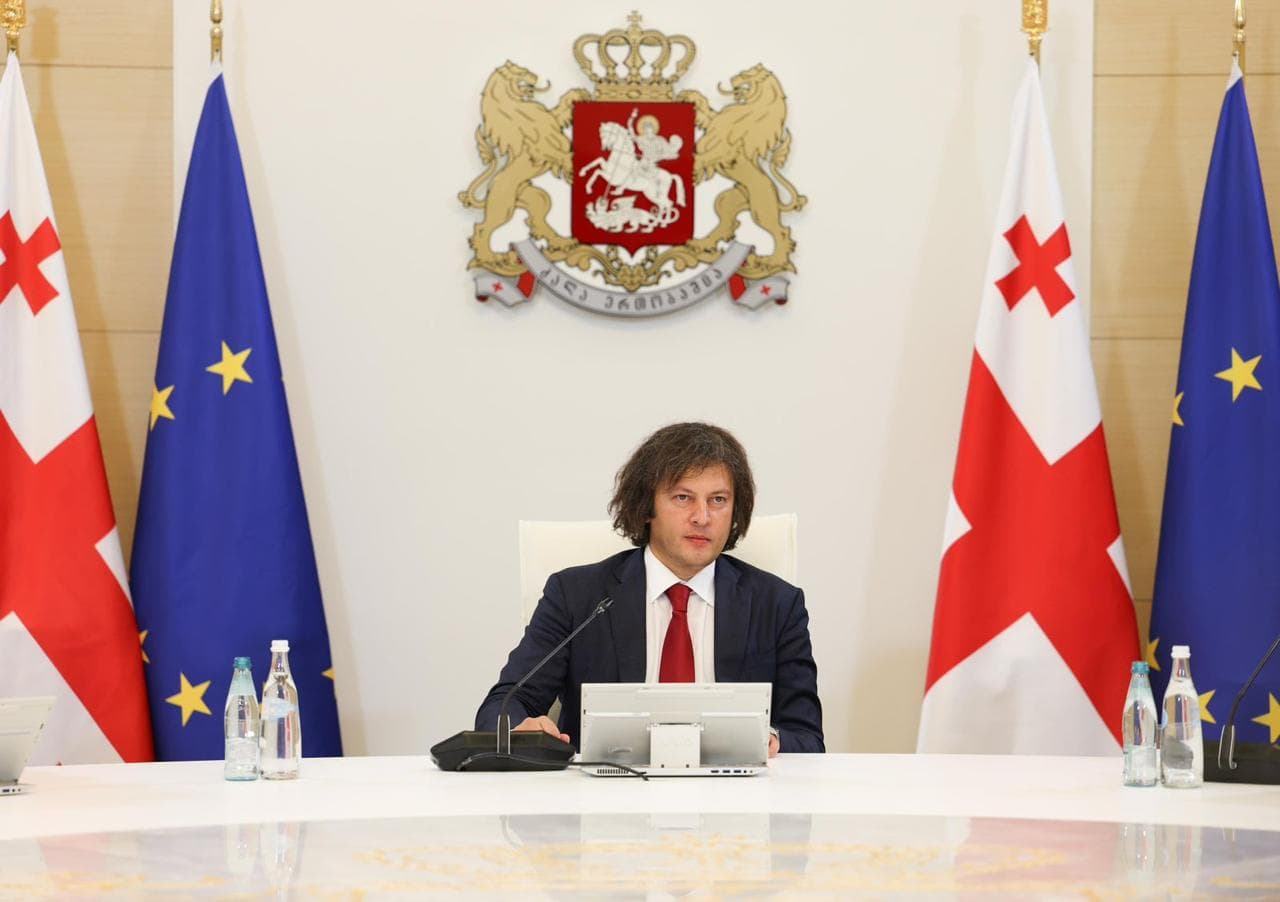
PM Kobakhidze rejected claims that political prisoners exist in Georgia

Author
Front News Georgia
The prime minister of Georgia, Irakli Kobakhidze, has said the European Union - not Georgia - needs to “correct its course”, criticising what he described as the actions of European bureaucracy.
Speaking to journalists on Monday, Kobakhidze said Georgia’s foreign policy direction remained clear and that the country continued to prioritise integration with the European Union.
“We have the correct course. It is the European bureaucracy that must correct its course in order to avoid the problems it is artificially creating for the European Union,” he said.
Kobakhidze argued that the EU’s global economic position had weakened in recent years. He claimed the EU accounted for around 30% of the world economy in 2008, while that figure had fallen to about 17.5%, with projections for 2025 expected to be even lower.
He said Georgia remained confident about its strategic goals, including European integration, but insisted that “European bureaucracy has not yet corrected its own course”.
In further remarks, Kobakhidze criticised the EU’s decision-making regarding visa rules for holders of diplomatic passports, comparing it to what he described as repeated political gestures.
Referring to former Georgian president Mikheil Saakashvili and the opposition United National Movement, he said the situation reflected what he called “very low standards” within European bureaucracy.
The prime minister also dismissed as “completely uninteresting” a debate planned in the European Parliament titled “the case of Elene Khoshtaria and political prisoners under the Georgian Dream regime”.
Kobakhidze rejected claims that political prisoners exist in Georgia, saying that the country had experienced five unsuccessful attempts at revolution over the past four years.
“When people still talk about political prisoners under such circumstances, it is simply shameful,” he said, adding that the situation reflected what he described as a “very difficult state” within European bureaucracy.
Tags:
Irakli Kobakhidze