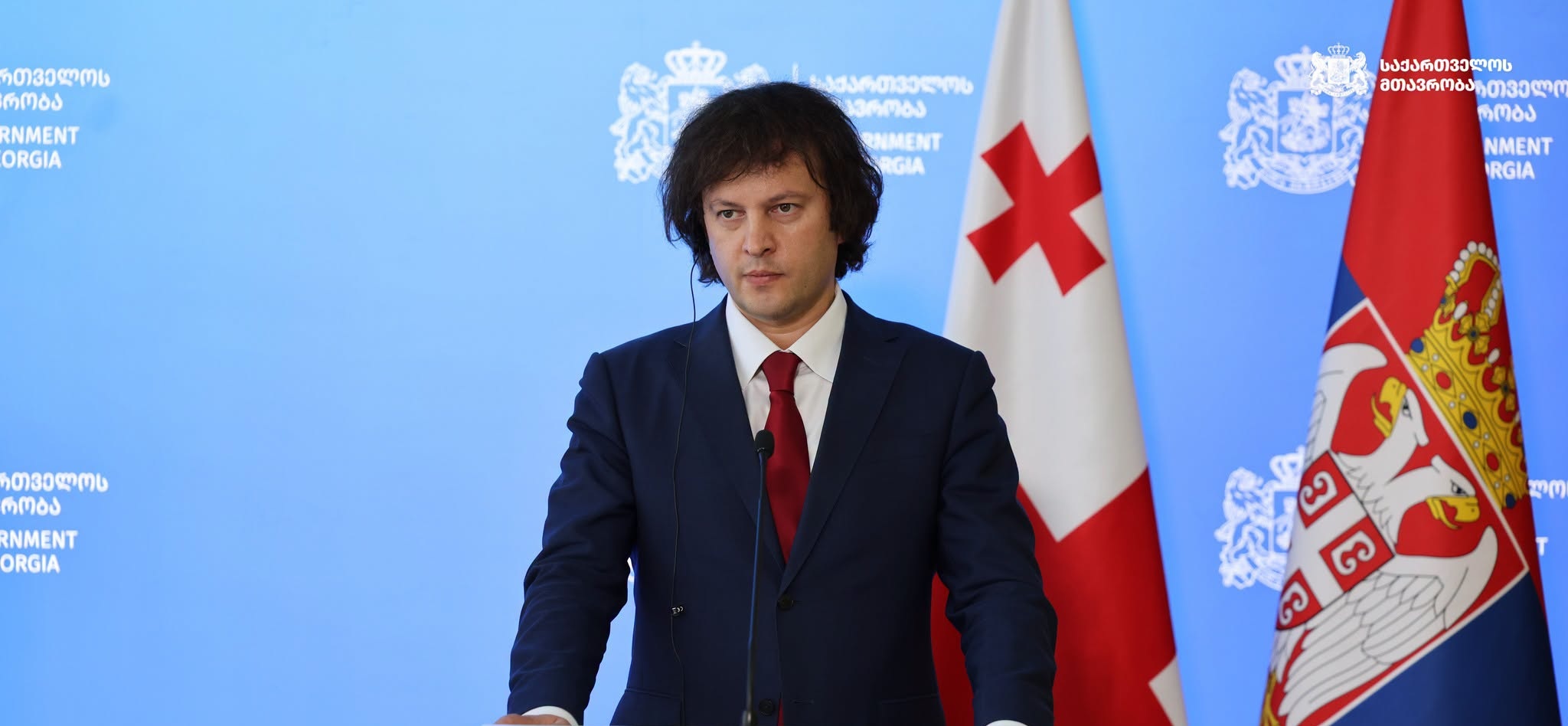
“For economic growth, what matters most is not membership in a particular bloc, but the economic policy pursued by the government within the country,” Kobakhidze said

Author
Front News Georgia
Georgian Prime Minister Irakli Kobakhidze has argued that economic growth is driven primarily by a country's domestic economic policies rather than membership in international organizations such as the European Union.
Speaking in Parliament, Kobakhidze said there had been repeated attempts to portray EU membership as a guarantee of rapid economic development, but maintained that economic performance depends mainly on the policies implemented by national governments.
“There have been numerous campaigns suggesting that joining the European Union would automatically lead to an economic miracle. In reality, the data do not support a direct correlation between EU membership and economic growth,” the prime minister said.
Kobakhidze compared Georgia's economic performance with that of countries that joined the European Union during the 2004 enlargement round, arguing that Georgia's economy has expanded more rapidly over the same period.
According to the prime minister, while some EU member states saw their nominal economies double, triple, or increase up to sevenfold since the early 2000s, Georgia's nominal economy has grown approximately twentyfold during the same timeframe.
“Georgia's example demonstrates that we have grown significantly faster than countries such as the Baltic states, Poland, the Czech Republic, Slovakia, Hungary and Slovenia during the same period,” he said.
Kobakhidze stressed that EU membership can bring advantages, including political benefits, but argued that governments should remain focused on implementing effective domestic economic policies.
“For economic growth, what matters most is not membership in a particular bloc, but the economic policy pursued by the government within the country,” he stated.
The prime minister also noted that EU accession may involve trade-offs, including the need to align with EU trade and regulatory policies, which could affect existing free trade agreements, visa arrangements, tourism flows, and import-export relations.
“Overall, these factors can likely be balanced, but it is important to understand the full picture,” he said.
Tags:
Irakli Kobakhidze