Ukraine war will end when Russia’s elites agree to remove Putin, military analyst Lekvinadze

Author
Frontnews Georgia
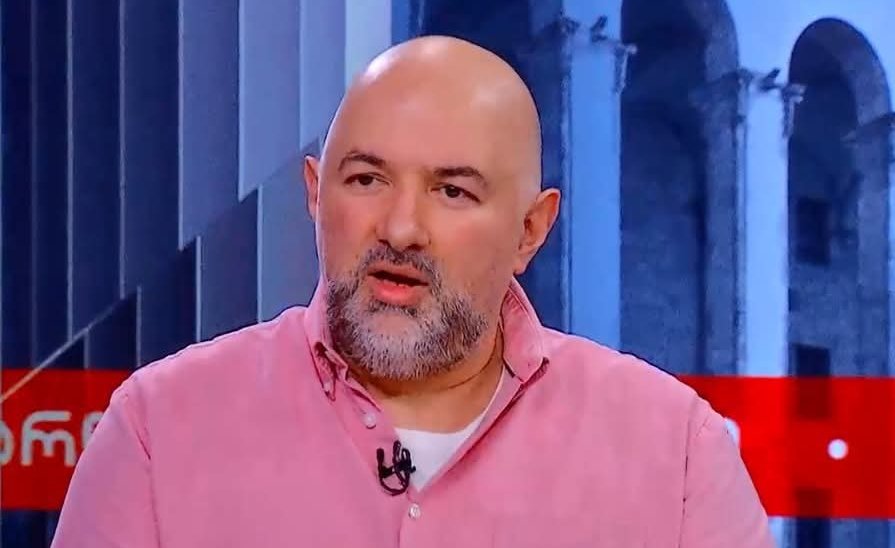
Ukrainian strikes deep inside Russian territory and mounting military pressure on Crimea are having a significant impact on the dynamics of the war, although a decisive turning point is still at least one or two years away, military analyst Irakli Lekvinadze said.
In an interview with Front News, Lekvinadze discusses the growing economic pressure on the Kremlin and the targeting of Russia’s oil infrastructure. He says the attacks are primarily damaging the Russian budget, although Moscow will still be able to continue financing and waging the war for several more years by relying on alternative supply routes and domestic resources.
The analyst claimed the war is more likely to end not with a sudden collapse of the front line, but with Russia’s internal elites eventually agreeing behind the scenes to remove Vladimir Putin. He believes this process could also be significantly influenced by potential changes in political leadership in major European countries and by NATO’s long-term financial support for Ukraine.
Q: Today, when Kyiv has the capability to strike Russia’s key economic arteries at distances of up to 2,500 kilometres, what kind of strategic advantage does this give Ukraine? To what extent are these strikes changing the balance of power, and could they eventually enable Kyiv to impose its own terms on the Kremlin at the negotiating table?
A: Strikes deep inside Russia will certainly have an impact, but not immediately. I believe we are still far from fundamental changes, and the decisive turning point has not yet arrived. In my view, it will take at least another one or two years.
A great deal will have to change before that happens. Russia will develop greater resilience to these strikes and adapt to them. Of course, it will not be able to neutralise the threat completely. Ukraine, for its part, is also improving its strike capabilities and testing ballistic missiles. In any case, the current phase of the conflict is likely to continue for several more months.
Another very important factor is the daily pressure being applied against Crimea. Ukrainian forces are also striking oil and fuel reserves there. Attacks have already been carried out against the land corridor, and sooner or later the Crimean Bridge will also be struck and destroyed.
However, another important development is that these drones had previously been used mainly to attack naval vessels, whereas over the past two days, 19 tankers have reportedly been sunk in two separate raids.
I would not say that the land and maritime corridors have been completely closed, but the pressure has become so intense that Crimea has effectively been placed under blockade.
This is important because Crimea is strategically crucial. Russia’s occupation of Ukrainian territory began with the occupation of Crimea in 2014. The peninsula is also extremely important to Russia from the perspective of control over the Black Sea and regional security.
Crimea is equally important to the countries confronting Russia and to NATO. For Russia, it also carries enormous symbolic significance. Therefore, if Russia loses Crimea, that is when we should expect serious internal problems to emerge.
Q: How long could it take for the disruption of Russia’s oil refineries and shortages of aviation fuel to cause genuine supply problems for military equipment and aircraft on the front line, potentially forcing Russia to scale back or halt military operations?
A: These attacks are already having an impact. However, Russia prioritises supplies for military needs.
As far as oil refineries are concerned, Russia will attempt to compensate for the damage by exporting crude oil and importing refined petroleum products in return. There are already signs of this happening. Russia has reached agreements with Kazakhstan and is exploring other alternatives.
From a military perspective, I do not expect Russia to face a critical fuel shortage. The situation is different when it comes to strikes against logistics hubs inside Russia. These attacks certainly create problems and cause repeated disruptions.
However, I do not believe Russia will simply run out of fuel supplies and be forced to stop the war as a result.
The primary objective of these strikes is to inflict economic damage on Russia. Oil refining facilities and oil transportation infrastructure are major sources of revenue for the Russian state.
Striking this infrastructure is particularly important because it reduces budget revenues at a time when government expenditure has already been increasing year after year. As a result, Russia’s budget deficit will grow, and the government will have to find alternative sources of financing.
Russia can borrow money, but the liquid assets of the two funds it has used over the past four years to cover these expenditures have largely been depleted. What remains consists primarily of Russian securities that cannot easily be sold and converted into cash.
Russia also has gold reserves, some of which it is selling, but it no longer has substantial resources available to replenish the budget.
China is not providing loans either. Russia has made several attempts to secure financing from China, but Beijing has refused.
One remaining option would be to turn to private depositors and attempt to raise funds from domestic savings. There have already been calls for such measures from the Communist Party, which effectively serves as a state-approved opposition force. This has allowed the authorities to float the idea publicly that private savings could be used to help cover the budget deficit.
Another option is to print additional money, which would lead to higher inflation and further depreciation of the rouble.
Through these measures, Russia will still be able to sustain itself for several more years.
Q: How realistic is the possibility that rising fuel prices and growing logistical problems could trigger serious political instability inside the Kremlin or a wave of public discontent that Putin’s government would no longer be able to suppress through repression?
A: Such a development is certainly possible, and these problems have a cumulative effect.
For the moment, most of the dissatisfaction remains at the level of everyday grievances. People argue, complain and express frustration. The Russian state is accustomed to public dissatisfaction and will be able to absorb this pressure for some time.
Major political changes in Russia usually occur when the elites themselves reach an agreement that a fundamental change is necessary and decide to remove the country’s leader behind the scenes.
I believe something similar is possible, and, in principle, I think this is how the current situation will eventually end.
Wars of this kind can otherwise end with the army of one country entering the capital of another. At present, it is impossible to imagine Ukrainian troops marching into Red Square.
The more likely scenario is that the Russian elites will eventually become so deeply troubled by the consequences of the war that they will agree to remove Putin.
However, we are still far from that point.
We have also seen renewed US strikes against Iran. We know that local elections will take place in the United States in November, and I believe the conflict involving Iran could intensify again after those elections.
That would push oil prices higher, providing additional revenue for the Russian budget. Russia would earn greater profits from crude oil exports, giving the Kremlin additional financial resources.
Q: From the foreign policy perspective, particularly in its relations with the West, what is Russia counting on? How long can Europe maintain its current level of unity, given the possibility of political leadership changes in some of the continent’s major countries?
A: Russia is certainly counting on developments in this direction as well.
Moscow is waiting for political leadership changes in Europe. Its main focus is on the largest and most influential European countries, particularly Germany and France.
Friedrich Merz’s term is not yet approaching its end, but early elections in Germany cannot be ruled out. His approval ratings are low, and the governing coalition could collapse at any time.
France, meanwhile, is approaching important elections, including a presidential election. Theoretically, political forces or leaders could come to power who have a completely different attitude towards the war in Ukraine.
Even if only one major country were to block further assistance to Ukraine, it could create serious problems for Kyiv within the European Union.
Q: Against the backdrop of Ukraine’s large-scale military successes, we have heard increasingly clear and, at times, forceful statements at the NATO summit. How do you interpret the political messages emerging from behind the scenes of the summit?
To what extent has Ukraine’s increasingly independent campaign against targets inside Russian territory changed the attitudes of Western leaders? Could this indicate that the Alliance is preparing to move towards a qualitatively new and more assertive phase of support for Kyiv?
A: Two important developments took place.
The first is that the US president agreed, at least verbally, that licensed production of Patriot missiles should begin in Ukraine in response to the existing shortage.
Production cannot begin within one or two months. It may take considerable time before the necessary facilities and processes become operational. Until then, Ukraine will still have to search for small batches of missiles and obtain additional supplies wherever possible.
The second important development was the declaration adopted at the summit and supported by all participants. Under the agreement, Ukraine is expected to receive $70 billion in funding this year and another $70 billion in 2027.
However, the declaration did not specify the sources from which these funds would be obtained. For now, it resembles a declaration of intent.
It is difficult to say where the money will come from or whether these commitments will ultimately be fulfilled in practice.
There had been concerns that the participants might not even be able to agree on such a commitment. The fact that they did reach an agreement is a positive development.
At the same time, commitments must be implemented. Promises alone are not enough. Ukraine needs actual financing.
How these funds will be secured and whether the commitments will be fully implemented remains unclear.
By Elza Paposhvili
Tags:
Irakli Lekvinadze