
Author
Front News Georgia
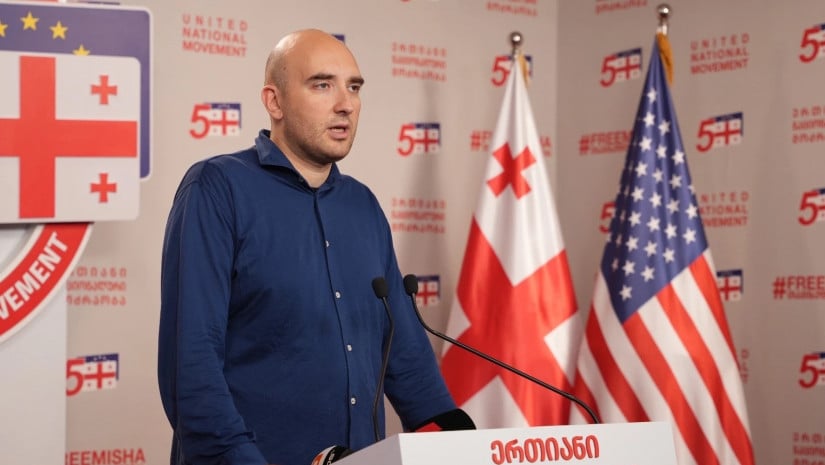
The United National Movement has begun gathering evidence related to alleged chemical exposure during last year’s protest dispersals, the party’s deputy secretary-general, Irakli Pavlenishvili, announced on Monday.
He said the party is calling on all citizens who experienced health complaints possibly linked to the alleged poisoning to contact them. Medical analysis of the collected information will be conducted by Dr. Levan Peradze.
“Our suspicions were strengthened by the BBC investigation, which showed that the regime used a substance banned under international law since 1930 during last year’s protest crackdowns. If [Colonel General Igor] Rodionov targeted and sacrificed Georgians on April 9, 1989, then last year [the ruling party founder Bidzina] Ivanishvili sacrificed his own people,” Pavlenishvili said.
He stressed that the issue concerns the health and safety of Georgian citizens.
“We are starting to collect evidence and call on everyone who had complaints connected to this poisoning to reach out to us, including via Facebook. Our medical team, led by Dr. Peradze, will review the cases and prepare a conclusion, which we will share with our international partners. With their support, we will launch an investigative process,” he said.
Pavlenishvili added that he hopes confirmation of the allegations will accelerate the imposition of sanctions, noting that “this incident, if verified, will not go unanswered”.
According to a BBC investigation, evidence suggests that Georgian authorities used a World War I–era chemical agent to disperse anti-Government demonstrations last year. The report cites testimonies from protesters who described symptoms such as shortness of breath, coughing and vomiting - some lasting for weeks - after being targeted by water cannons during pro-European rallies.
BBC journalists spoke with chemical weapons experts, informants from Georgia’s special police units and medical professionals, concluding that the evidence points to the use of a substance once known in French military documents as “camite”—bromobenzyl cyanide, originally developed during World War I.
Tags:
Irakli Pavlenishvili