Institute for the Study of War: Russian offensive stalls as forces lose 116 sq km in April

Author
Frontnews Georgia
Russia’s offensive operations in Ukraine showed negative momentum in April 2026, with occupying forces recording a net territorial loss rather than gains, according to the Institute for the Study of War.
ISW reported that Russian forces lost control of 116 square kilometres over the course of the month — the first such setback since August 2024, when Ukrainian forces launched operations in the Kursk region.
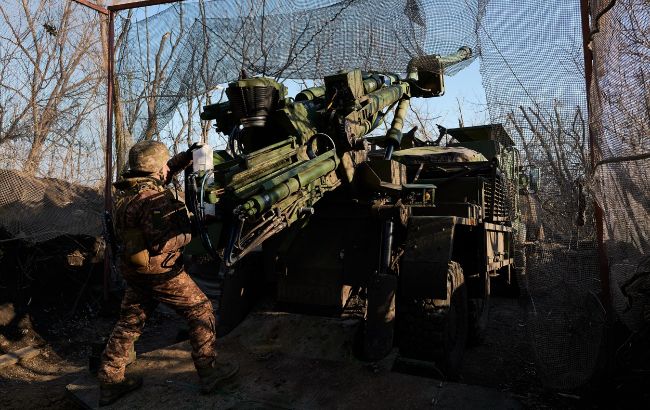
The report notes that Russia’s advance has been slowing since November 2025, while Ukrainian forces have conducted effective ground counteroffensives. Precision medium-range strikes have disrupted Russian logistics, forcing units to shift from offensive to defensive positions.
ISW analysts point to several key factors behind the deterioration in Russia’s battlefield performance.
Among them is the disruption of communications. In February 2026, access to Starlink terminals in occupied territories was widely blocked, while restrictions imposed by the Kremlin on the Telegram platform hindered coordination between units.
Logistical challenges have also intensified, with Ukrainian strikes on warehouses and headquarters exacerbating long-standing supply issues. Without stable communications, ISW notes, coordinating offensive operations has become difficult.
Weather conditions further compounded the difficulties. A harsher-than-usual winter, followed by snowmelt and heavy spring rains, turned terrain in eastern Ukraine into mud, significantly limiting the mobility of mechanised units.
While Russian forces have traditionally attempted to resume more active operations in May as ground conditions improve, analysts question whether sufficient resources remain to sustain renewed offensives.
ISW also suggests that the Kremlin is attempting to obscure the situation on the ground through the use of so-called “infiltration” tactics, whereby small units enter contested “grey zones” between Ukrainian positions. Although these areas are not fully controlled, they are often presented in official narratives as territorial gains.
Comparative data cited in the report shows that between November 2025 and April 2026, Russian forces captured 1,443 square kilometres — significantly less than the 2,368 square kilometres recorded during the same period a year earlier. The average rate of advance in 2026 stands at just 2.9 square kilometres per day, compared to 9.76 in 2025.
“Russian forces are attempting to create the illusion of continuous movement. In reality, their level of control over newly claimed territories is minimal,” ISW said, adding that many of the areas reported as captured remain contested.