The WHO called on countries across the European region to remove barriers to testing and treatment and build on the experience of successful programmes, including Georgia's, to achieve the goal of eliminating viral hepatitis as a public health threat by 2030

Author
Front News Georgia
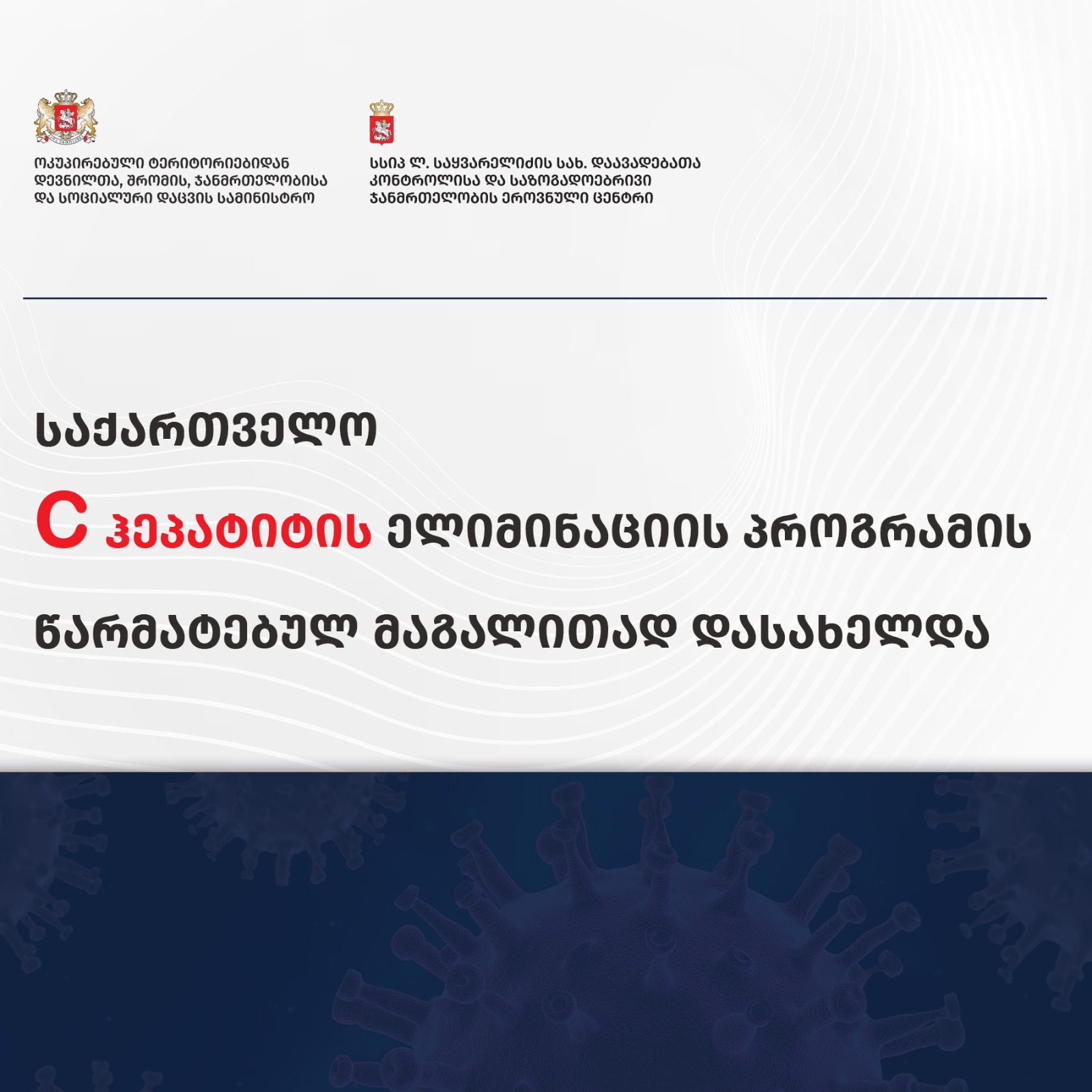
The World Health Organization's Regional Office for Europe has recognised Georgia's hepatitis C elimination programme as a successful model, highlighting the country's significant progress in reducing the burden of the disease in its Global Hepatitis Report 2026.
According to Georgia's Health Ministry, the WHO report and a separate article published by the organisation describe Georgia's experience as an example of how hepatitis C elimination can be achieved through sustained political commitment, large-scale testing and universal access to treatment.
"The hepatitis C elimination programme in Georgia has shown that elimination is not just an aspiration, it is achievable," Maia Tsereteli, head of the HIV/AIDS, Hepatitis, Sexually Transmitted Infections and Tuberculosis Division at the National Centre for Disease Control and Public Health (NCDC) and head of the WHO Collaborating Centre for Viral Hepatitis Elimination, said in a statement on Thursday.
"By expanding testing, ensuring access to treatment and working closely with communities, we have dramatically reduced the burden of hepatitis C. Our experience shows that every country can make progress when hepatitis becomes a national priority," she said.
The WHO called on countries across the European region to remove barriers to testing and treatment and build on the experience of successful programmes, including Georgia's, to achieve the goal of eliminating viral hepatitis as a public health threat by 2030.
Tags: