Georgia’s ruling party launches legal actions against BBC over ‘defamatory reports’
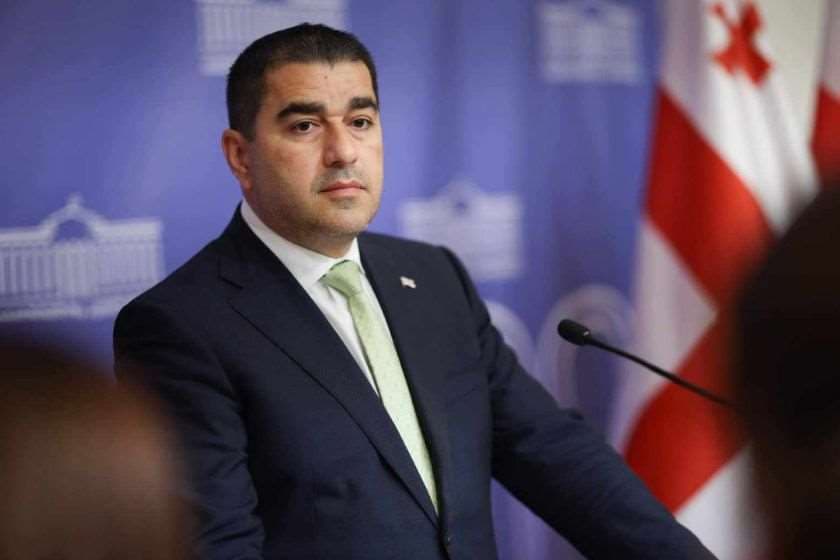
Papuashvili said the complaint was submitted on behalf of the ruling party on the same day the BBC aired and published materials alleging that Georgian authorities used a chemical agent during protests

Author
Front News Georgia
Georgia’s ruling party, Georgian Dream – Democratic Georgia, has filed a formal complaint with the BBC, accusing the British public broadcaster of publishing false and defamatory content over alleged use of a banned substance during anti-governmental protests last year, Parliament Speaker Shalva Papuashvili said at a briefing on Thursday.
The official claimed the complaint was submitted on behalf of the ruling party on the same day the BBC aired and published materials alleging that Georgian authorities used a chemical agent during protests.
“As previously announced, we formally addressed the BBC yesterday in response to its defamatory publications,” Papuashvili said.
Papuashvili referred to a BBC documentary and related publications released on December 1, 2025, which included claims that Georgian law enforcement authorities had allegedly used Cmite, a World War I-era chemical weapon, during protests.
“These accusations are false, unsubstantiated, and defamatory,” Papuashvili said, adding that domestic investigations confirmed the substance had never been used or possessed by Georgia’s Interior Ministry.
He argued that the nature, scale, and presentation of the allegations indicated a political campaign aimed at damaging the Georgian government’s reputation through a predetermined false narrative, rather than informing the public through balanced journalism.
According to Papuashvili, the claims were later amplified by foreign officials and domestic political actors, and used as a politically motivated tool against Georgian Dream.
Papuashvili said the complaint asserted that the BBC materials violated the broadcaster’s editorial standards, the UK communications regulator Ofcom’s Broadcasting Code, and fundamental principles of responsible journalism.
He outlined several key concerns:
Accuracy: The BBC presented as fact claims that Georgian police used a chemical agent, despite the absence of verified or independent sources.
Impartiality: The program allegedly promoted a one-sided narrative portraying the Georgian government as violent, pro-Russian, and aligned with Russian interests.
Right of Reply: Georgian authorities were contacted only days before broadcast, which Papuashvili said violated BBC rules requiring adequate time for response to serious allegations.
Fairness: Statements by individuals whose credibility, conflicts of interest, and background were not disclosed were presented as established facts.
He also rejected claims that Bidzina Ivanishvili, honorary chairman of Georgian Dream, was involved in decision-making related to the dispersal of protests in November–December 2024 sparked by delayed EU integration, calling the allegation unfounded.
The ruling party is requesting:
Removal of the documentary and related materials from all BBC platforms
A public and explicit apology from the BBC for:
Alleging the use of chemical agents without factual basis
Claiming unjustified use of force by police
Asserting alignment between Georgian Dream and Russian interests
Linking Bidzina Ivanishvili to protest dispersal decisions without evidence
Papuashvili said the complaint followed UK legal procedures, which require complainants to first address the media outlet directly.
“If the BBC does not correct the violations, the next step will be to apply to Ofcom,” he said. “Should the matter remain unresolved, we will pursue legal action in UK courts and reserve the right to appeal to the European Court of Human Rights.”
Papuashvili added that the Georgian government intended to use all available legal mechanisms to counter what he described as a coordinated campaign against the country.
Tags:
Shalva Papuashvili