I expect palace coup in Russia rather than popular uprising, expert Jejelava

Author
Frontnews Georgia
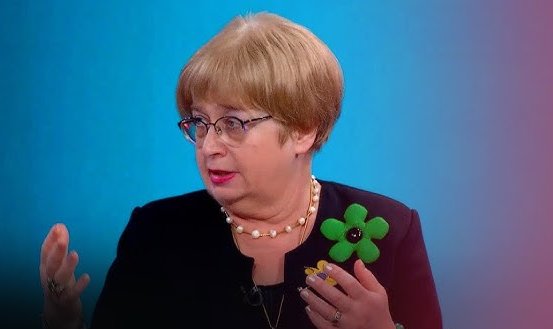
Russia's growing fuel crisis in major cities and the continued strikes against its energy infrastructure are creating increasing domestic political risks for the Kremlin. In an interview with Front News, international relations specialist Lela Jejelava argues that, rather than mass public unrest, Russia is more likely to experience a "palace coup," as the worsening economic crisis and the prospect of asset expropriation directly threaten the financial interests of the country's elites.
Jejelava argued Vladimir Putin is politically doomed under any scenario, while the eventual format of ending the war will largely depend on Ukraine's military strategy and Russia's internal financial and economic collapse.
Q: Long lines at gas stations and increasingly sharp criticism from citizens on social media are already becoming visible. How likely is it that fuel shortages could escalate into broader social protests in Russia's major cities or trigger panic buying of essential goods?
A: What we are seeing in Russia today is only the beginning. How events develop will largely depend on the 40-day special operation announced by President Zelenskyy, whose stated objective is to trigger public unrest inside Russia and thereby force Putin to end the war in Ukraine.
Everything depends on how this planned military operation unfolds. It will likely continue targeting Russia's military and energy infrastructure. Most probably, the focus will be on energy infrastructure, because its destruction has immediate and tangible consequences for the civilian population. The further course of events will largely depend on the effectiveness of these operations.
Only recently, General Ivashov's letter was published. He is the same general who, together with 70 other generals, released an open letter before the invasion of Ukraine, warning in detail about the consequences such a war would have for Russia. At that time, they argued that Russia lacked the capability to wage a large-scale war against Ukraine. Neither the Russian armed forces, in terms of combat readiness and military-industrial capacity, nor the Russian economy, were prepared for such a conflict.
Today, we can clearly see that the developments predicted by Ivashov and those 70 officers have become reality.
Russia's economy is suffering severe blows. In addition to Zelenskyy's military operations, Western sanctions imposed by both the European Union and the United States are significantly contributing to this pressure.
For some time, it appeared that President Donald Trump's policy represented Putin's last potential lifeline. Trump sought to end the war, while Ukraine's interests were not always given primary consideration, and Kyiv faced considerable pressure to agree to a settlement. However, we have seen how events unfolded. Putin has now lost that potential lifeline.
Q: Given these developments, how do you envision events unfolding inside Russia?
A: The most likely scenario, in my view, is that Russia's elite will begin seriously considering Putin's political future.
Increasingly, there is discussion about possible expropriation, particularly in the banking sector - that the state could potentially seize citizens' bank deposits. If Putin chooses to continue the war, the reality is that there is simply no money left, and he will have few alternatives. Naturally, this would fuel even greater public dissatisfaction.
Military elites, the military-industrial establishment, security agencies, representatives of the FSB, and, of course, the business elite have accumulated substantial wealth over the years. If expropriation becomes a reality, they risk losing those assets. Preserving their wealth will therefore become their primary concern.
Q: Speaking at the United Russia congress, Vladimir Putin described Ukraine's actions as "terrorist methods" and stated that Russia possesses sufficient strength to withstand any external pressure. Does this rhetoric reflect genuine confidence within the Kremlin, or is it primarily intended to reassure the domestic audience or intimidate the West?
A: These statements tell us more about the fact that Putin has exhausted his resources than about any rational basis for optimism.
Even Elvira Nabiullina, who has done an extraordinary job and is undoubtedly a highly capable economist, managed to keep Russia's economy functioning up to this point. However, it now appears that even she has largely lost influence over the ongoing processes.
It is impossible to ignore what we are hearing from various Russian government officials - particularly those responsible for economic policy - who openly acknowledge the existence of serious economic problems.
When oil production stops, restarting it requires enormous time, investment, and resources. That is an extremely costly process. We have already witnessed the destruction of oil refineries and related facilities deep inside Russia.
As a result, for the first time in this war, Russia is discussing the possibility of importing oil. Even Kremlin spokesman Dmitry Peskov acknowledged that negotiations are underway and that Russia may import oil if acceptable prices can be agreed upon.
But who would currently be willing to sell oil to Russia at favorable prices, especially when the United States is itself seeking greater control over Iranian oil supplies?
The developments we are witnessing provide no basis for optimism for the Russian leadership.
Officials within Russia's security services, including the FSB, understand very well how events could unfold. If they truly want to stop the war in Ukraine, they know that first they must stop Putin. Russia has historical experience with such outcomes - you wake up one morning, and the ruler is simply gone. In my opinion, that may ultimately prove to be the least painful solution.
Q: So you believe Putin is politically doomed regardless of what he does? If he agrees to end the war, he appears defeated. If he continues it, he risks dragging Russia into an even deeper crisis.
A: Yes. Putin is doomed under any scenario.
It is now extremely difficult to imagine a Russian victory. I see no realistic possibility that the course of the war could change in such a way that Russia achieves any meaningful or tangible victory.
If he ends the war under these circumstances, he is politically finished. If he refuses to do so and drags Russia into an even more severe crisis, he is equally finished.
Stopping Putin has now become an essential step toward stopping the war itself.
Q: Ahead of any future negotiations, what leverage do you believe President Zelenskyy currently holds? Which side now has the stronger incentive to negotiate and bring the war to an end?
A: Neither Russia nor Ukraine has unlimited capacity to continue this war. Therefore, ending it is also in Ukraine's interest.
Ukraine's objective is to end the war without allowing Russia to claim victory.
As for victory and defeat, those concepts will ultimately be relative. I doubt that everything will return to the 1991 borders. However, Zelenskyy's current strategic focus on southern Ukraine is, in my opinion, absolutely correct from a military standpoint.
As for the Luhansk and Donetsk regions, which are largely populated by Russian-speaking communities, the destruction there is so extensive that reconstruction may not even be feasible - at least not by Russia for a very long time.
For that reason, it is possible that the front line could temporarily stabilize there.
We will have to wait and see how events develop; at this stage, making precise predictions remains difficult.
Russia is not a homogeneous state. What happens in one region inevitably affects the entire country. The key question is how severely Moscow, St. Petersburg, and Yekaterinburg will be affected by the economic crisis.
It is difficult to predict when the population of these cities might become sufficiently discontented to launch mass protests.
Personally, however, I expect a palace coup in Russia rather than a popular uprising.
By Elza Paposhvili
Tags:
Lela Jejelava