Party ban campaign a political ‘game’ aimed at voters, not law, Constitutional expert Alapishvili

Author
Front News Georgia
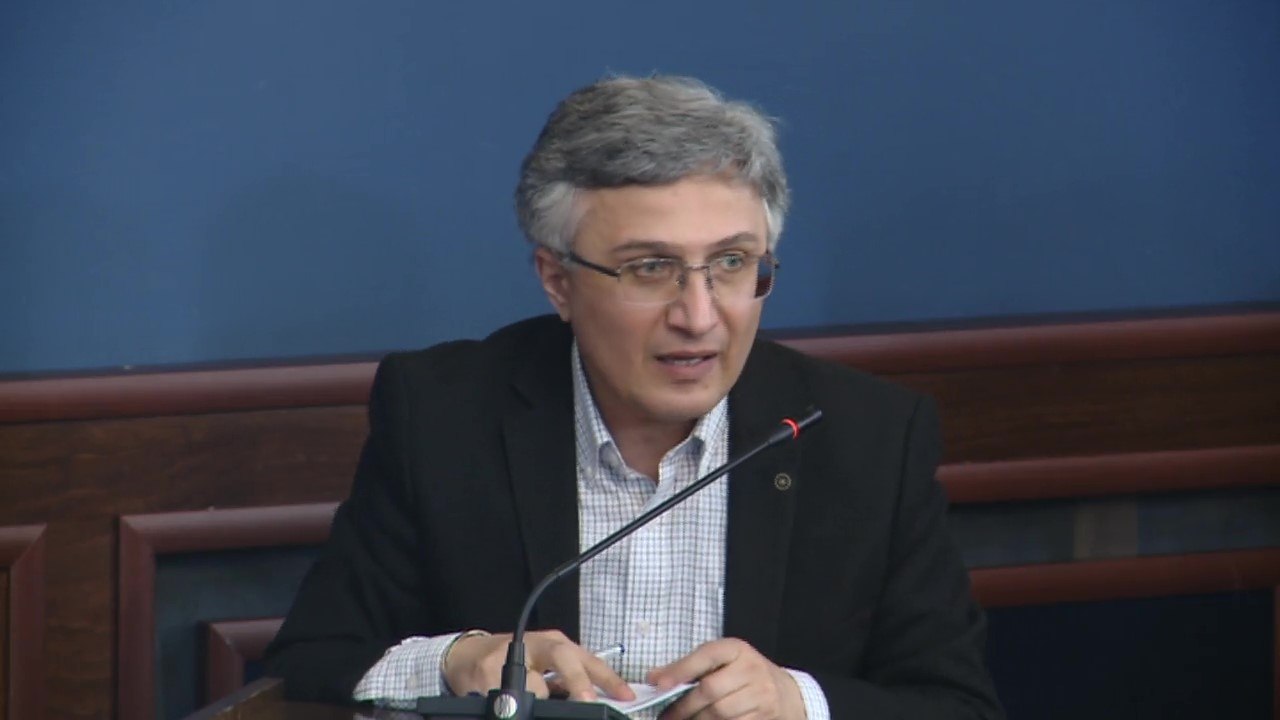
In an interview with Front News, Constitutional Expert Levan Alapishvili describes the ruling party’s recent legislative and personnel initiatives as a “political game” aimed not at achieving legal results, but at mobilizing its electorate and serving propaganda purposes.
Alapishvili claims the government’s actions reflect not strength, but “extreme weakness” and an attempt at revenge driven by past political defeats.
– The ruling party plans to file a new constitutional complaint with the Constitutional Court over the banning of political parties, adding the Federalists to the list. Why has the government made this decision, and will the issue of banning parties be postponed for another nine months?
– From a substantive standpoint, this decision is not significant to me. Procedurally, someone is trying to construct something, but the key issue is how this process will later be used politically.
Banning parties in this form is, by itself, unconstitutional and unenforceable. The right to form or join a political party is an individual right, protected by both the Constitution and international instruments.
Therefore, if a citizen’s right is not restricted, what prevents them from creating another party or joining a different one according to their ideology?
It is essential - especially for the authorities - to understand that in democratic states, a political party is a mechanism through which a group of people comes to power. Parties and elections are the foundation of democracy.
You can ban something today, and tomorrow a new party can be created again. No one can prevent individuals from engaging in political activity alongside like-minded people. Nor can anyone stop them from joining existing parties.
Furthermore, why is this unconstitutional? Because one group of citizens, currently in power, assumes the authority to draft laws based on its own views and to define criteria accordingly.
When a ruling force - already constitutionally strong because it has won elections - makes such decisions, it demonstrates its extreme weakness.
– The authorities likely understand this as well, which is why they are stretching the process over time. So what is the logic behind their actions? Is it about reassuring their electorate and creating the illusion of fulfilling electoral promises?
– Exactly. What I am describing is precisely the situation.
For a long time, especially during the 2024 elections, their main slogan was the prosecution of [ex-President] Mikheil Saakashvili. Their own supporters - the so-called “old guard” - are now asking: where is the key promise about banning the United National Movement?
This promise remains important for a certain group of people, and the ruling party must respond to them.
Accordingly, they first passed a law, then filed a complaint, then withdrew it and added another party. Later, they will split the cases and file complaints against each party separately. Who is stopping them? No one.
Then they will recombine them again - playing this game to pacify their electorate.
I am convinced that even within the ruling political force there are individuals who understand that this process will not yield any legal result.
– The ruling party is also proposing another amendment to the Law on Grants. According to the draft, funds issued by accredited diplomatic missions, consular offices, and international organizations will not be considered grants if they serve activities linked to the political or public interests of foreign governments or political parties. How do you interpret this change?
– I think this is simply a demonstration: “we have power, so we can flex our muscles.”
This so-called second wave of the transparency law followed a very painful political defeat for the ruling party. We remember March 9, when the law was first adopted and then forced to be withdrawn by society itself.
Mamuka Mdinaradze [the former MP and the head of the State Security Service] initially publicly opposed it, and later that same evening, under public pressure, voted against it, leading to its collapse.
This defeat has been deeply felt by the authorities, and what we are seeing now is a form of retaliation.
They are trying to do certain things selectively. Let me give an example of what the ruling party does not dare to do fully:
Are the Cartu Foundation [founded by ruling party honorary chair Bidzina Ivanishvili] or the UTA Association [Uta Ivanishvili, son of Bidzina Ivanishvili] registered under this law? Are their employees labeled as agents? If they truly believe in this framework, let them apply it consistently - these entities are also financed from foreign sources.
What about the Patriarchate’s television or organizations funded by donations—are they agents? Let them register them and demand transparency.
But they cannot do this. The situation has reached a point where laws remain on paper and are not effectively applied in reality.
What has actually changed after these laws were passed, apart from making life more difficult? Does the Young Lawyers’ Association no longer exist? Clearly not.
– The legal dispute between the ruling party and the BBC is entering a new phase. The ruling party is preparing a third complaint over a late-2025 investigative report that raised political tensions in Tbilisi and caused an international scandal. Is there any real chance the government could win this case? What is the logic behind their actions here?
– Once again, the main answer is that the ruling party is acting to convince its own electorate of something.
The state has all the resources needed to determine that this dispute is legally hopeless. Anyone familiar with investigative journalism and verification standards understands that the ruling party cannot win a legal case over this documentary.
This has already reached the international level. No democratic Western media organization releases content without rigorous filtering. Media standards exist, and legal risks are carefully managed.
– The government says it plans to take the case to Strasbourg. Is there any chance of success there?
– If they are confident, why delay? Why not take it directly? Why waste time?
Why didn’t they challenge it in court initially? Why go through internal boards instead? UK law provides such mechanisms.
During the time they had for appeal, they could have taken it to court and been fully prepared for Strasbourg.
Instead, they are deliberately prolonging the process and using it for propaganda.
– On April 21, the Prime Minister announced new cabinet changes - Interior Minister Geka Geladze as head of the State Security Service, Sulkhan Tamazashvili as Minister of Internal Affairs, and [former State Security chief Mamuka] Mdinaradze as Vice Prime Minister. The government suggested Mdinaradze would coordinate security agencies. What functions might he actually have, and how do you interpret this explanation?
– Frankly, similar practices existed under previous governments as well. When they did not want to remove someone entirely, they would “promote” them instead.
Under a constitutional parliamentary system, no single ministry can supervise others. Constitutionally, executive power in Georgia is exercised by the government as a whole.
The Prime Minister and the cabinet are responsible for both domestic and foreign policy, while Parliament oversees their activities. This is the governance model.
The functions of these institutions are clearly defined by law. No separate ministry or minister without portfolio can replace or override others.
This may simply be an attempt to keep Mdinaradze in politics - retaining the title, but without real function.
By Elza Paposhvili
Tags:
Levan Alapishvili