Georgian president links environmental policy to ‘economic stability’ at Astana summit
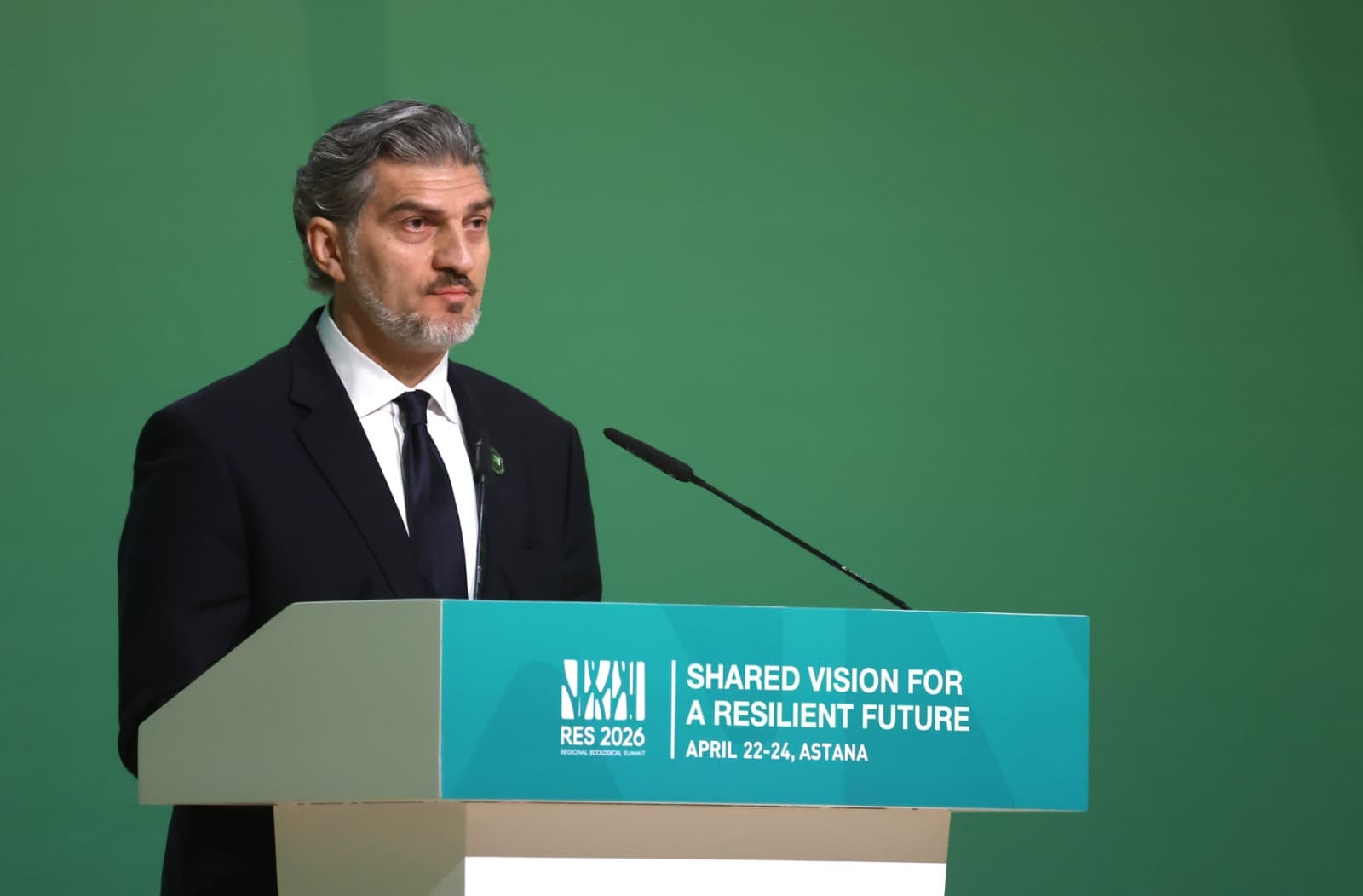
Kavelashvili also stressed the growing strategic importance of the South Caucasus as a hub for connectivity and cooperation

Author
Front News Georgia
President Mikheil Kavelashvili has said that environmental protection was no longer confined to political debate but was now directly shaping economic performance and everyday life, in remarks delivered at a regional ecological summit in Astana.
Addressing the plenary session, Kavelashvili thanked the government of Kazakhstan and its president, Kassym-Jomart Tokayev, for hosting what he described as a significant international gathering.
He told delegates that challenges such as climate change, water security, biodiversity loss and pollution were increasingly interconnected, posing risks to both social resilience and economic stability.
“Today, environmental protection is no longer just a topic of political discussion, but one that affects our economies, societies and the daily lives of our citizens,” he said.
The Georgian president outlined his country’s policy approach, centred on strengthening environmental governance, advancing climate policy and promoting green and inclusive economic growth. He said these priorities, he claimed, embedded in Georgia’s national strategic documents and reflected a commitment to sustainable development principles.
Kavelashvili noted that over the past decade Georgia had expanded its protected areas to more than 13% of its territory, with protected ecosystems covering around 23%. He added that the government aimed to increase this figure to 30% by 2035, in line with international targets.
He also highlighted efforts to transition towards a circular and resource-efficient economy, including restrictions introduced in January 2026 on certain single-use plastic products.
Reforms in water resource management were identified as another priority, with investments aimed at improving access to safe drinking water and enhancing wastewater treatment capacity to better protect rivers and ecosystems.
Agriculture and rural development, he said, remained central to the country’s sustainable development agenda, with plans to modernise irrigation systems and introduce climate-resilient practices and innovative technologies.
Kavelashvili also stressed the growing strategic importance of the South Caucasus as a hub for connectivity and cooperation. He said Georgia aimed to strengthen its role as a stable and predictable partner linking regions, markets and cultures.
He added that sustainable development was a core priority of state policy and that the United Nations Sustainable Development Goals form an integral part of Georgia’s long-term development vision. Georgia, he noted, was among the first countries to present a voluntary national review at the UN’s High-Level Political Forum, demonstrating its commitment to the 2030 Agenda.
He concluded by underlining the importance of peace and stability for economic growth, saying Georgia will continue to support dialogue and cooperation in what he described as an increasingly unstable global environment.
Tags: