Georgia’s Health Minister questions effectiveness of exon-skipping drugs
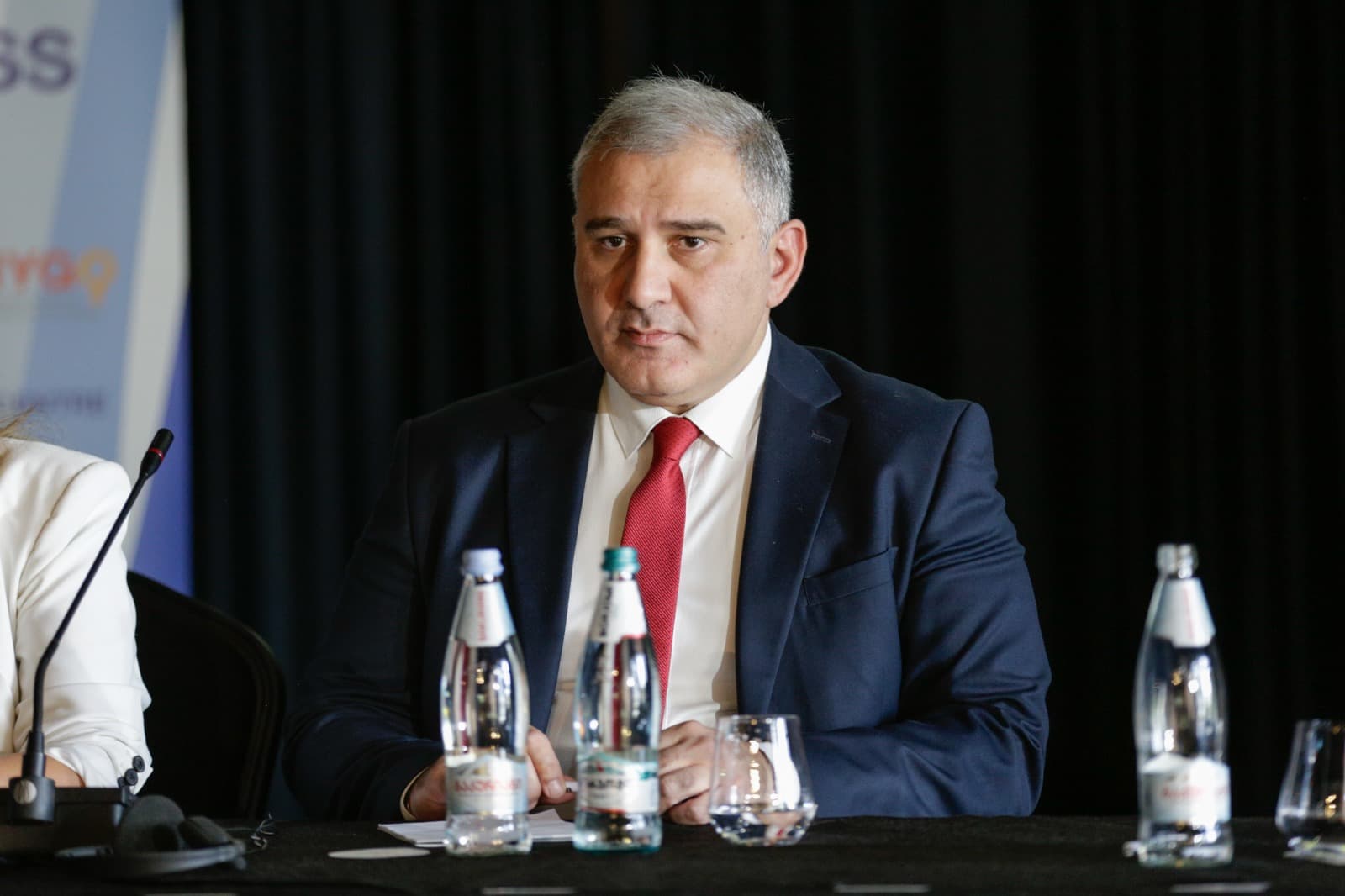
Sarjveladze also referred to another drug, Ataluren, whose conditional approval in Europe was not renewed

Author
Front News Georgia
Georgia’s Health Minister Mikheil Sarjveladze has said that none of the exon-skipping medicines have been authorised by the European Medicines Agency, with the exception of one drug whose approval was later withdrawn.
He noted that the decision dates back to 2018, and that no applications for authorisation of similar treatments have been submitted since. He claimed the main reason is a lack of sufficient evidence demonstrating the drugs’ effectiveness.
“Research did not confirm its effectiveness compared to a placebo,” he said, explaining that outcomes were the same for patients receiving the treatment and those given a placebo. “This is, naturally, a significant factor.”
Sarjveladze added that in some cases such medications can cost up to one million dollars, making regulatory decisions particularly sensitive and unlikely to be taken without strong supporting evidence.
He also pointed out that while the US Food and Drug Administration has granted accelerated approval to some of these drugs, it has required manufacturers to continue studies, including research involving animals and humans.
“These medicines do not have authorisation from the European regulator, but they have been granted accelerated approval by the FDA,” he said. “This accelerated pathway means further research must follow, including studies on animals and humans, to determine safety, effectiveness, how the drug works, and what protective measures may be required.”
He described this as a “conservative approach”, noting that it reflected the position of the European regulator and most European countries, which treat the issue with caution.
“If these questions are answered with appropriate scientific evidence, the process will move forward quickly, as no one has time to lose,” he said. “These are entirely legitimate and logical questions that require answers. We are seeking those answers, and I sincerely hope they will emerge soon, so that we can know there is a medicine capable of delivering safe benefits to those who need it.”
However, he stressed that “no matter how strong the desire, it is not sufficient on its own to justify a decision.”
Sarjveladze also referred to another drug, Ataluren, whose conditional approval in Europe was not renewed.
He said the European Medicines Agency decided on 28 March 2025 not to extend its conditional authorisation. The drug had previously been approved, but after 11 years the authorisation was not prolonged.
“This means that the studies conducted did not demonstrate sufficient results, and it was no longer considered necessary either to extend the authorisation or to grant standard approval,” he said.
Tags:
Mikheil Sarjveladze