Georgian health minister highlights healthcare reforms at World Health Assembly
Sarjveladze additionally discussed Georgia’s ongoing primary healthcare reform, which he said was focused on prevention, high-quality services and patient-centred care

Author
Front News Georgia
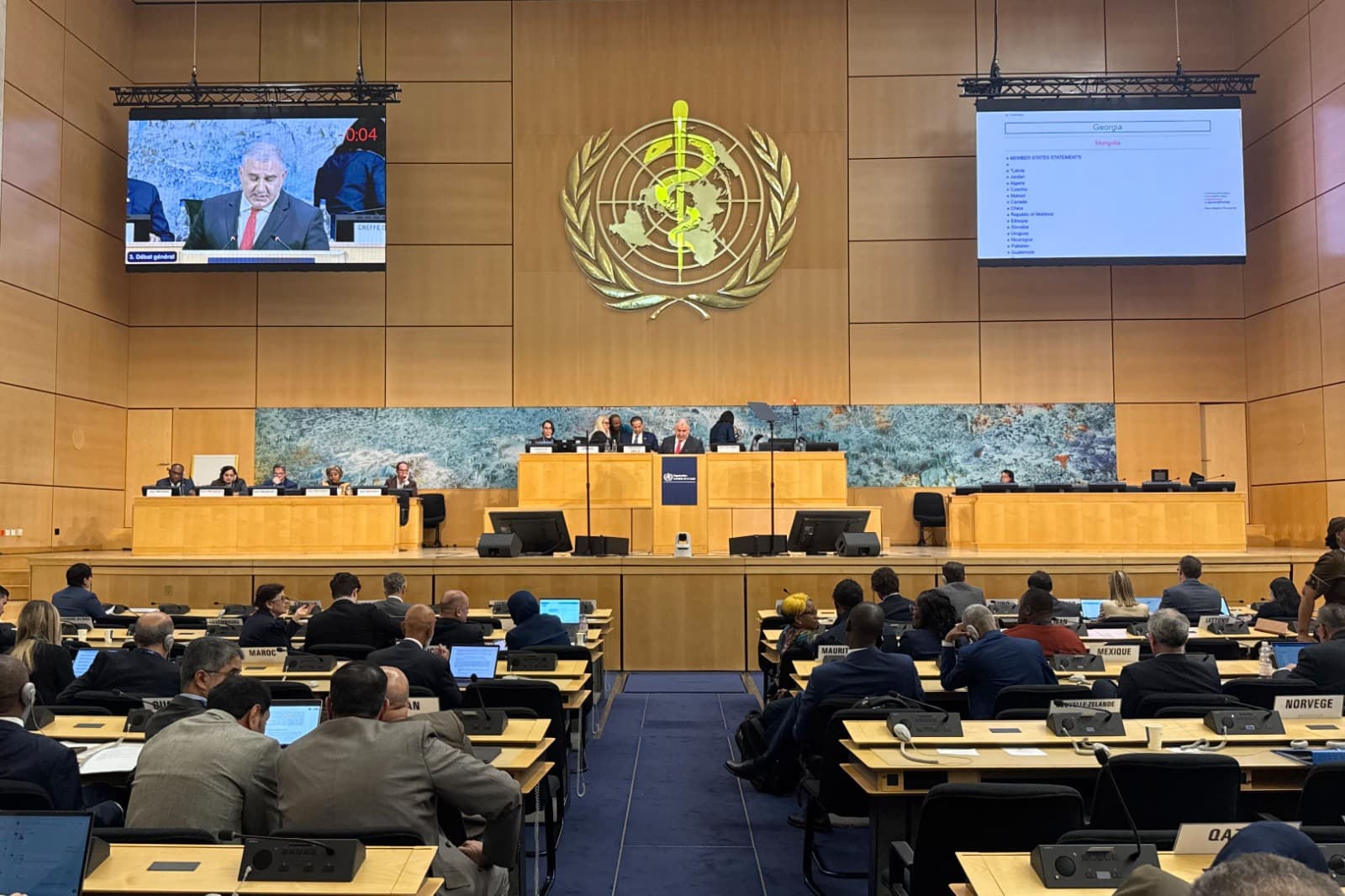
Georgian Health Minister Mikheil Sarjveladze has presented Georgia’s healthcare reforms during the general debate of the 79th session of the World Health Assembly, highlighting “expanded access” to state-funded medical services and pharmaceutical reforms.
Sarjveladze said more than 95% of Georgia’s population now has access to state-funded healthcare services following the introduction of the country’s universal healthcare programme, his press office said.
“Over the past decade, we have continued strengthening the healthcare system through reforms aimed at improving accessibility, quality and financial protection for the population,” the minister said.
Sarjveladze stated that access to essential medical services had significantly expanded, while out-of-pocket healthcare spending by citizens had decreased.
He also pointed to pharmaceutical reforms introduced in recent years, including reference pricing and managed entry agreement mechanisms, which he said had improved access to medicines.
According to the minister, the reforms also allowed the government to abolish annual spending caps on medications for oncology and chronic disease treatment under state healthcare programmes.
Sarjveladze additionally discussed Georgia’s ongoing primary healthcare reform, which he said was focused on prevention, high-quality services and patient-centred care.
The reform includes new financing mechanisms, digital transformation initiatives and the introduction of quality standards and results-based approaches, he added.
The Georgian delegation attending the assembly also includes Zaza Lominadze, Health Ministry Strategic Development and Analytics Department head Lela Sulaberidze and Georgia’s permanent representative to the United Nations Office in Geneva Aleksandre Maisuradze.
Tags: