Analyst Mirianashvili: Iran ready to agree to almost everything, but wants to avoid losing face

Author
Frontnews Georgia
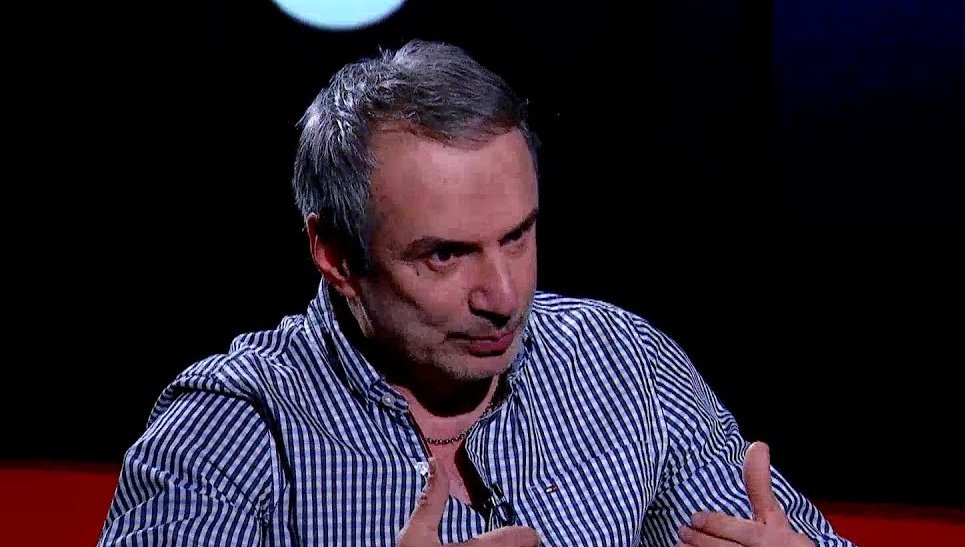
In an interview with Front News, analyst Mirian Mirianashvili assesses the critical phase of US–Iran relations and the behind-the-scenes barriers that have complicated talks between Donald Trump’s special envoy Steve Witkoff and Iranian Foreign Minister Abbas Araghchi. He discusses Tehran’s effort to preserve “face” amid what he describes as de facto capitulation, why Washington rejects undocumented conditions, the role of Israel in US decision-making, possible reasons for recent US State Department visits to Georgia, and the ethnic and elite dynamics behind internal instability in Iran.
Q. According to Axios, talks between Witkoff and Araghchi collapsed, reportedly over Tehran’s request to hold them in Oman rather than Turkey. Why did the venue become such a decisive obstacle?
A. Iran is ready to agree to almost everything, but it wants to do so without losing face and without public exposure. The Americans are not opposed to Oman as a location. However, the Iranians presented Witkoff with a condition: Iran is prepared to renounce nuclear weapons, but there is a second, unofficial version of the deal to be conveyed to Trump. In essence, Tehran would accept Trump’s proposals, but quietly.
The Iranian leadership believes that openly declaring total capitulation would put it in a very weak domestic position, potentially reigniting protests that would be difficult to contain. From the American point of view, however, assuming behind-the-scenes responsibility for issues publicly denied by the other side would be extremely hard to monitor.
One thing is when Iran states commitments publicly and control mechanisms are written into an agreement. Another is undocumented arrangements. This is precisely what the dispute is about. Such terms are also unacceptable to Israel.
Q. Does this mean Iran no longer trusts Turkey as a mediator, or was this a deliberate move by Tehran to derail the process after Trump announced the redeployment of major naval assets?
A. Iran never truly trusted Turkey in the first place. The core issue is not the venue itself but the “second version” of the deal. Iran is ready to give up nuclear weapons, but not to openly concede on other elements. It would quietly step back from Hezbollah and aspects of its missile programme in order to preserve the regime’s image.
Q. President Trump said Iran’s Supreme Leader Ayatollah Ali Khamenei “should be worried”. Does this rhetoric suggest Washington is shifting towards regime change, or is it another attempt to force Iran back to the negotiating table?
A. In Georgia, the US–Iran confrontation is often viewed only through the prism of their bilateral positioning. That approach is misleading, because in parallel Trump is negotiating with the Israelis.
Israel, in turn, is expected to take on certain responsibilities towards Trump, including in the sphere of media and information influence. With local elections approaching in the US, support from the Jewish community is very important for him. As a result, he must take Israel’s positions into account. Israeli leaders are demanding a very tough line on Iran. Many of these internal dynamics are not well understood in Georgia.
Q. In recent days, senior US State Department officials visited Tbilisi. Could this be linked to the Iran crisis and a final check of positions ahead of a possible military confrontation?
A. That is one possible interpretation. If there is a risk of war and no agreement is reached, Russia may adopt a more openly pro-Iran, anti-American stance. It appears the Georgians are being asked not to echo such rhetoric. When the US enters a conflict, it matters greatly who supports it and who does not. I think the Georgian authorities have received this message.
Q. If a direct military conflict breaks out between the US and Iran, does Georgia have the capacity to remain neutral, especially if Washington requests logistical support or access to airspace?
A. The US does not traditionally attack Iran from the north. That would require major infrastructure that does not exist in the South Caucasus. The United States has significant bases elsewhere in the wider region, such as in Qatar and Turkey. From this perspective, Georgia faces no direct military risk and air logistics through this region are unlikely to be relevant.
Q. What about refugee flows? Could Georgia become vulnerable in that respect?
A. Iran’s geopolitical and demographic realities are very different from how they are often imagined here. If Iran were attacked, most refugee flows would head towards Iraq. Large-scale movement northwards through Azerbaijan towards the Caucasus is unlikely to be significant. For truly massive flows to occur, the US would have to conduct bombing on a scale comparable to Vietnam, levelling cities, which is highly improbable. The US tends to see urban populations as potential natural allies against the regime. So this scenario is largely unrealistic.
Q. If Washington does not receive the response it wants from Tehran, do you expect protest momentum inside Iran to rise again? How do you interpret recent developments in Iranian cities?
A. The anatomy of protests in Iran is often misinterpreted from Georgia. Many assume it is simply angry citizens taking to the streets. Iran is a vertically structured society where grassroots initiative does not operate as it does in European societies.
Recent protests reflected tensions between central authorities and regional elites. After a recent period of conflict, Iranian elites developed the impression that the US might be seeking regime change. Regions such as Khuzestan, Khorasan, Mazandaran and Baluchistan came to the fore. Much of the activism was supported or directed by local elites.
If these elites perceive real US backing for separatist tendencies, unrest could grow. They are trying to understand what kind of Iran the US ultimately wants.
Q. Do you think this is why the US has paused on Iran - because Washington itself has not yet decided what it wants?
A. Exactly. As long as the US has not fully decided which model of governance it considers acceptable in Iran, there will be pauses. If the Americans move to active steps, it will mean a decision has been made about which version of Iran’s political future they are prepared to accept.
Tags:
Mirian Mirianashvili