Gov’t: procurement reforms saved 67m lari in 2025, central purchasing body to launch in 2026
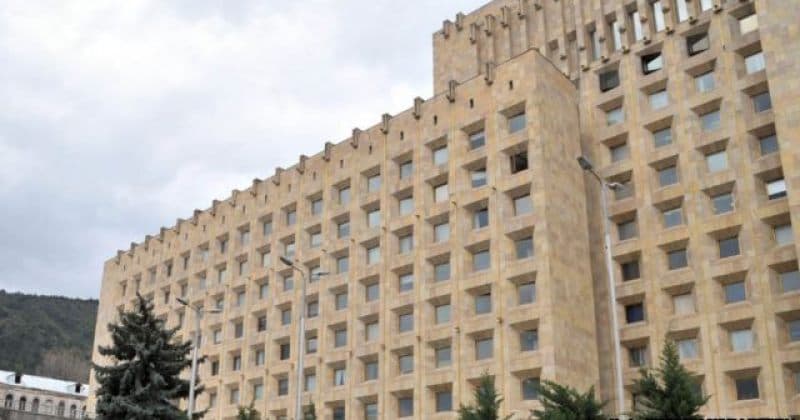
The report noted that routine monitoring of planned and ongoing procurements helped identify potential shortcomings at an early stage

Author
Front News Georgia
Georgia’s Government Efficiency Department on Thursday said its work in 2025 resulted in “significant savings” for the state budget, largely through tighter oversight of public procurement and a series of structural reforms aimed at improving transparency and competition.
According to the department’s 2025 activity report, state programmes and procurement projects worth 114.86 million lari were reviewed during the year. As a result of the department’s involvement, 67.41 million lari was saved for the benefit of the state budget, within the scope of its legally mandated authority.
The report said the department examined the budgets of projects initiated by state institutions, assessed their necessity and compliance, carried out critical analysis, evaluated risks and issued recommendations.
A substantial share of the savings was linked to public procurement management. The State Procurement and Market Research Department reviewed 328 requests submitted by various purchasing organisations, with a combined estimated procurement value of 558.98 million lari. Direct savings resulting from these reviews amounted to 14.49 million lari, the report says.
In addition, the department provided procurement-related consultations to state purchasing organisations, generating a further 5.3 million lari in savings for the state budget.
The report noted that routine monitoring of planned and ongoing procurements helped identify potential shortcomings at an early stage, enabling preventive measures and recommendations. Officials said this approach contributed to creating a more competitive environment, increasing participation in public tenders and strengthening transparency.
The report also confirms that, following a government decision and with the involvement of the Government Efficiency Department, a central purchasing body has been established. From 2026, the new institution will independently handle the procurement of certain goods and services for the state.
Under its mandate, the central purchasing body will also monitor contracts signed through centralised procurement mechanisms.
The estimated annual value of goods and services to be procured through the new body is around 2 billion lari. It will be staffed by “highly qualified specialists” and will conduct procurements through consolidated tenders, as well as provide centralised procurement services at the request of individual state institutions.
The report noted that the creation of the central purchasing body was under Georgia’s Law on Public Procurement, adopted as part of the country’s obligations under its Association Agreement with the European Union.
The department also highlighted the introduction of a new electronic market research module (MRS) within the unified electronic procurement system.
According to the report, the module significantly reduces the risk of bias or preferential treatment of specific suppliers. Notifications on the launch of market research are automatically sent to registered users based on classification codes, while the same information is also available to users accessing the system as guests.
Interested parties can submit questions related to procurement objects and receive responses, while information submitted through the module becomes available to the purchasing organisation at a predetermined time. Although the submitted data is not public, it is used to plan and carry out subsequent procurement procedures.
Officials said the module applies to electronic, simplified and special-rule procurements, as well as certain procurements conducted under legal exemptions.
The report described the MRS as an innovative product with no direct equivalent in the procurement systems of either EU member states or candidate countries. Information on procurements carried out by 4,751 registered state purchasing organisations is automatically distributed to 59,475 registered economic operators, increasing awareness and participation.
The department also reported significant changes to the criteria for inclusion in the so-called “white list” of approved suppliers, following close cooperation with the Ministry of Infrastructure and the State Procurement Agency.
Officials said the criteria were tightened after cases in which suppliers failed to fulfil contractual obligations, resulting in inefficient use of public funds and financial losses for purchasing organisations.
Under the revised rules, requirements related to completed projects and submitted recommendations have been strengthened. Over the next three years, the volume of required bank guarantees will gradually increase, and in 2029 the white list is scheduled to be fully abolished.
The department said the changes are intended to ensure the targeted use of public funds and encourage suppliers to meet their obligations properly, while continuing to benefit from existing incentives during the transition period.
Tags: