Military Analyst Konjaria: daily strikes give Ukraine advantage, ballistic missiles could enter service by year-end
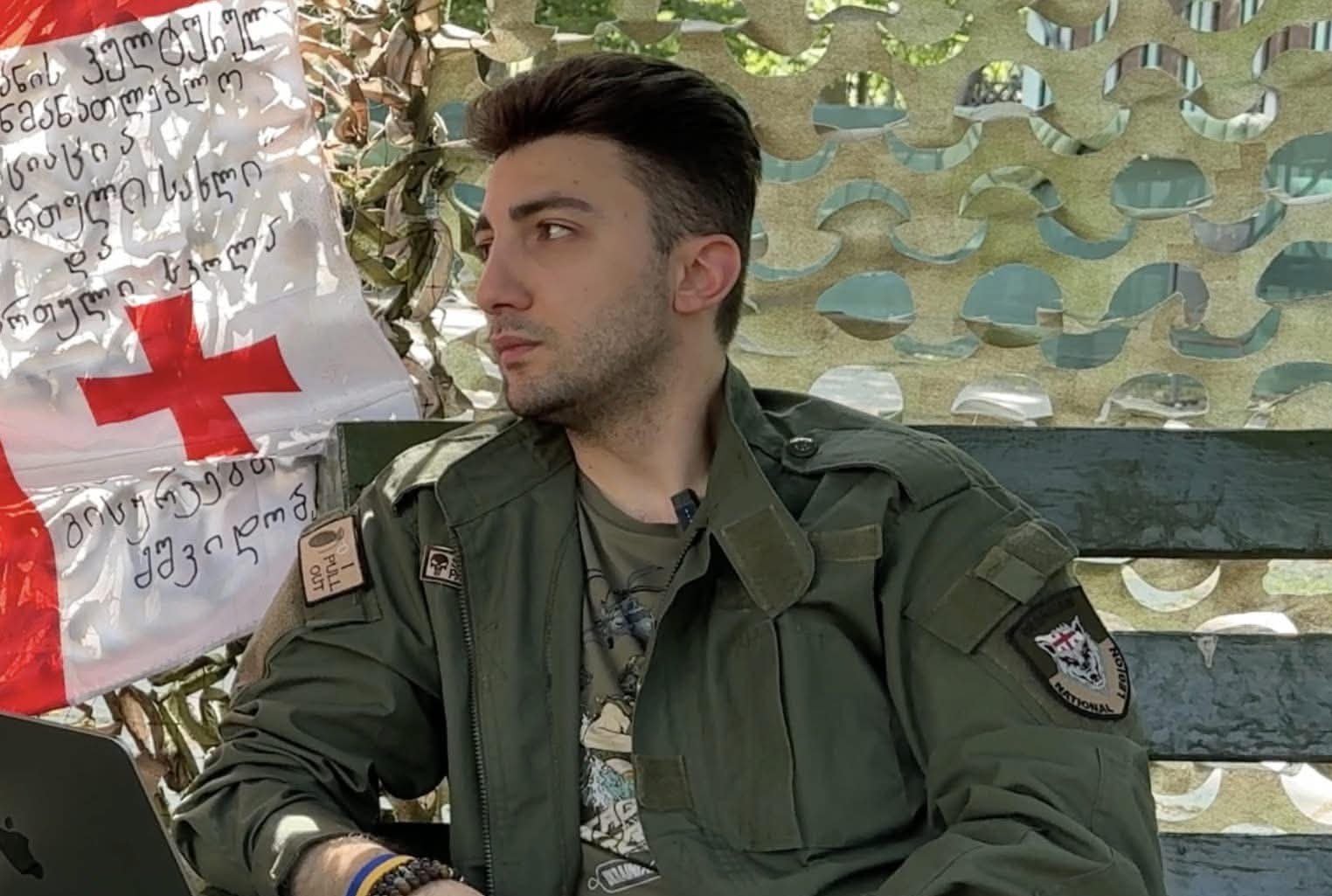

Author
Frontnews Georgia
The record-breaking air strikes carried out by Ukraine against Russia’s military and economic infrastructure are already having a visible impact on the frontline and the geopolitical balance. In an interview with Front News, military analyst Oto Konjaria provides a detailed assessment of the technological leap made by Ukraine’s military-industrial complex, the effectiveness of Starlink-guided long-range drones and the strategic advantages Kyiv is gaining amid the Trump administration’s efforts and potential peace negotiations.
According to the analyst, despite the difficult situation on the Donbas front, Ukraine’s strategy of bringing the war onto the aggressor’s territory is pushing the Kremlin toward an inevitable new mobilisation campaign and a potential domestic crisis.
Q. On June 18, Ukraine launched a record attack involving more than 1,000 drones against Moscow and other Russian regions, resulting in the shutdown of the Kapotnya oil refinery. From a military-tactical perspective, how would you assess the coordinated use of such a large number of drones in a single operation? What kind of logistical and technological breakthrough are we witnessing?
A. In general, Ukraine’s operations over the past year have been unique because the oil industry is one of the key sources funding this war. Therefore, the oil refineries and oil-processing facilities targeted by Ukraine are strategic objectives. The revenue generated from these resources finances Putin’s aggressive and unprovoked military campaign.
As for this specific attack, although Ukraine managed to penetrate Moscow’s three-layered air defence system, I would not say that this particular strike represents a major turning point. However, when viewed as part of a broader pattern of intensive, daily attacks, it certainly gives Ukraine a significant advantage.
Regarding the technological breakthrough, this is not information available through open sources. We do not know exactly what upgrades are being implemented within Ukraine’s defence industry modernisation programmes. However, I assume that improvements have been made to targeting systems. These drones are also equipped with electronic warfare countermeasures and self-protection systems designed to prevent enemy interference with their signals.
There is also discussion that Ukraine’s military-industrial complex has significantly refined both the pace and scale of production. At present, this capability remains out of Russia’s reach. No matter how extensively Russia bombs Ukraine, the tragic reality is that civilians continue to bear the brunt of those attacks. In fact, Russia would probably benefit more if it were able to destroy Ukraine’s military-industrial facilities, but it has failed to do so.
Q. Kyiv emphasises that these long-range weapons are 100 per cent Ukrainian-made. To what extent has Ukraine modernised its military industry enough to surpass Russia in this area and how independent is this process from Western financial and technological assistance?
A. Saying Ukraine has surpassed Russia overall would be an exaggeration if we compare the two military-industrial complexes in their entirety. However, in this particular area - drone production - we can openly say that Ukraine’s advantage is evident. When Ukrainians use medium and long-range drones in occupied territories or deep inside Russia, they achieve highly successful results.
Russia suffers considerable damage because Ukrainians use Starlink terminals on these drones. The terminals are installed inside the drones, allowing operators to monitor the aircraft’s movement in real time and guide it precisely to targets that inflict substantial damage on Russia’s military and economic infrastructure.
As for the claim that these drones are entirely Ukrainian, European partners also make significant contributions by financing Ukraine and supplying components. This support enables Ukraine to further increase production capacity. Currently, around 500 long-range drones - with ranges of 1,200 to 2,000 kilometres - are being produced daily. By the end of the year, ballistic missiles will probably enter service as well and they will also be a joint Ukrainian-European product, which could have even more serious consequences for Russia.
Q. Disabling strategic facilities such as the Kapotnya refinery directly affects fuel supplies and prices inside Russia. In your view, how quickly could this type of “economic sabotage” impact the logistics of Russia’s military machine on the front line?
A. Despite the public enthusiasm surrounding Ukraine’s strikes deep inside Russia, the situation on the front line is not quite as optimistic. Ukrainian forces have managed to stop Russian advances across nearly all sectors of the front.
In the Zaporizhzhia direction, near the settlement of Stepnohirsk, Russian forces had established a bridgehead from which they planned to launch an offensive toward the city of Zaporizhzhia. That threat has now been eliminated. Ukrainian troops pushed the assault force back by about 20 kilometres and destroyed much of its manpower.
A similar situation exists in certain sectors of northern Kharkiv and Sumy regions, where Russian offensives have either been halted or pushed back.
The most consistently difficult situation remains on the Donbas front, particularly in the direction of Kostiantynivka. This area forms part of the Kramatorsk-Sloviansk agglomeration, one of the key bastions where Ukraine has built strong defensive fortifications over the past several years.
My point is that Ukrainians cannot remain permanently on the defensive. If Putin manages to capture this region within a year, despite the enormous losses, he will try to present it as a success. He will portray it as achieving the strategic objective of “liberating” Russians living in Donbas. However, I believe Ukraine may be preparing substantial reserves for a breakthrough somewhere. If not this summer, then perhaps next year, we are likely to see a Ukrainian counteroffensive.
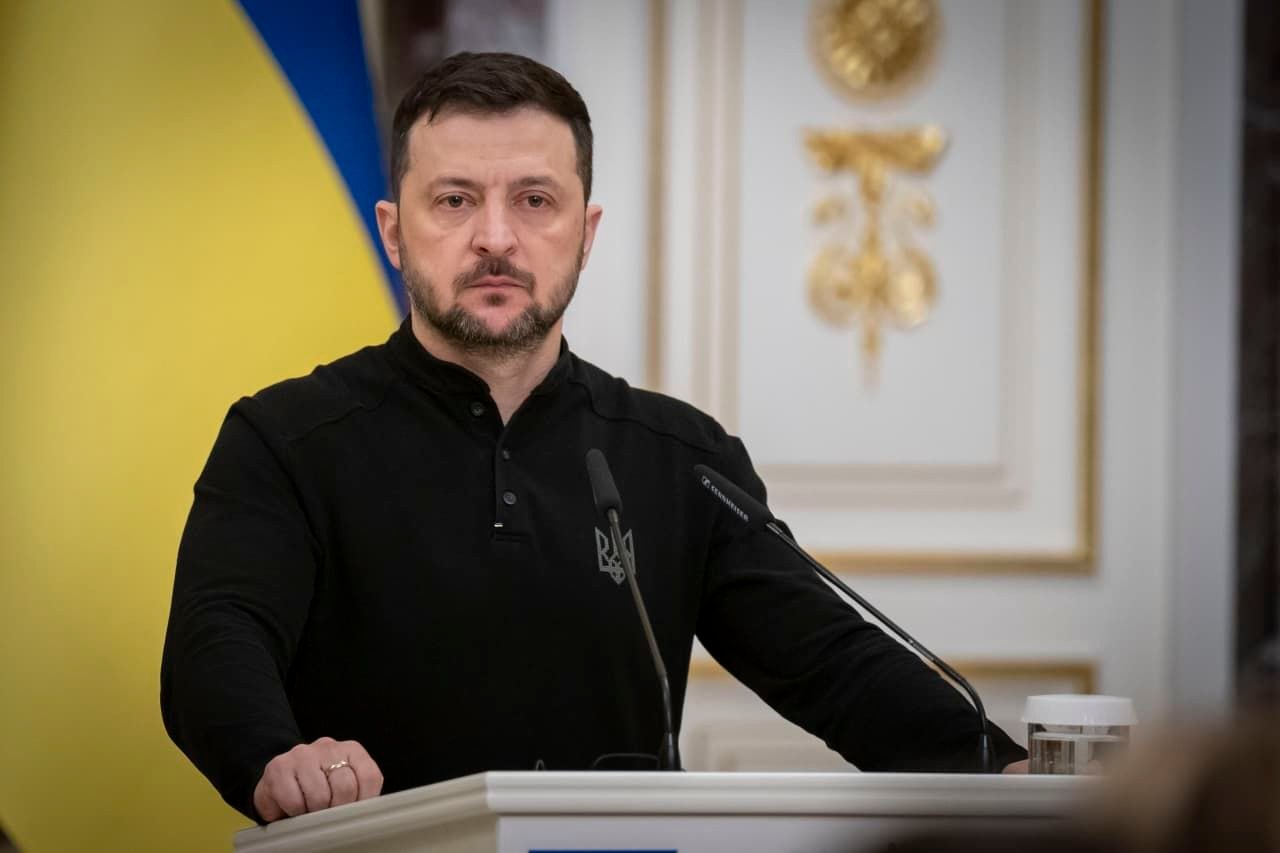
Q. President Zelenskyy openly stated that the strikes on Moscow were a response to the destruction of the Kyiv Pechersk Lavra. In your assessment, how does this strategy of “symmetrical response” affect the balance of power and what advantages does it give Kyiv at a potential negotiating table, especially amid renewed activity by the Trump administration? What leverage does this provide Zelenskyy, considering Trump once told him he had no cards to play?
A. Trump’s statement that Zelenskyy had no cards to play was ridiculous. Today, it is even harder to make such a claim. Trump himself and his administration now acknowledge that Ukraine and its armed forces represent one of the most capable and battle-tested military forces in the world.
Both Marco Rubio and Pete Hegseth have openly stated that Ukraine’s armed forces are currently the number one force in terms of experience with drones and their use in warfare. Europeans are learning from this experience and they have also requested that Ukraine share its expertise. This concerns not only military operations but also military-technological engineering.
As for Ukraine’s leverage, its strongest card is the determination of its people to continue fighting. There remains strong public support for resistance. Although people are exhausted and many have suffered personal tragedies, the price Putin is demanding from Ukrainians is unacceptable.
Russia is essentially offering Ukraine capitulation and withdrawal from Donbas. Such a proposal might have seemed more realistic when Russian troops were near Kyiv in 2022. But now, after more than 1.2 million Russian casualties, Russia cannot dictate ultimatums to Ukraine in the same way. At the same time, there should be no illusion that Ukraine will win the war tomorrow or that the Russian army will suddenly collapse.
Q. We now see that, in the fifth year of the war, residents of Moscow are being forced to seek shelter much like residents of Kyiv. How effective is Ukraine’s strategy of bringing the war onto the aggressor’s territory in shaping Russian public opinion? Could this hidden dissatisfaction eventually trigger a domestic political crisis within the Kremlin?
A. I do not think Putin will back down unless he is physically removed or his government is overthrown. However, Ukraine’s strategy is proving highly effective.
Despite Putin’s efforts, he has failed to turn this conflict into a “patriotic war.” Russian society does not perceive this war in the same way it viewed the so-called Great Patriotic War during World War II. Back then, society was united against Germany and regarded the war as a collective national struggle.
Today, many Russians increasingly view this conflict as Putin’s personal obsession.
As a result, this creates a serious problem for him. Russia’s manpower losses are so severe that there will inevitably come a point when it can no longer sustain offensive operations. I believe a new mobilisation campaign will be announced in Russia by the end of the year. Such a move is likely to create a more critical mood within society. Increasingly, people are beginning to feel that something must be done.
Tags:
Oto Konjaria