Georgian Parliament backs amendments to Grant Law, expands state oversight and criminal liability

Author
Front News Georgia
Georgia’s Parliament on Tuesday approved in the first reading a package of legislative amendments centered on changes to the Law on Grants, with 82 lawmakers voting in favour and 10 against.
The proposed amendments clarify the definition of a grant and significantly broaden the scope of activities that would fall under state regulation. Under the new wording, a grant would include funds or in-kind resources transferred with the belief or intention that they could be used to influence the Georgian Government, a state institution, or any segment of society, particularly in ways aimed at shaping, implementing, or changing Georgia’s domestic or foreign policy. The definition also covers activities linked to the political or public interests of a foreign government or foreign political party.
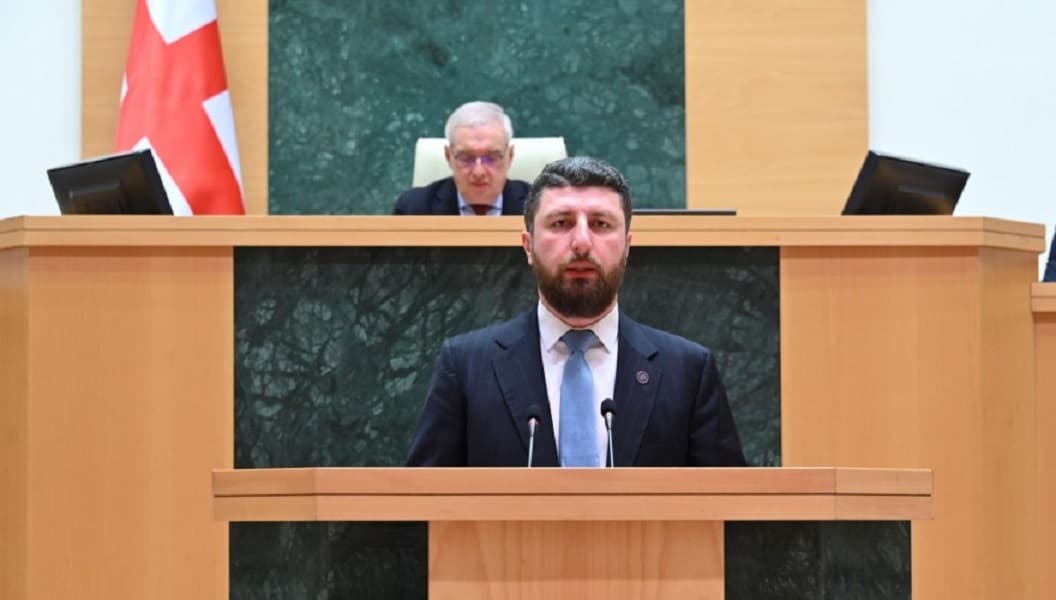
Presenting the bill, Chair of the Parliamentary Legal Affairs Committee Archil Gorduladze said the initiative continues a series of legislative changes aimed at ensuring a “high standard of protection of the country’s sovereignty.”
Government consent requirement
According to the amendments, organisations registered abroad whose substantial activities relate to Georgia will be required to obtain government consent before receiving a grant, in line with procedures set out in the Law on Grants.
Grants are also defined as funds or material-technical resources transferred by a foreign state, foreign citizen, or legal entity to a Georgian citizen or resident if the purpose is to influence the public or part of society in matters related to policy formation, implementation, or change.
Branches and representatives of foreign foundations operating in Georgia would also be required to apply to the Georgian government before receiving funds from their parent organisations. Gorduladze said the rules would not apply to business entities as such, but would cover organisations substantially engaged in, among other things, financing political activities.
A transitional provision states that if a grant was issued before the law enters into force, including to persons previously not subject to government consent requirements, and the funds have not yet been spent, recipients must obtain government approval within one month of the law taking effect.
Criminal code changes
The legislative package also introduces amendments to the Criminal Code. Article 194 (money laundering) would be expanded to include laundering money for activities related to political issues connected to Georgia, carrying a penalty of nine to 12 years’ imprisonment.
Receiving and using a grant without government consent, in violation of the Law on Grants, would trigger criminal liability in the form of a fine, community service ranging from 300 to 500 hours, or imprisonment of up to six years. Funds paid for lobbying or political activities abroad would also lead to criminal responsibility.
Failure by a political-party-oriented subject to submit a declaration, the intentional submission of incomplete or false data, or failure to correct deficiencies within the legal deadline would be punishable by a fine or community service from 120 to 200 hours, along with a ban on holding office or engaging in certain activities for up to three years.
Political activity and party rules
The amendments clarify the concept of a “party-political objective.” Individuals and legal entities with a declared political-party objective would be subject to the same regulations as political parties. This includes a ban on income from abroad, a ban on donations from legal entities, and an obligation to declare revenues within deadlines set by law.
Under planned changes to the organic law on political unions of citizens, a person employed under a labor contract by an organisation that receives more than 20 percent of its annual income from a foreign power would be barred from party membership for eight years. The State Audit Office would oversee financial monitoring of political party members.
The package also establishes a new offense for business entities engaging in public political activities unrelated to their core business operations. According to Gorduladze, a first violation would lead to administrative liability, while repeated violations would carry criminal responsibility.
The draft laws will proceed to further readings in Parliament.
Tags:
Law on Grants