Fundamental changes necessary, education system must be renewed, political analyst Sakvarelidze

Author
Frontnews Georgia
Public concern has followed the latest wave of higher education reform in Georgia. The proposed merger of Tbilisi State University and Georgian Technical University has triggered protests among academic circles and students.
Some professors fear that the process could damage university autonomy and institutional identity. The Ministry of Education claimed the goal is to optimize resources and improve academic quality, while critics point to a lack of transparency in the decision-making process. At this stage, university representatives are holding meetings with the Ministry, where both sides are presenting their positions.
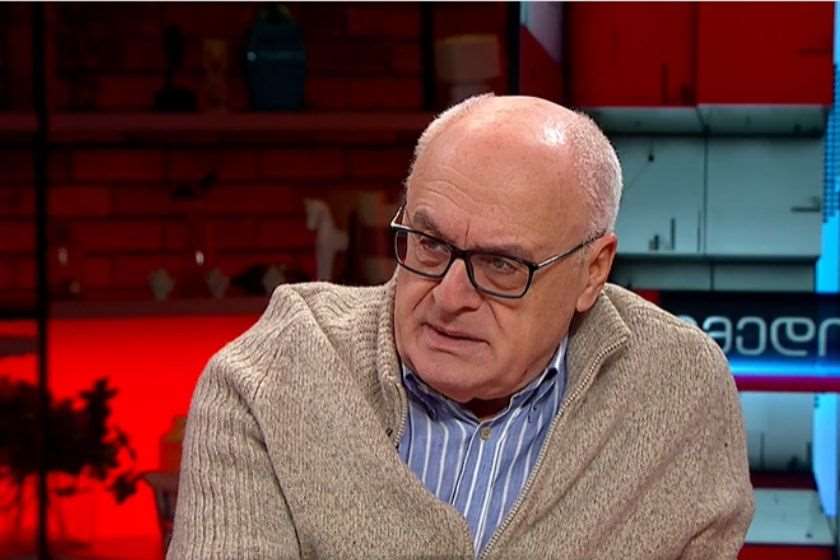
Political scientist and psychologist Ramaz Sakvarelidze discusses this topical issue in an interview with Front News.
– The decision to merge the two universities has sparked protests among professors and students. Some professors are announcing that they will fight alongside students. Do you expect that this decision could generate a new wave of protests? And do you think the authorities currently have any resources to convince them that the decision is justified?
– I do not rule out that, amid these protests and sentiments, the authorities may retreat. I say this based on past examples - the cannabis law and the first version of the so-called transparency law. Even without large-scale protests, the government reversed its decision on cannabis legislation. At that time, public disapproval alone proved sufficient for the initiative to be withdrawn.
Therefore, if the authorities fail to convince the professors and no consensus is reached, I do not exclude the possibility that they may step back once again.
– However, professors leaving recent meetings say they have the opposite impression - that the decision has already been made and that these meetings are merely informational, explaining how and in what form the merger will take place. Why do you think they are coming away with such a perception?
– Let us avoid pessimism, and at the same time try to understand the logic of the authorities and the attitudes of part of society. One fact is clear - large areas of the Technical University campus are empty and underutilized. To such an extent that Giuli Alasania [mother of former president Mikheil Saakashvili] established a new university on the basis of GTU facilities.
By profile, the Technical University has not been sufficiently loaded - even when new faculties are opened, ranging from philology to other fields. These are real problems that require attention. I came across a social media post by one lecturer, suggesting that we consider a federal model for these universities - meaning that both institutions would retain their independence while sharing common governance mechanisms.
Perhaps it would be appropriate to focus on clarifying the nature of the relationship between the universities as one possible solution - a model that addresses existing problems without creating new ones.
– Why do you think the authorities made this decision independently, without prior discussion with professors and students? Why are they now forced to provide explanations? Would it not have been better to safeguard the process from the start by initiating public discussion? In your view, what explains this haste?
– Of course, it could have been handled very differently. My profession as a psychologist suggests this. A psychologist knows that a client does not accept everything immediately. Time and proper techniques are needed to convince a person of your position.
Convincing people is not easy - especially when their entire biography is tied to these buildings and institutions, when this is their life’s work. Therefore, I agree with you- it probably would have been better to open discussions in advance and then move toward some form of consensus.
– Do you think this could also be a case of the authorities “testing the ground” - probing public sentiment?
– Another example of retreat, as we already mentioned, was the so-called transparency law. There, too, public reaction played a decisive role. At the time, it was said that the bill was reintroduced in order to see how people would respond.
Such provocative mechanisms cannot be ruled out. Doctors sometimes act this way when they cannot establish a diagnosis - they provoke symptoms to reveal the real picture. Politics also employs similar tactics - it is a well-tested method. So we should not exclude this possibility either.
Not everything is in order within Georgia’s education system. It is a fact that fundamental changes are necessary and that the system needs renewal. The issue here is quality improvement.
In a small country like Georgia, there are 62 universities - half public, half private. The government cannot interfere with private institutions, so it focuses on reorganizing state universities. Too much attention has shifted toward the idea that the authorities are setting traps or exerting pressure, while little is said about the fact that things are not ideal even within the Technical University itself.
I have personally been at GTU, searching for a classroom, and could not find a single person to guide me. This university possesses enormous resources, and they must be properly utilized - especially in a world driven by technology.
There is much to reflect on. However, the narrative that pressure exists only on one side oversimplifies the issue. The matter is far more complex and requires deep, substantive discussion.
By Elza Paposhvili
Tags:
Ramaz Sakvarelidze