Political analyst Sakvarelidze: opposition has lost its fuel for revolution and is being forced to change course

Author
Frontnews Georgia
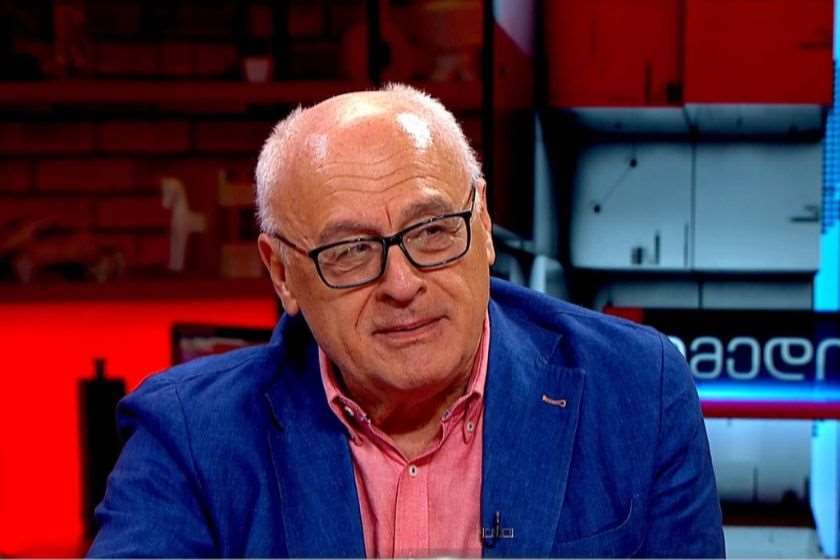
The large-scale visit of US State Department representatives to the Georgian capital city of Tbilisi and ongoing debates within the country’s political spectrum are creating new conditions for a potential reset in relations between Washington and Tbilisi. In an interview with Front News, political analyst Ramaz Sakvarelidze assessed Prime Minister Irakli Kobakhidze’s expectations for restoring ties with the United States without preconditions and highlighted what he sees as fundamental differences between Democratic and Republican administrations.
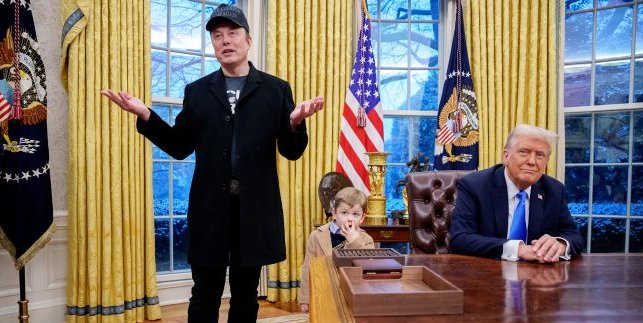
According to Sakvarelidze, President Donald Trump’s approach — centered on non-interference in the internal affairs of other countries and respect for sovereignty — presents new opportunities for Georgia. At the same time, he argues that the domestic opposition, facing a decline in Western financial and political support, is being pushed away from revolutionary rhetoric and toward an electoral strategy.
Q. Prime Minister Irakli Kobakhidze is calling for the restoration of relations with the United States without preconditions, such as the release of prisoners or other domestic political requirements. How realistic is this expectation? Would Washington be willing to reset relations while overlooking concerns about Georgia’s internal democratic processes?
A. The Trump administration has openly declared that interference in the internal affairs of other countries is unacceptable. This position has already been publicly stated and the administration even dismantled a major organization that financed such activities.
Against this backdrop, it is difficult to imagine the Trump administration making the same demands that were raised by the Biden administration. Biden and Trump were fundamentally opposed to each other politically.
At the same time, the fact that the Prime Minister made such a statement suggests that there has already been some level of understanding between the sides. Major political issues are rarely raised publicly before at least a basic consensus exists. Therefore, it appears there is already some kind of agreement in place to avoid a repeat of the tensions seen during the Biden administration.
Q. The Georgian Government frequently accuses Western partners of applying double standards, pointing to Azerbaijan and Armenia, where strategic agreements were signed without significant emphasis on domestic democratic issues. Could Georgia expect a similar approach?
A. The Trump administration is focused on ensuring that the United States benefits as much as possible from its international relationships. Under that logic, there is little interest in interfering in the internal affairs of other countries.
No one seriously claims that democracy is flourishing in either Armenia or Azerbaijan. But as I mentioned, this reflects the new “America First” policy. For that reason, I do not expect Washington to pursue a fundamentally different policy toward Georgia.
Q. State Department officials Peter Andreoli and Charles Yockey visited Tbilisi and met with Government representatives, opposition figures and church leaders. What does such a broad range of meetings suggest, particularly the engagement with the Georgian Orthodox Church?
A. Here again, the contrast between the Biden and Trump administrations is important. Religion was not a major priority for Biden’s America. The emphasis was largely on opposition groups and their concerns.
That has changed significantly. Trump’s approach is based on engaging with a country as a whole — its culture, religion, economy and traditions — and respecting those elements.
These comprehensive meetings were less about gathering information and more about demonstrating the type of relationship the United States wants to build with Georgia. It signals engagement with Georgia as a sovereign state and with its entire system of values.
Q. Some opposition figures, such as Zurab Japaridze, argue that American officials are no longer focused on democracy and human rights, while Nika Gvaramia claims that Western interests cannot advance where Russian influence dominates. Why are opposition leaders sending such different messages?
A. The opposition is not offering a coherent logic when one leader says one thing and another says the opposite.
I believe Gvaramia is trying to position himself as a more confrontational political figure in order to attract a particular segment of the electorate. During the elections, he succeeded in drawing support from radical opposition voters and even surpassed Mikheil Saakashvili in certain respects. His rhetoric appears aimed at longer-term political goals.
Japaridze, on the other hand, seems to have fewer ambitions in terms of leading the broader opposition movement.
Q. The opposition’s May 26 rally under the slogan “Georgia Deserves Better” generated criticism even within opposition ranks. After the event, further large-scale demonstrations were postponed until autumn, with plans to focus on regional outreach during the summer. How do you assess the rally and the opposition’s current strategy?
A. What we saw on May 26 was largely the same picture we have seen during previous major opposition mobilisations. They failed to exceed their usual turnout levels and essentially demonstrated their standard mobilisation capacity.
What I found more significant was the fact that the issue of elections resurfaced during the rally. Although the opposition remained inconsistent — and Gvaramia once again resorted to revolutionary rhetoric by suggesting the Government could have been overthrown if people had attended the rally instead of shopping — the discussion nevertheless returned to elections.
In my view, the re-emergence of the election agenda was the most important outcome of the event.
Q. Why do you think the opposition has changed its strategy? What is driving this shift?
A. I think they no longer have anyone to pour fuel on the revolutionary fire. The revolutionary movement has run short of fuel.
It is clear that they no longer have the same support from the United States. And I do not believe European actors are particularly enthusiastic about supporting revolutionary scenarios either.
As a result, the opposition is being forced to change the record and adopt a different strategy.
Tags:
Ramaz Sakvarelidze