Papuashvili claimed that Khoshtaria had acknowledged purchasing and distributing Molotov cocktails and other incendiary devices used against the Georgian Parliament building and law enforcement officers

Author
Front News Georgia
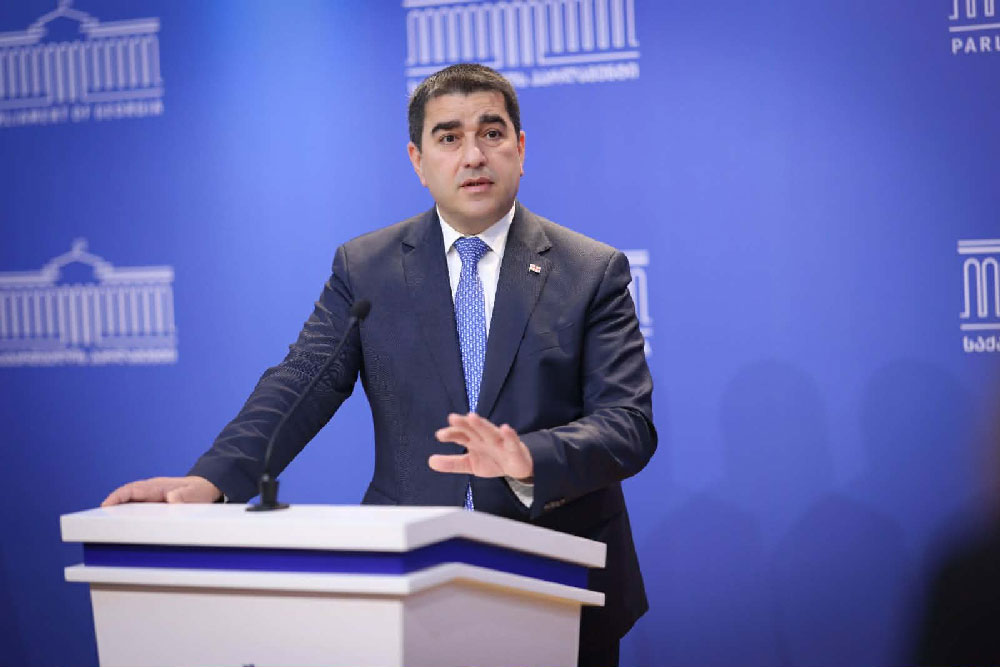
Georgian Parliament Speaker Shalva Papuashvili has criticised a recent debate in the European Parliament, saying it resembled the assemblies of Soviet-era people’s deputies.
Speaking to journalists on Thursday, Papuashvili said that the debate, in both tone and content, echoed the 1989 Moscow congress held shortly after the April 9 tragedy in Georgia, where Georgian lawmakers were verbally and physically attacked by representatives from other Soviet republics.
“Those who remember will recall the intonation and tone of that assembly,” he said. “We saw yesterday a similar atmosphere. Names like Ms. Yuknevičienė, who has previously used inflammatory and hostile language toward Georgians, were involved. She has used terms such as ‘infection’ and ‘the people’s fault,’ which are typical of fascist rhetoric directed at Georgians.”
Papuashvili added that the European Parliament appeared to have moved away from its values.
“We expected a forum based on democratic principles. Instead, it resembled a Soviet people’s lawmakers’ assembly. Currently, it is at a perestroika-level approach, but the trend seems to be regressing further, potentially toward the Brezhnev era.”
He also criticised discussions surrounding opposition politician Elene Khoshtaria, claiming that the resolution in her name ignored her alleged involvement in violent acts during past protests.
Papuashvili claimed that Khoshtaria had acknowledged purchasing and distributing Molotov cocktails and other incendiary devices used against the Georgian Parliament building and law enforcement officers.
“Debates honouring someone who has engaged in violence are shameful,” he said. “This shows that the assembly has lost the moral line expected of any democratic institution.”
Tags:
Shalva Papuashvili