Georgian Parliament Speaker: EU no longer global guarantor of international order
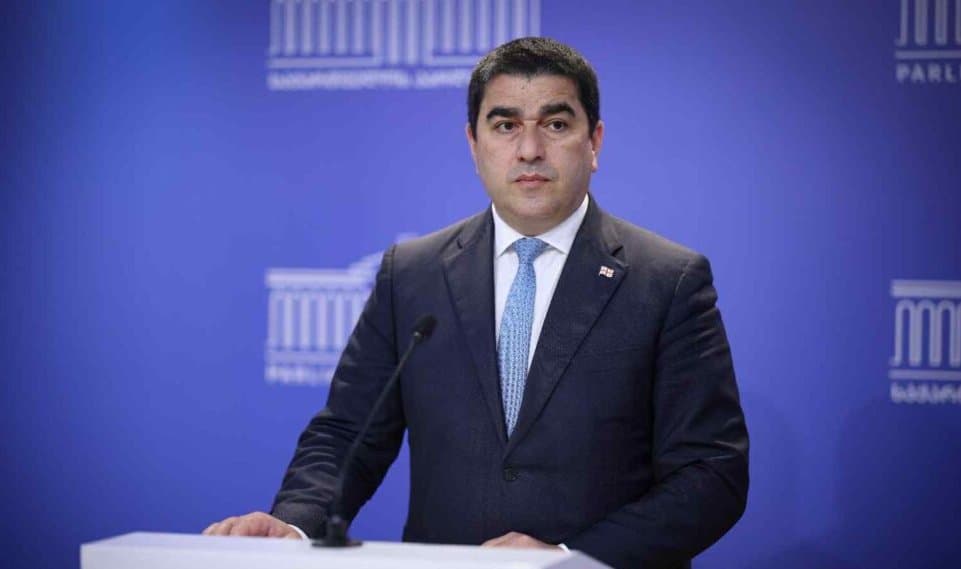
Referring again to Venezuela, Papuashvili said a “few-minute operation” there had underscored the EU’s declining role on the global stage

Author
Front News Georgia
The Speaker of Georgia’s Parliament, Shalva Papuashvili, has said that recent developments in Venezuela demonstrate that the European Union no longer exists as a guarantor of the international order or as a significant global geopolitical actor.
In a post published on social media on Tuesday, Papuashvili argued that the EU is willing, when it serves its interests, to benefit from and exploit the breakdown of the international order. He also claimed that Brussels’ actions towards Georgia, which he said violate international law, were further evidence of this trend.
Papuashvili further claimed Georgia’s government continued to pursue two unchanged priorities - restoring the country’s territorial integrity and ensuring the welfare of its citizens. He said there was no place for political sentiment or “illusions” in the struggle for territorial integrity, adding that any state that does not recognise Georgia’s territorial integrity “can never be a friend of the Georgian people”.
The parliamentary speaker stated that for small countries like Georgia, international law has traditionally been a key shield and tool, but argued that its influence is steadily diminishing. He said the post-Second World War international order no longer exists, a reality that, in his view, has now been conclusively confirmed.
Papuashvili also criticised domestic political opponents, accusing them of relying on external forces after losing public support at home. He claimed that recent global events had exposed such groups, whom he described as seeking political change through foreign intervention rather than democratic processes.
Referring again to Venezuela, Papuashvili said a “few-minute operation” there had underscored the EU’s declining role on the global stage. He concluded that ongoing international tensions had reinforced the Georgian government’s plan for 2026 - to maintain what he described as a policy of peace and to avoid becoming involved in scenarios driven by external actors.
He said the government’s approach was backed by citizens “who want peace and prosperity in a united and independent Georgia.”
Tags: