Georgian Parliament Speaker highlights legislative reforms, ‘economic growth’, ‘democratic safeguards’
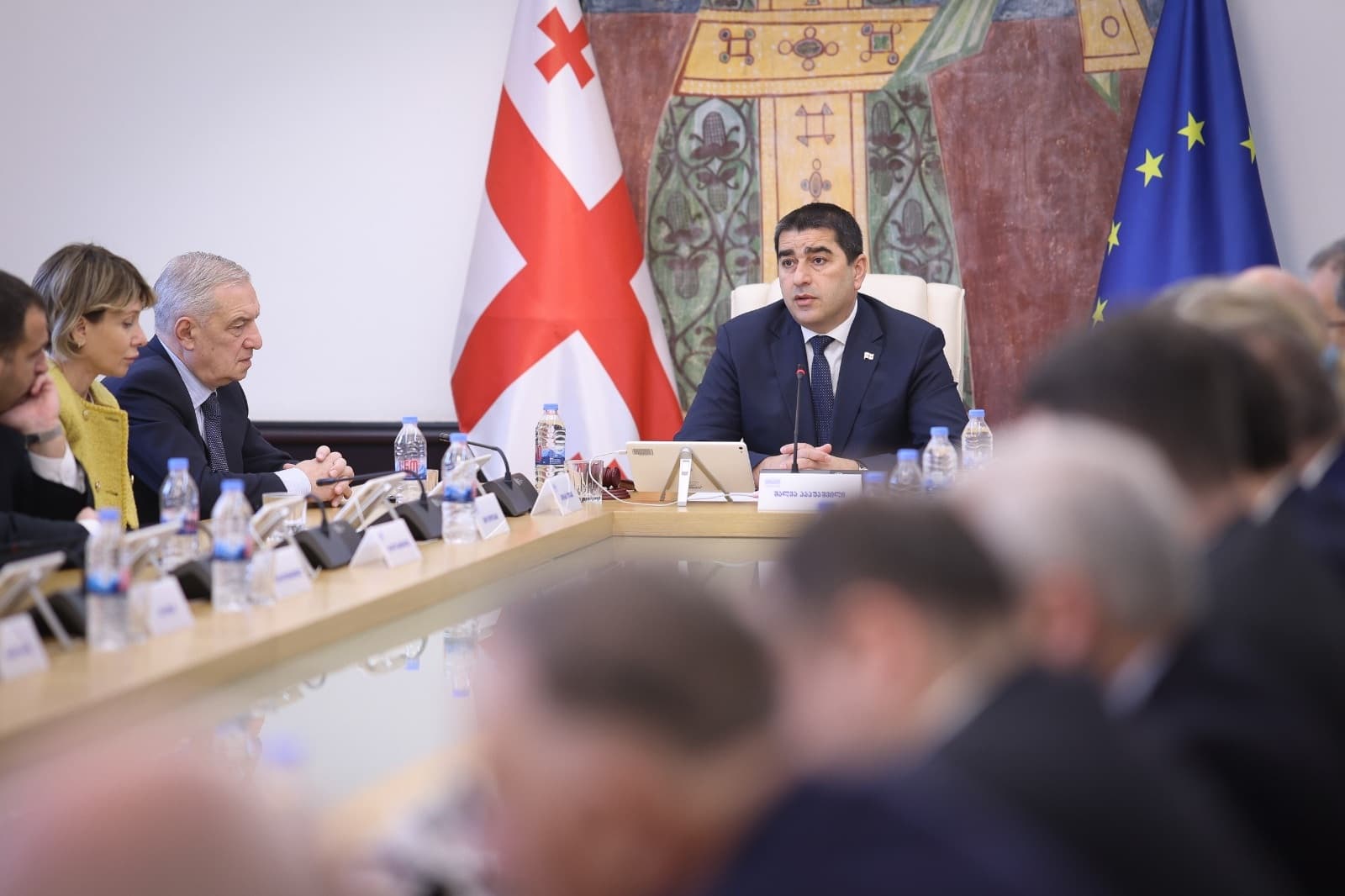
Papuashvili emphasized the primacy of national interest in state decision-making

Author
Front News Georgia
The Speaker of the Georgian Parliament, Shalva Papuashvili, has outlined the “key legislative achievements” of the autumn parliamentary session, emphasizing institutional reforms, democratic safeguards, economic growth, and education reform.
Speaking at a session of the Parliamentary Bureau on Friday, Papuashvili said that lawmakers adopted a number of significant legislative changes across multiple areas, with a particular focus on institutional reform.
“We adopted important legislative changes in various directions. Among them, I would highlight the projects related to institutional reform, which restored the institutional framework to the constitutional system envisaged in our Constitution. Over time, this system had become eclectic due to various add-ons,” Papuashvili said. “This year, we brought the institutional structure closer to the constitutional design embedded in the Constitution.”
The Speaker also addressed legislative changes “aimed at strengthening democracy” in Georgia, including measures designed to “protect the country from external interference.”
“The second key direction concerns legislative changes to strengthen Georgia’s democracy, particularly in terms of protecting it from external interference. This year, and especially during the autumn session, important decisions were made in this regard,” he said.
Papuashvili also commented on the adoption of a new Election Code, claiming that it had faced virtually no substantive criticism.
“A new Election Code has been adopted, and criticism from certain groups focused only on the issue of opening polling stations abroad,” he said. “As time passes, it is increasingly evident not only in Georgia but also in Europe and other countries how persistent concerns are about foreign interference in elections. We see full support from our voters for ensuring that elections are conducted in line with democratic principles, with maximum protection from external interference.”
Turning to education policy, Papuashvili spoke about the education reform package approved by Parliament last week, describing it as a long-term and historic process.
“Reform is an ongoing effort that will require not only legislative action but also strong parliamentary oversight to ensure that it fully achieves its goals in higher and general education,” he said. “This is a truly historic process that will qualitatively transform Georgia’s education system and restore a sense of pride in our higher education.”
He stressed the importance of ensuring internationally competitive education standards and providing future generations with access to high-quality schooling and universities.
The Speaker also highlighted the role of Parliament in parliamentary diplomacy and foreign relations amid ongoing regional turbulence.
“I would like to thank everyone involved in various delegations who represented the voice of the Georgian Parliament within international organizations,” Papuashvili said.
Addressing economic performance, Papuashvili stated that Georgia is ending the year with unprecedented growth for the region.
“For the first time in Georgia’s history, GDP per capita will exceed USD 10,000. The country’s economy will surpass 100 billion lari, making Georgia stand out both in annual growth rates and absolute economic results, regionally and among candidate countries,” he said.
According to Papuashvili, these achievements were made despite external obstacles rather than external support.
“Everything was done to undermine Georgia’s economy, security, peace, and democracy,” he said, adding that the country continues to face occupation-related challenges alongside calls for escalation and confrontation.
He criticized “acts of violence carried out under the banner of European symbols,” describing them as a “civilizational disgrace,” including “attacks on Parliament, attempts to storm the presidential palace, and the use of Molotov cocktails.”
“These actions are being carried out by individuals holding EU flags, and this represents a civilizational shame for the European Union - one with which, regrettably, some European forces today associate themselves,” Papuashvili said.
He further expressed confidence that political trends in Europe would shift, leading to greater alignment between European institutions and the will of European citizens, particularly in favor of peace, economic prosperity, and what he described as genuine European values.
Concluding his remarks, Papuashvili emphasized the primacy of national interest in state decision-making.
“National interest is the foundation of every decision. This is how nations and states are formed, and this is how unions are built - when they are based on national interests,” he said, expressing hope that governments across Europe would listen more closely to their own citizens.
Tags: