Catholicos-Patriarch Ilia II laid to rest at Sioni Cathedral

Author
Frontnews Georgia
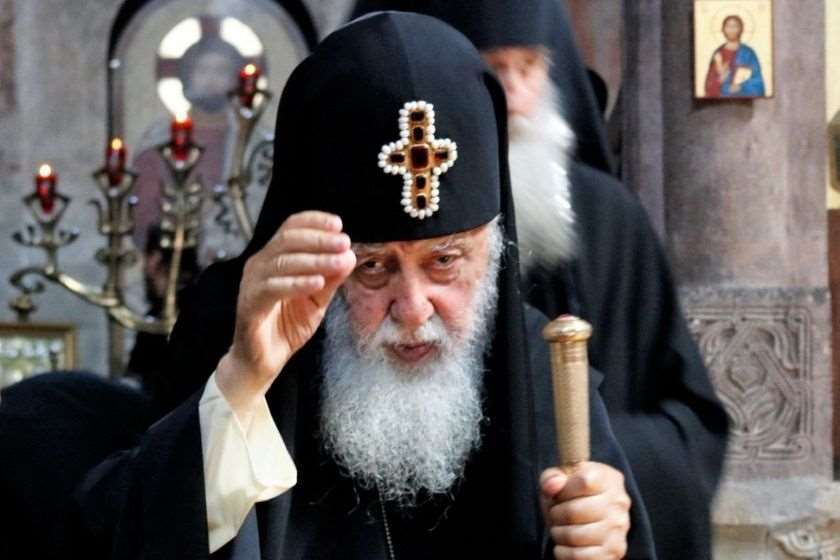
Catholicos-Patriarch of All Georgia, Archbishop of Mtskheta-Tbilisi, Metropolitan of Bichvinta and Tskhum-Abkhazia, His Holiness and Beatitude Ilia II, has been laid to rest at Sioni Cathedral in Tbilisi.
His body was escorted in a funeral procession from the Holy Trinity Cathedral of Tbilisi to Sioni Cathedral, with the late Patriarch’s final words, “Georgia, I love you,” resonating along the route.
Sioni Cathedral is the resting place of several previous Catholicos-Patriarchs, including: Kirion II (1855–1918), Leonid (1861–1921), Ambrosius (1861–1927), Christophorus (1873–1932), Callistratus (1863–1952), Melchizedek III (1872–1960), Ephraim II (1896–1972), and David V (1903–1977).
Patriarch Ilia II passed away on March 17 at the age of 93. His decades-long leadership left a profound mark on the Georgian Orthodox Church and the nation’s spiritual and cultural life.
Born Irakli Shiolashvili on 4 January 1933 in Vladikavkaz, Ilia II was baptised shortly after birth and named in honour of King Erekle II.
He pursued theological studies at the Moscow Theological Seminary and later at the Moscow Theological Academy, before returning to Georgia in 1960 to serve in the clergy during a period of shortage.
His rise within the Church was swift. In 1963, he was consecrated Bishop of Shemokmedi and later became the first rector of the Mtskheta Theological Seminary, the country’s only theological institution at the time. He was elevated to metropolitan in 1969 after being transferred to the Abkhazia diocese in western Georgia.
Following the death of David V in 1977, Ilia was appointed locum tenens and soon elected Catholicos-Patriarch of All Georgia. He was enthroned on 25 December 1977, beginning a tenure that lasted nearly five decades.
Over 48 years as Patriarch, Ilia II oversaw the revival and expansion of the Georgian Orthodox Church, becoming one of the most influential and respected figures in the country.
His death marks the end of an era in Georgia’s religious and public life.