Russia is also attempting to exert pressure on Armenia to prevent it from taking steps that would reduce Moscow’s influence, Zurab Bendianishvili said

Author
Front News Georgia
The appearance of Russian railway engineering brigades on Georgia’s occupied territory of Abkhazia and the rapid pace of work have raised questions not only in technical terms, but also in a deeper political dimension. While Tbilisi officially denies that any negotiations are under way, Moscow appears to be employing a strategy of presenting Georgia with a fait accompli.
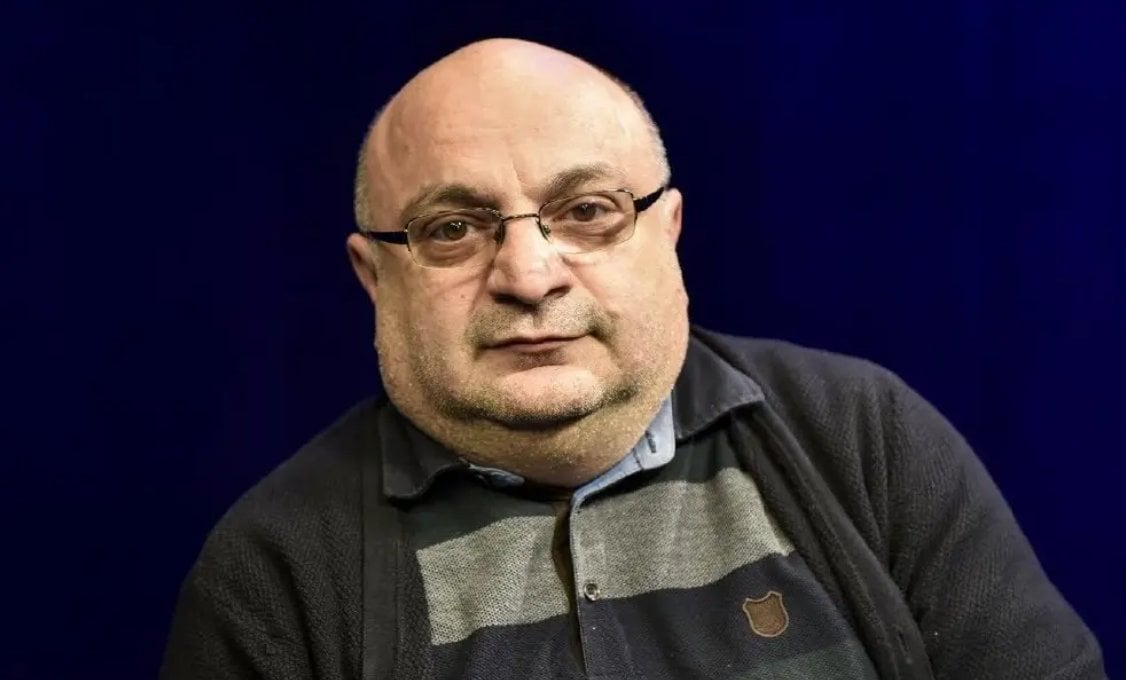
In an interview with Front News, conflict analyst Zurab Bendianishvili assessed the developments surrounding the Abkhaz railway. He said the process represented a multi-layered geopolitical game by the Kremlin, aimed at exerting pressure on Armenia, testing Georgia’s sovereignty, and legitimising new logistical corridors against the backdrop of the war in Ukraine. The analyst said the central challenge remained the legal status - how can the railway be put into operation without undermining Georgia’s territorial integrity?
– Russian engineering brigades have appeared from Sokhumi to the Enguri Bridge. The Kremlin has begun restoring the railway line on the occupied territory of Abkhazia, while Tbilisi claims that no agreement exists. What lies behind these “demonstrative works” - a genuine economic project or another geopolitical trap?
First of all, it should be clarified that Tbilisi has not refused negotiations - the government has said that this issue is not currently under discussion. There is a significant difference. At this stage, no negotiations are taking place between Georgia and Russia. It is difficult to imagine in what format such talks would occur. Even if certain informal or behind-the-scenes conversations are taking place, this does not mean that any official agreement exists.
At the same time, we are well aware that Russia possesses very strong leverage over Georgia. The question is whether these levers have already been used or are yet to be employed. Moscow appears to believe that this railway will inevitably be opened. I think there is a real possibility that they are confident it will eventually happen.
– Can we say that Russia is attempting to present the Georgian authorities with a fait accompli or create internal pressure to push the ruling party to agree to opening the railway? What do you mean when you say Russia seems confident it will be opened?
This is not about triggering an internal crisis - it is about applying pressure. There has been no preparatory informational campaign from the Georgian side to “sell” this issue to the public or to frame the reopening of the railway in a favourable way. Since that has not occurred, I assume there is no agreement or arrangement with the Georgian side.
This may also be a test by Russia – to what extent it can subordinate the Georgian authorities to its objectives. In the long term, the railway will probably be opened, if not in the short term.
– The Abkhaz side describes this as their “internal matter.” Does this work give Russia leverage to force Tbilisi into direct, legitimate economic dialogue with Sokhumi?
I do not think so. After the ruling party indirectly expressed hope that its policy towards Russia might prove beneficial in the context of the occupied territories, Moscow’s response has remained unchanged: Georgia must recognise the independence of Tskhinvali (South Ossetia) and Abkhazia. This position has not shifted.
There have been no indications that these conditions might be altered in exchange for reopening the railway or for any other reason. Therefore, it is unlikely that Russia would now claim it is helping Abkhaz and Georgians resolve their problems or settle territorial disputes. More likely, the railway issue will be framed in a broader regional context – as something that serves everyone’s interests.
– How closely is this project linked to attempts to ease Armenia’s isolation, and what role do Western sanctions, which Russia seeks to circumvent, play in this?
Yes, this process is unfolding in parallel with developments in Armenia. Armenia intends to restructure and purchase its railway system, with the aim of freeing it from Russian management. I believe accelerating these processes may be one of Russia’s pressure mechanisms – effectively signaling that if Armenia proceeds in that direction, Russia could block the cheaper railway route.
In this sense, Russia is attempting to exert pressure on Armenia to prevent it from taking steps that would reduce Moscow’s influence.
– If Russia extends the railway to the Enguri Bridge, near territory controlled by Georgia, what security risks would this pose from a military standpoint?
It would certainly create additional risks. However, the 2008 war demonstrated that Georgia is already highly vulnerable to Russian military aggression. The existence of a railway would not fundamentally change that. For a full-scale annexation, Russia would not require a railway. Yes, it weakens security and increases risks, but in principle it does not alter Georgia’s vulnerability in any decisive way.
There are many hidden complexities in the issue of reopening this railway. From a security perspective, it could even offer certain benefits to Georgia. The more countries have vested interests in such a project, the stronger the security guarantees may become. Economic interests generally reinforce security considerations. However, this would only be positive if Russia’s economic interests are balanced in a way that does not create problems for Georgia’s sovereignty. Any communication line that opens also represents an additional source of revenue.
– What kind of legal solution is possible if Russia does not abandon its recognition policy, while Georgia does not intend to revise its policy of non-recognition of the occupied territories?
The central issue is the legal mechanism. Given that Abkhazia is under occupation, Georgia does not recognize any legal jurisdiction of Russia there, nor of Abkhazia itself. How, then, could the railway function legally?
It is worth recalling that when Russia sought accession to the World Trade Organization (WTO), an agreement was reached whereby a Swiss company would monitor cargo flows. This arrangement did not threaten Georgia’s territorial integrity. A corridor via Tskhinvali and Abkhazia was envisaged, where cargo would be registered, while standard customs procedures would apply between the two countries.
At that time, Russia accepted this arrangement. Now, however, nothing similar is being discussed. No Swiss company is visible in this process. The most important question is how, if this proceeds, it can be resolved legally in a way that does not harm Georgia’s interests.
– Is the Georgian government searching for a solution precisely within this legal framework? How much concern is there about public reaction inside the country?
Public reaction is one aspect of the problem. The more serious concern is damage to Georgia’s sovereignty, which would be a far more difficult and harmful development for the country.
The ruling party appears to have a relatively stable balance within its electorate, so it is probably less concerned about losing supporters. The greater fear is that sovereignty could be undermined, which would carry heavier consequences for the authorities.
Georgia’s economy today remains significantly connected to the Russian market. Goods are exported there, and cheaper products are imported from Russia, benefiting our market. If the railway and cheaper transport were added to this, and Armenia benefited as well, that in itself would not be negative. But the key issue remains the legal dimension: how to resolve this in a way that preserves state sovereignty while allowing the railway to function.
– Finally, regarding the idea of a confederation with Abkhazia and Tskhinvali, which was discussed ahead of the 2024 elections – do you see any prospect of this returning to the agenda?
The Georgian side may raise such proposals, but so far there is no indication from Russia that it is prepared to discuss concessions with Georgia. That was not evident before either. The environment was created by the Georgian authorities themselves: since they did not impose sanctions on Russia or adopt sharply confrontational rhetoric, and as relations between Georgia and the West became strained, speculation emerged that this might lead to some form of deal with Moscow.
Even in Tskhinvali, there were open discussions suggesting they might be “sold out” as a bargaining chip. In Abkhazia too, consideration of confederation was linked to expectations of a possible arrangement between Georgia and Russia.
The elections have passed, and Russia has firmly reiterated that Georgia must recognise the independence of these territories. For now, I do not see prospects for such a development, given Russia’s position. Moreover, until the war in Ukraine ends, Russia is unlikely to clarify its stance further. Georgia, in my view, should not rush either. As the war moves toward its conclusion, many issues may be placed on the negotiating table – including Georgia itself.
By Elza Paposhvili
Tags:
Zurab Bendianishvili