Political analyst Gamzardia: skipping Iran funeral would have required more explanation than attending
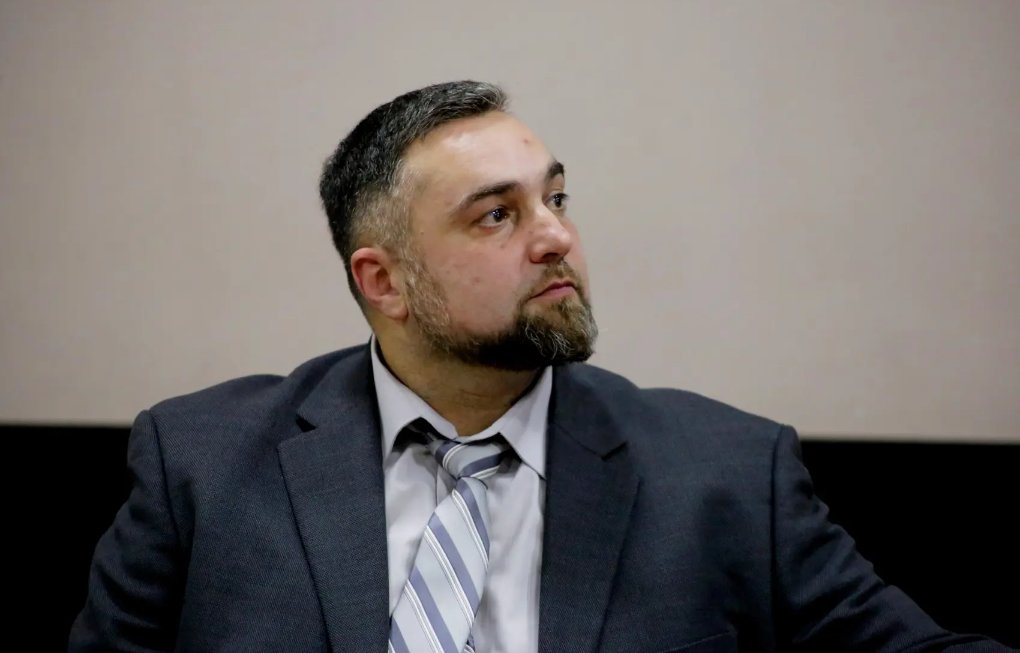

Author
Frontnews Georgia
The political controversy sparked by Georgian President Mikheil Kavelashvili's visit to Iran to attend the funeral ceremony of Iran's Supreme Leader Ayatollah Ali Khamenei, the internal reorganisation of the opposition spectrum and the emergence of new academic platforms are among the topical issues discussed by Georgian political analyst Archil Gamzardia in an exclusive interview with Front News. The analyst provides a detailed assessment of Georgia's foreign policy balancing strategy, the conduct of the Government and the opposition at the reception hosted by the US Embassy, and explains why, in his view, only one real political force remains in Georgia.
Q. Kavelashvili's visit to Iran has become a source of political confrontation within the country. The opposition believes that the President's visit to Iran harms Georgia because it could damage relations with the United States and escalate tensions. The Government, however, points to visits by representatives of Azerbaijan, Armenia and Turkey as an argument. What is your position – should Kavelashvili have gone to Iran or not?
A. This is a very delicate issue because when it comes to relations with two major powers, neither we nor anyone else can approach it so simply. There are limits to all of this, boundaries that should not be crossed. There are limits to how far you can go while pursuing a policy in good faith. I am not referring, of course, to other types of relations, but it should be understandable to any well-intentioned country that Georgia cannot and should not enter into confrontation with Iran. In such circumstances, Georgia should avoid confrontation.
Therefore, when we are talking about a funeral ceremony, not attending would in itself have been a response on our part and that response would have been confrontational. Accordingly, there was not much room for choice. The state had to act within the framework of moderation. This step demonstrates nothing other than the fact that Georgia needs friendly relations, including with states that may be in conflict with one another. All of this must remain within the bounds of diplomatic ethics.
For example, during the Armenia-Azerbaijan conflict, Georgia maintained a neutral position and had partnership relations with both countries. Therefore, it was understandable to both sides that Georgia could not make a different choice regarding its neighbours.
The only issue here is how successfully the state will continue to pursue its policy of balance and neutrality. If you ask me whether Kavelashvili should have gone to Iran – yes, he should have, and it was the right decision. [Armenian Prime Minister Nikol] Pashinyan, who is now developing relations with the European Union, working on certain issues with the United States and is almost on friendly terms with [US President Donald] Trump, still attended the funeral. Therefore, Georgia also has its own national interests.
Q. Do you think the Georgian authorities may have communicated with the United States and, to some extent, explained the reasons behind this decision?
A. I believe there is nothing here that requires an explanation to the United States. This could have taken place at a lower level, within the framework of internal communication, rather than publicly. This decision was logical and Georgia has nothing to justify. On the contrary, not attending would have required more explanation than attending. How do we know that Georgia did not communicate with the US administration at the internal level? The Government recently attended the reception at the US Embassy and it is impossible that there was no interaction there. I would not rule out that such communication did indeed take place.
Q. Alongside this, we saw Prime Minister Irakli Kobakhidze deliver remarks at the US Embassy. How do you assess his messages? Many argued that the Americans effectively gave the Georgian Dream Government a certain carte blanche, while the opposition was forced to listen to a Government it does not recognise. How do you evaluate what happened at the Embassy?
A. First of all, this marked the anniversary of the United States’ Independence Day. Naturally, such an occasion could not pass unnoticed. It was always going to be a large-scale event and that is exactly what happened. The issue of legitimacy is relevant only for about three months after an election; after that, it gradually loses its significance. I have always said this. I argued that prestige was far more important than legitimacy. That is where the Government had its concerns. The very concept of "legitimacy" in this context was rather unusual anyway. If our Government had actually been declared illegitimate internationally, that would have posed a much more serious and dangerous challenge for the state. A great deal has happened over the past two years and there is no going back.
The new US administration views legitimacy through its own lens. Trump has met at the highest level with [Russian President] Vladimir Putin, who is internationally recognised as a war criminal. That alone shows that, for Trump and his administration, these conventional approaches simply do not carry much weight. They have made up their minds, and that is that.
Secondly, why did the Prime Minister speak? Because he represents the Georgian state. It was a matter of respect for the state, which is why he was given the floor and received with due honours. These are basic rules of politics, diplomacy and diplomatic protocol.
Q. Many believed the opposition should have protested the Government's presence and the Prime Minister’s speech. Would that have been appropriate and what political benefit, if any, could such a protest have brought the opposition?
A. I honestly do not know what they expected. Were opposition members supposed to start shouting insults? Start a fight? This reflects one of the fundamental problems in our country: we constantly confuse institutional politics and diplomatic standards with personal attitudes. In this case, I simply do not see any problem with what took place. It was an anniversary reception. Both the opposition and the Government were invited and received with respect. Naturally, the Government represents the Georgian state, so it was treated according to the diplomatic protocol that applies to a country's official authorities.
Q. I would also like to ask about developments within the opposition. Former President Mikheil Saakashvili appears to be attempting to rebrand the United National Movement. His statements and his decision to replace [UNM Chair] Tina Bokuchava with [TV presenter] Nanuka Zhorzholiani have reportedly caused dissatisfaction within the party. Do you believe this was the right decision? What is Saakashvili trying to achieve and could this further deepen divisions within the party?
A. First and foremost, Saakashvili is trying to demonstrate that he remains active, that he is still the party’s indispensable figure, its key leader, not merely an honorary chair but the person who continues to exercise real control.
Secondly, Saakashvili’s political objective is not simply to keep the party alive or secure a handful of parliamentary seats. For him, this is directly tied to his own freedom and his prospects of regaining political power. Sometimes he makes the right decisions, sometimes the wrong ones. This latest move should be viewed in that context.
Apparently, he believes that since his party failed to gain substantial support through its foreign policy positioning, it should now try to strengthen itself domestically. That is why he decided that a journalist should become party chair.
I cannot say I see any particularly promising prospects here. On the contrary, at least theoretically, this could further deepen internal divisions. Nanuka is energetic, she communicates well, she speaks effectively and she has public recognition. However, I have always been cautious about the prospects of political leaders who lack a political education. In Georgia, people often believe that being well-liked and admired by the public is enough.
Saakashvili, however, seems to believe that he himself possesses the necessary political authority, while the party chair is merely an administrator rather than a genuine leader. In his view, the position is more akin to that of a hired manager. If that is indeed how he sees it, we will soon find out what results this approach produces.
Q. A new political movement, Georgia First, has been established, led by [ruling party founder] Bidzina Ivanishvili’s former lawyer, Viktor Kipiani. The party is largely made up of academics. However, as Nanuka Zhorzholiani recently suggested, by 2028 Georgian politics will still revolve around Ivanishvili and Saakashvili. How do you see the future of this new party? What prospects does it have?
A. I do not believe there are two real political forces in Georgia at all. There is simply another side, but it does not function as an actual political force. A political force is a subject that has significant influence over public processes and that simply does not exist in our case. So, there is no second force in the country. There is only one real force and that is Ivanishvili and his Government.
As for the rivalry between Ivanishvili and Saakashvili, that is only natural. Saakashvili is the country's former ruler, while Ivanishvili represents the current governing force. Had [former President] Eduard Shevardnadze still been alive and politically active, he would likely have occupied the same position in the political landscape. The fact is that only two living former and current national leaders remain politically relevant, so naturally public attention continues to focus on them.
As for the emergence of new political parties, I see them more as academic and intellectual movements - Georgia First, the Round Table, the Social Democrats, who currently operate more as movements than fully established political forces, and others.
It is difficult to predict what prospects they have. They may not possess significant political leverage or strong electoral chances individually. However, if they are able to influence the substance of political debate, including the quality of opposition politics, that alone would be a positive development. If the current confusion and disorder within the opposition were replaced by genuine intellectual and academic competition, it would only benefit the country.
Tags:
Archil Gamzardia