Seems ex-PM Garibashvili expected different outcome, instead he faced something entirely different, Archil Gamzardia

Author
Frontnews Georgia
The developments surrounding currently imprisoned former Prime Minister Irakli Garibashvili, possible internal divisions within the ruling establishment, and the Georgian government’s ambiguous political moves regarding the Russian-controlled Abkhazia remain among the main subjects of debate in Georgian politics.
At a time when the opposition is struggling to maintain its political relevance, while the ruling party’s foreign-policy rhetoric continues to raise questions, assessing the country’s political dynamics is becoming increasingly complex.
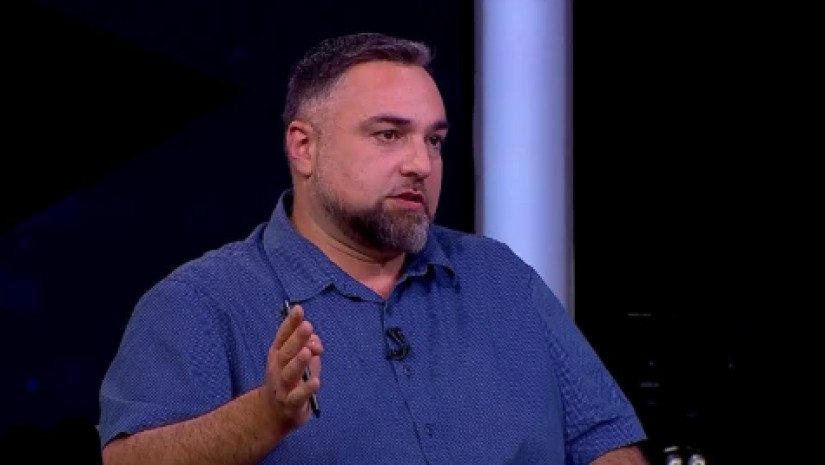
Front News spoke with Dr. Archil Gamzardia, Doctor of Philosophy, about the current situation, the internal dynamics of Georgian Dream, and possible future political scenarios.
Q: Former Prime Minister Irakli Garibashvili has sent a letter from prison and made a number of statements. He said that he was entrusting [ruling party founder and honorary chair] Bidzina Ivanishvili with the security of his family. He also said that he had received a letter purportedly sent on Ivanishvili’s behalf, telling him to abandon any return to politics and, in exchange, to admit to his involvement in corruption as a form of insurance. What kind of statement is this?
A: To tell you the truth, I really have not been able to draw any firm conclusions from this process. The only thought that has occurred to me is that when Garibashvili entered into this legal process, he apparently expected a completely different outcome, while in reality he ended up facing something entirely different. Now that he has realized this, he is trying to find a way out of the situation he has found himself in.
Q: What kind of outcome do you think he expected?
A: I don't know. Perhaps he thought he would receive a shorter sentence and that there would be no corruption charges, and so on. Or perhaps he expected some form of support from Ivanishvili. There could be many explanations.
The fact is that he did not take seriously enough what was happening to him. As far as I remember the mood within his family, they appeared to be quite optimistic and their reactions reflected that. I think they, too, were expecting a different response and a different course of events.
Q: Do you think Garibashvili hoped that once Ivanishvili learned about what was happening, he would intervene on his behalf? Now that this has not happened, could he be trying to attract Ivanishvili’s attention in this way?
A: There are many possible interpretations. It is entirely possible that he did have such hopes. But he was a prime minister, and if something like this happened to an ordinary person, one could perhaps understand it. But he served as prime minister twice. How could someone with that level of experience not know how and where decisions are made?
The whole situation is rather vague and unserious. Someone who has held such a senior position and has had such extensive experience should probably have approached and expressed himself differently.
Looking at what is happening now, there is even something somewhat comical about it. Of course, we are talking about people’s lives. Garibashvili is still a relatively young man, and seeing him being destroyed on every level is difficult and painful. However, he himself was part of the system that carried all of this out, and now it has come back to him.
It is tragic because we are talking about human beings and families, and I certainly do not take people’s fate lightly. But, on the other hand, there is also something almost comical about the situation because it leaves people with very little room to draw any other conclusion.
Q: What do you think was the reason for Garibashvili becoming a target? There is a theory that he may have provided the Americans with certain information about Bidzina Ivanishvili. He is not on the sanctions list, and this has apparently raised suspicions about him. Do you think Garibashvili could have done something like that, and what might have motivated such a move?
A: As we have said, any number of scenarios are possible, including that one. However, first and foremost, we are talking about someone who served twice as prime minister, as well as minister of internal affairs and minister of defence. He should know better than anyone how the system operates from within.
What is somewhat difficult to understand is when something happens and these individuals then find themselves at odds with the very system of which they were previously part.
Garibashvili was not simply a part of that system; he was one of its leading figures. He knew exactly how everything worked internally. If he was able to turn against it so easily, then that only makes his situation worse.
As Udzilauri (Giorgi Udzilauri, a former journalist and former head of public relations at Ivanishvili’s Cartu Group, who later became a senior official in Georgia’s Financial Police and has been accused of espionage) says, “I was arrested because of my relations with Europeans and the West.” If Garibashvili really had covert communications with Western counterparts and did not understand how the system in which he himself had worked operated, that presents an entirely separate problem for him.
He knew better than anyone that his covert actions could potentially become public. You cannot treat something like that so casually.
And if they were not acting legally, then what exactly do they have against the law-enforcement authorities if they themselves were engaging in actions prohibited by law? If he believed that such actions were necessary for the country and that the government was taking the wrong path, who prevented him from speaking openly about it and acting publicly?
I don't know. There are many contradictions here.
Q: The decision to allow fuel to be brought into Abkhazia, along with statements by the Georgian authorities, has sparked contradictory reactions and heated debate in Georgia. What kind of political decision do you think this is, and what expectations should the Georgian government have regarding the Abkhaz side? What is the logic behind this policy?
A: In theory, I can understand the logic that the government should use certain means to demonstrate a positive role - to show even the population living in Abkhazia that they are dealing with a different Georgia today.
We could follow that logic. We know that Abkhaz residents use healthcare services in Georgia. Let us assume that this is also part of such a positive policy. At some level, I could support that kind of policy. But controversial elements should not be introduced into it.
Free healthcare is a state policy - fine. But then what does business have to do with it? This should be an active state policy.
As is accepted internationally - and Georgia itself has participated in such initiatives - if the purpose was humanitarian, then the fuel should have been provided on humanitarian grounds as well.
There are international organizations that can deliver water, food and medicine. They could also have facilitated the delivery of fuel.
If this had been presented as a business initiative or some kind of corporate campaign, there would also have been a logical framework for understanding it.
Beyond that, there is another very important issue: how is this understood in formal and legal documentation? This is not something that happens informally - you cannot simply hand over five kilograms of sugar and say, “Here you go.” There are invoices, formal procedures and documentation.
The de facto authorities in Abkhazia have what they call a tax system and a constitution. Our legal system does not operate there. So the question arises: how is one of Georgia’s own regions being treated from the Georgian side within all this paperwork and documentation?
If you take something to Adjara, what is the problem? From a legal standpoint, Georgia considers Abkhazia in the same way - as part of its territory.
In the case of humanitarian assistance, it is also important that the local population express some degree of appreciation. In this particular case, even that element is missing.
Q: There is a view and information circulating within the opposition that Prime Minister Irakli Kobakhidze could resign in the autumn and that Ivanishvili could replace him. The argument is that if there is no real progress in foreign policy and in repairing relations with the United States, Kobakhidze could suffer the same fate as his predecessors. Do you see any likelihood or political signs of this?
A: I don't think Ivanishvili is somehow unable to control Prime Minister Kobakhidze. Kobakhidze may be acting independently and covertly on certain matters, but Ivanishvili remains the principal source of power.
If Kobakhidze were making decisions that Ivanishvili found unacceptable, why would Ivanishvili have any particular difficulty removing him? One public statement from Bidzina would be enough to put him in his place.
Since that is not happening, it is generally assumed that this reflects Ivanishvili’s wishes.
Otherwise, Kobakhidze would have to somehow have Ivanishvili imprisoned or otherwise confined, which is clearly not a realistic possibility.
I have also always said that removing Kobakhidze is not as simple as many people think. He has spent this entire period working to consolidate his position.
He has distanced many of Ivanishvili’s traditional sources of support from him and has created a great deal of antagonism toward Ivanishvili, both inside and outside the country.
Through Kobakhidze, the attitudes of a segment of society that had previously viewed Ivanishvili positively have changed.
So, if Ivanishvili has a problem somewhere, on the one hand it is his own decisions and views, while on the other it is what Kobakhidze has done.
I think Ivanishvili and Kobakhidze have been in a kind of cold-war relationship for the past several years.
That is why I don't think Kobakhidze is as easily removable as many people assume.
Q: Recently, we have frequently heard statements coming from Russia expressing a willingness to cooperate with the Georgian government. The government responds by saying that political and diplomatic cooperation with Russia is impossible as long as Georgia’s territories remain occupied. At the same time, however, the opposition points to the government’s recent actions and statements, including Kobakhidze’s remarks about the Treaty of Georgievsk. What kind of political discourse are we witnessing?
A: I genuinely do not understand what purpose discussing the Treaty of Georgievsk in 2026 serves. What does it have to do with anything?
What is the purpose of all this at the state level? It is unclear.
Moreover, the fact that the prime minister and the government are discussing it in what appears to be a coordinated, campaign-like manner is completely incomprehensible to me.
I cannot see a positive theory behind this in any context.
The fact that Russia has never had a positive objective toward Georgia has never really been in dispute-especially after Russia’s occupation of Georgia, and certainly after the two rounds of occupation.
Against this backdrop, representatives of the Georgian government have effectively become Russia’s positive public-relations agents.
That is completely incomprehensible and unacceptable.
Q: I also want to ask you about Mikheil Saakashvili’s recent statements and his confrontation with other opposition leaders. Nika Gvaramia has also responded to him in recent days. Saakashvili accuses the opposition of inaction. What do you think the opposition is capable of at this point, and what do you expect? What are these internal confrontations about?
A: I suspect that this opposition does not have any practical resources with which to seriously challenge the government.
Therefore, from my perspective, the remaining struggle is largely about self-actualization.
Essentially, society is receiving the political reality it is demanding. The opposition is responding to that demand and supplying society with this particular political “product.”
If anyone is capable of changing the status quo, it is Ivanishvili. If he does something even more damaging, then the political process could potentially become more active.
As for the rest, his opponents are trying to maintain their political relevance and remain in survival mode. They are attempting to survive politically through these kinds of political reality shows.
By Elza Paposhvili
Tags:
Archil Gamzardia