EU’s 2026 Georgia report cites further democratic backsliding as ambassador hands document to Gov’t

Author
Frontnews Georgia
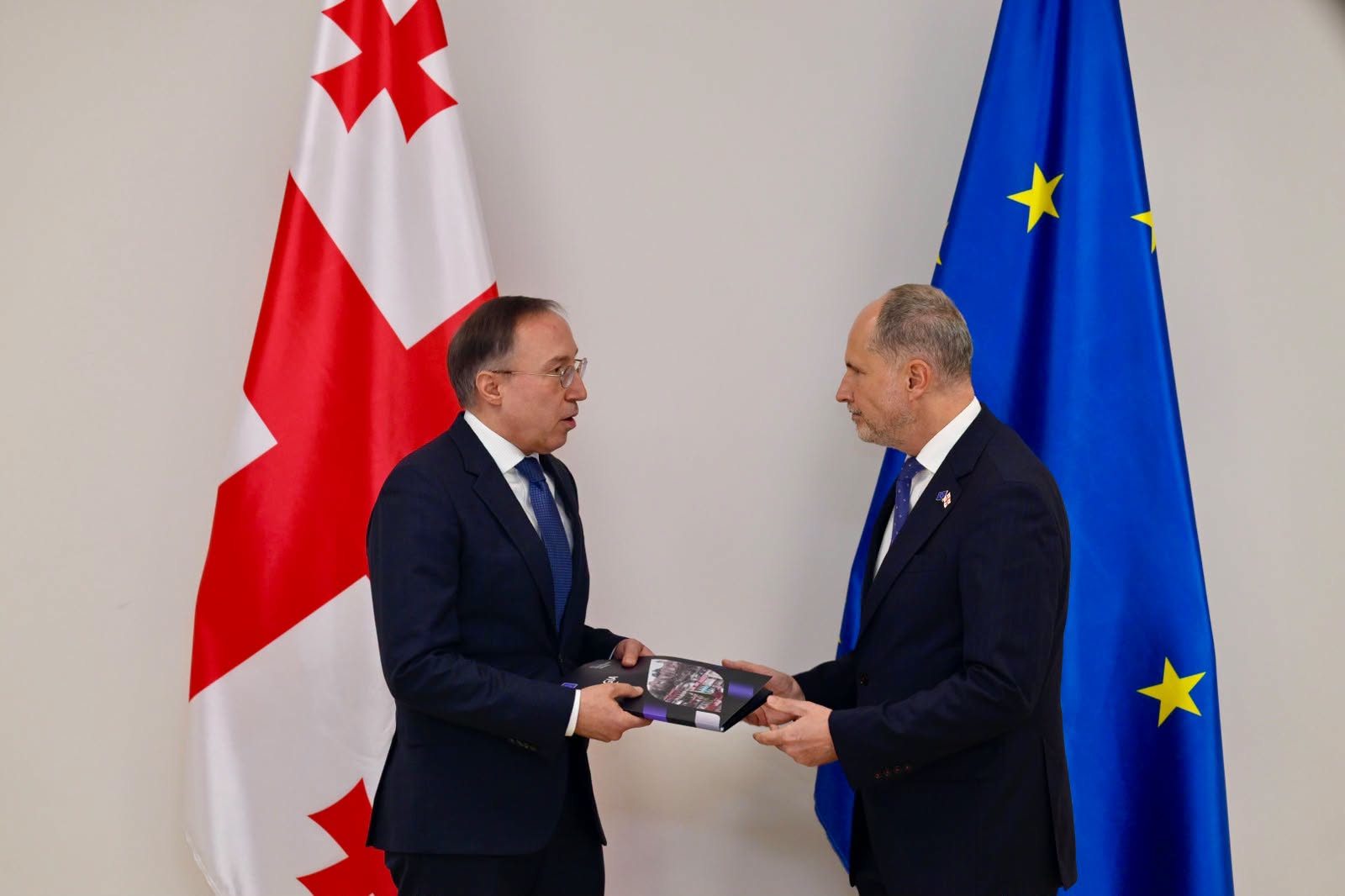
European Union Ambassador to Georgia Paweł Herczyński has officially presented the European Commission’s 2026 Georgia Report to the Georgian government, with the assessment stating that the country’s EU accession process remains halted and that democratic conditions have deteriorated further.
Herczyński handed the report to Giorgi Zurabashvili, First Deputy Minister of Foreign Affairs.
The report, published on Wednesday, assesses developments in Georgia between September 1, 2025 and September 1, 2026. The European Commission said the country’s democratic situation continued to deteriorate during the reporting period, citing the erosion of democratic institutions, increased concentration of power, restrictions on civil and political liberties, a shrinking space for civil society, and hostile anti-EU rhetoric.
The document stressed that Georgia’s EU accession process remains at a standstill. It recalled that the European Council concluded in 2024 that actions taken by the Georgian authorities had jeopardised the country’s European path, while the government announced that it would suspend the accession process until 2028.
On democracy, the Commission raised concerns over attempts to ban major opposition parties through proceedings before the Constitutional Court, restrictions on political activity and the failure to reform the electoral framework in line with longstanding recommendations. It also said the October 2025 municipal elections took place in a highly polarised and repressive environment that undermined their competitiveness and transparency.
The report further noted that most opposition leaders are facing criminal charges, living in exile or imprisoned, while parliamentary oversight remains limited and executive power has increased.
The Commission identified continued backsliding in the judiciary and fundamental rights for the third consecutive year. It said the independence, impartiality and integrity of the judicial system remain “seriously undermined” and expressed concern over what it described as harsh and disproportionate sentences imposed on protesters.
On fundamental rights, the report criticised legislation that it said restricts freedom of expression, assembly and association, as well as political participation and foreign funding. It called on the authorities to release people it considers arbitrarily detained, including politicians, journalists and activists, and to investigate allegations of excessive force, torture and ill-treatment by law enforcement officers.
Media freedom was also identified as an area of continued deterioration. The Commission claimed Georgia remained at an early stage of preparation in this field, citing harassment, intimidation and attacks against independent and critical media outlets and journalists, as well as restrictions on foreign funding that it says threaten media pluralism.
The report also found no progress in the fight against corruption during the reporting period. It pointed to the absence of an anti-corruption strategy and action plan since 2020, concerns about institutional independence and the lack of measures to address what it described as entrenched oligarchic influence.
The economic assessment was more mixed. The Commission considered Georgia moderately prepared in terms of establishing a functioning market economy and acknowledged some progress, while noting that strong economic growth had not translated into sufficient job creation and that significant structural weaknesses remain. It also identified limited progress in the country’s ability to withstand competitive pressure and market forces within the EU.
Because Georgia’s accession process remains halted and the report identifies “continued backsliding”, the Commission said this year’s assessment focused on the fundamental areas of the accession process and did not provide recommendations for the other policy chapters.
The full European Commission 2026 Georgia Report is available here.
Tags:
EU