Girchi leader: Baramidze’s remarks were foolish, but they do not make him a traitor

Author
Frontnews Georgia
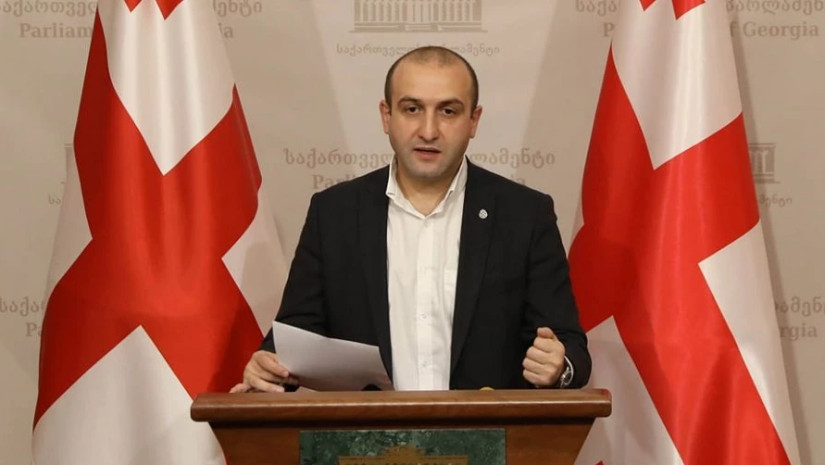
The leader of Georgia’s Girchi party, Iago Khvichia, has criticised the arrest of former interior and defence minister Gia Baramidze on treason-related charges, arguing that controversial political remarks should not in themselves amount to a criminal offence.
Baramidze, a senior member of the opposition United National Movement, was detained on the basis of a court order after prosecutors charged him with treason in the form of sabotage. The offence carries a sentence of up to four years in prison.
Khvichia said he strongly disagreed with Baramidze’s remarks but argued that they did not make him a traitor.
“You can accuse Baramidze of many things, and I am not going to act as his defender. What he said was foolish, but that does not make him a traitor to his country,” Khvichia said in an interview with Postv.
He questioned the legal grounds for prosecuting Baramidze over comments concerning events dating back more than three decades.
“This means that you had no other genuine accusation against Baramidze,” Khvichia said. “You came to power promising to restore justice, but instead of restoring justice, you have created another case of injustice.”
Khvichia also referred to complaints filed by military veterans against Baramidze, saying he did not believe they had necessarily wanted to see him imprisoned.
“I understand that they were angry and wanted answers from him, but you did not allow them to demand those answers themselves. Why send the man to prison?” he said.
Khvichia, who is also a member of Georgia’s Prosecutorial Council, said prosecutors should publicly explain how Baramidze’s statements meet the legal threshold for sabotage or treason.
“I want to know what legal grounds exist for prosecuting someone for treason not because of what he did or did not do, but because of something he said 32 years later,” he said.
He described the case as an “absurdity of encyclopaedic proportions” and said it raised broader concerns about freedom of political expression and the way criminal law was being applied.
Khvichia called on the prosecutor handling the case to publicly explain the charges and the specific legal provisions being used.
“I want the prosecutor in this case to come out publicly and explain what exactly Baramidze is accused of and under which article of the law,” he said. “Since everything surrounding this case has been public, the legal argument should also be discussed publicly.”
Khvichia said he remained unconvinced that Baramidze’s remarks could constitute treason.
“No prosecutor can convince me that what Baramidze said has anything to do with treason,” he said. “It may have been nonsense, but people should not be arrested simply for saying something.”
He added that the case contradicted the government’s earlier pledge to restore justice.
“You came to power promising to restore justice, and this is not justice,” Khvichia said. “A bureaucrat is arresting a politician over a political statement that may have been foolish.”
Tags:
Iago Khvichia