Georgian Dream Parliamentary Majority Leader Accuses Brussels of Avoiding Dialogue, Slams EU Criticism as ‘Shameless’

Author
Frontnews Georgia
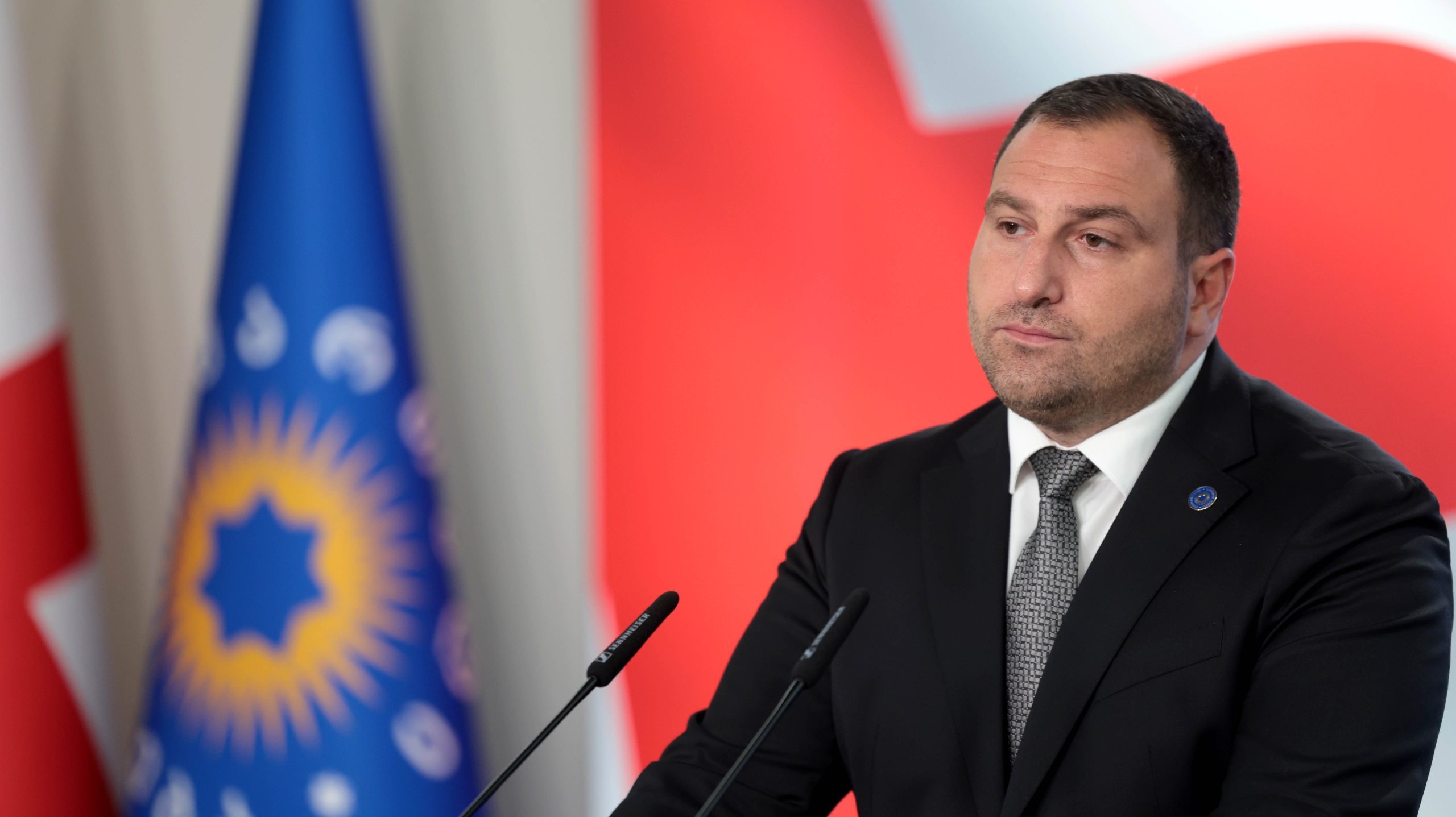
Irakli Kirtskhalia, leader of the ruling Georgian Dream party’s parliamentary majority, has accused European Union officials of refusing to engage in constructive dialogue with Georgia’s government, describing criticism from Brussels as “shameless” and politically motivated.
Kirtskhalia said criticism from Brussels should be followed by open and constructive discussions, but claimed that EU representatives, diplomats and domestic political groups allegedly influenced by them were unwilling to engage in substantive debate.
“Whenever we face criticism from Brussels, it should always be followed by a healthy discussion, which is precisely what we continue to demand. However, neither EU officials nor their diplomats, nor the agents they control who obey them like unquestioning servants are willing to enter into such a discussion,” Kirtskhalia said.
According to the parliamentary majority leader, EU officials would struggle to justify their objections to several pieces of Georgian legislation, including the country’s foreign influence transparency law and restrictions on LGBT-related advocacy.
“It is very difficult to enter into a discussion with Georgians and demand that they refrain from adopting a transparency law. Apparently, the European path is now supposed to be based on a lack of transparency,” he said.
Kirtskhalia also criticised what he described as European pressure on Georgia over legislation concerning LGBT rights and gender identity.
“It is difficult to engage in a discussion when you tell Georgians, or any self-respecting nation, that banning LGBT+ campaigns is somehow contrary to European values. It is difficult when you tell Georgians that a man should be able to walk into a Public Service Hall and become a woman. It is difficult to argue that same-sex marriage is a European value,” he said.
The ruling party official claimed that Brussels had been demanding the repeal of these laws for years.
He further accused European officials of applying double standards when assessing protests and political unrest in Georgia.
“It is difficult to engage in a discussion with the government and society when you tell Georgians that setting a police officer on fire, throwing Molotov cocktails and pursuing revolutionary scenarios constitute freedom of expression. It is difficult to make such arguments to the Georgian people,” Kirtskhalia said.
He also rejected the description of Georgia’s transparency legislation as a “Russian law”, accusing its critics of deliberately misrepresenting the legislation.
“They are the authors of the great deception of labelling this legislation a ‘Russian law’. It is difficult for them to explain why the law is supposedly Russian. That is why we continue to hear such shameless statements,” he said.
Kirtskhalia argued that such statements were damaging the credibility of European institutions and undermining the values on which the European Union was founded.
“These statements cast a shadow over their own reputation and the values upon which the European Union was built. We can see the results of surveys conducted within the EU itself, showing how citizens of EU member states perceive the policies pursued by the Brussels elite,” he added.
His remarks came amid renewed criticism of the Georgian government from the EU’s foreign policy chief, Kaja Kallas, during a meeting of EU foreign ministers in Luxembourg on October 12.
Kallas accused Georgian Dream of undermining the country’s European aspirations and warned that the bloc’s current approach was failing to generate sufficient pressure for political change.
“The Georgian people want a European future, but Georgian Dream is systematically taking it away from them,” Kallas said.
She also warned of worsening democratic backsliding in Georgia, citing pressure on opposition parties and restrictions affecting civil society. Kallas said EU foreign ministers would return to the issue in January.
The exchange highlights continuing tensions between Brussels and Georgia’s ruling party over democratic standards, civil liberties and the country’s path towards European Union membership.
Tags:
Irakli Kirtskhalia