Georgian Dream Faction Chair Tells German Ambassador to Consider Germany’s Own Political and Economic Challenges

Author
Frontnews Georgia
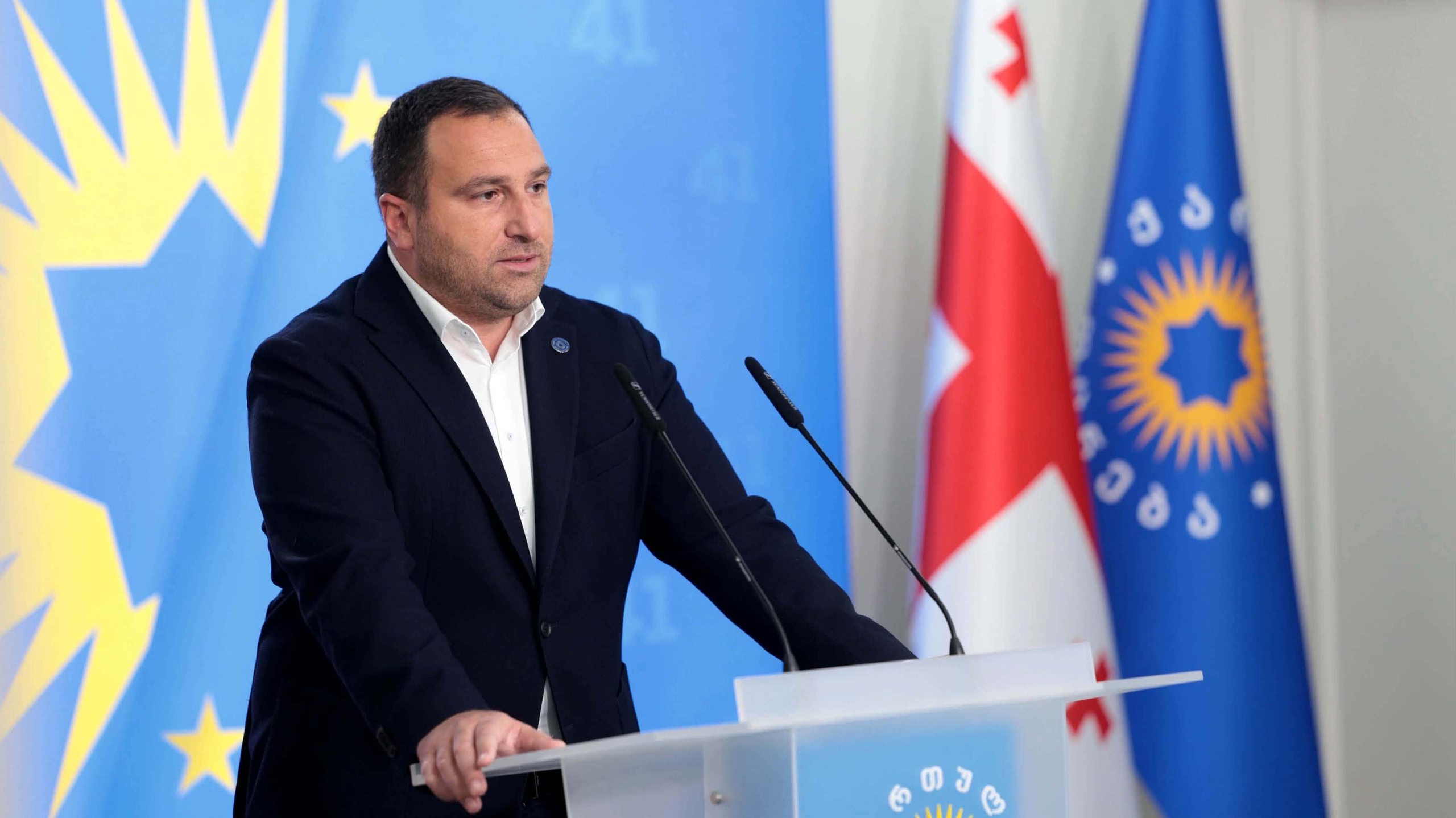
Georgian Dream parliamentary faction chair Irakli Kirtskhalia has advised Germany’s ambassador to Georgia to consider political and economic developments in Germany when making critical statements about decisions taken by the Georgian government.
Speaking at a briefing, Kirtskhalia was responding to the German ambassador’s remarks concerning the closure of foundations operating in Georgia.
Addressing the issue of grant funding, Kirtskhalia said programmes deemed eligible and necessary for funding would have received financial support.
“If grant programmes had been submitted that we considered necessary to fund, we would have funded them. If programmes were submitted that were not considered appropriate for funding, and if that became the reason for any organisation to close, then the ambassador should raise that issue with the organisations that provide the basis for the statements she subsequently makes,” Kirtskhalia said.
Turning to Georgia’s relations with the European Union, Kirtskhalia acknowledged Germany’s role as one of the bloc’s major contributors but urged the ambassador to take domestic political and economic developments in Germany into account when making public statements.
“I understand that Germany is one of the major contributors within the economic union that is the European Union. I would advise her, when making such strong statements, to take into consideration the political developments and processes taking place in her own country, including the results of elections held there and the broader dynamics unfolding in Germany,” Kirtskhalia said.
He also pointed to Germany’s economic situation and broader challenges facing the EU, including energy costs, tariffs, employment, business and industry.
“They should look at where their economy stands today, where the EU economy as a whole stands today, what challenges they face in terms of energy and tariffs, what the situation is with employment, entrepreneurship and industry, and only then make strong statements about how a step taken by our country on the basis of its security interests supposedly obstructs membership in one union or another,” he said.
Kirtskhalia also said Germany alone does not determine whether a country becomes a member of the European Union.
“Germany is not the sole decision-maker on which country joins the European Union and which does not,” he said.
He further referred to discussions concerning the rights of future EU member states, including voting and veto powers, and called on European officials to reconsider what he described as the bloc’s current governance approach.
“They should also think carefully about this in their own country. When they speak about member states, they should look at the decisions now being considered under which new countries joining the EU would not have voting rights or veto rights, and so on,” Kirtskhalia said.
“They should also reconsider the overall style of governance, because they should not forget what the European Union means and the values on which it was founded. The European Union was not founded on values that could be described as the finest form of fascist or communist governance,” he added.
Tags:
Irakli Kirtskhalia