Georgia must pursue its interests without illusions about foreign powers, PM

Author
Frontnews Georgia
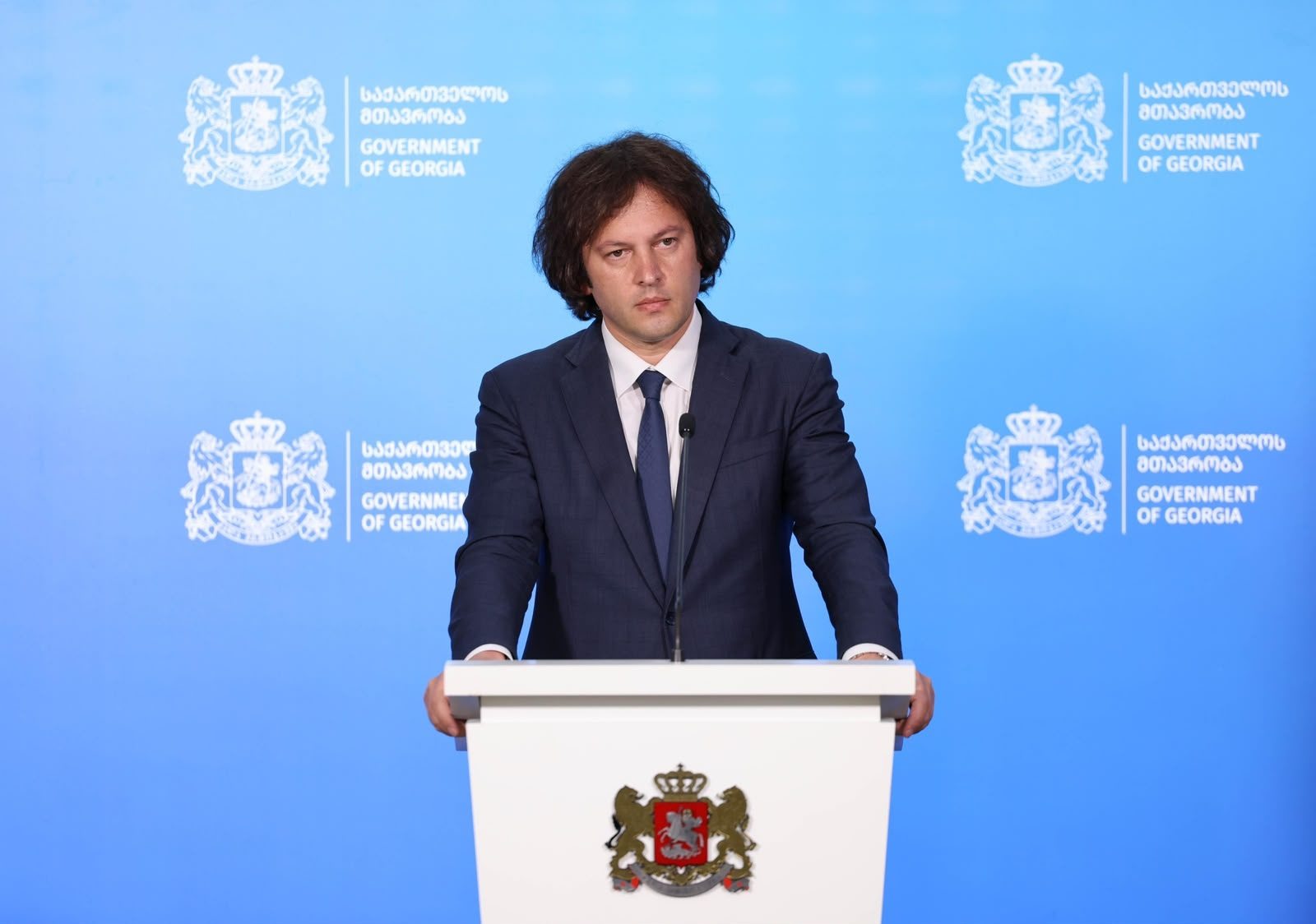
Georgian Prime Minister Irakli Kobakhidze has argued that states consistently act in pursuit of their own national interests and said Georgia should not expect foreign powers to put its interests ahead of their own.
Speaking at a government administration briefing on Tuesday, Kobakhidze linked his comments to the ongoing debate over the August 2008 war and the historical legacy of King Erekle II, whose decision to establish a relationship with the Russian Empire has become the subject of renewed political debate.
"Each state acts according to its national interests," Kobakhidze said. "No one should have the illusion that one state works for the benefit of another and sacrifices its own interests for it."
He added states cooperate and form partnerships when doing so serves their interests, while political, economic and other forms of influence can also be used when cooperation is insufficient.
Kobakhidze also defended Erekle II's decision to seek Russian protection, arguing that it should be assessed in the context of the severe military and demographic pressures facing Georgia at the time.
He added Georgia was under repeated attacks and political pressure from Persia, the Ottoman Empire and other powers, creating what he described as a real threat to the survival of both the Georgian state and the Georgian people.
The official claimed the agreement with the Russian Empire brought Georgia a "principled benefit" despite Russia itself pursuing its own interests.
He argued that Erekle II's decision was not merely justified but the "only correct and unavoidable" option available under the circumstances.
Kobakhidze also said the decision ultimately enabled Georgia to preserve its national identity, Christian traditions and links to European culture, and contributed to the country's eventual survival as an independent and sovereign state.
His remarks refer to the Treaty of Georgievsk, signed in 1783 between the Kingdom of Kartl-Kakheti and the Russian Empire. The treaty established Russian protection over eastern Georgia, although the Russian Empire later annexed Kartl-Kakheti in 1801.
Kobakhidze also criticised the “most active contemporary critics” of Erekle II, saying that many present themselves as strongly pro-European while failing to consider the historical circumstances in which the king made his decisions.
He argued that Erekle II's policy toward Russia preserved Georgia's ability to maintain a political and cultural connection with the Christian West.
"Criticism of Erekle II's decisions from today's perspective is completely unfounded," Kobakhidze said, arguing that the king's actions were motivated by the need to preserve Georgia's statehood and future.
He described Erekle II's decision as a "wise" and even "brilliant" act of statecraft when viewed against the circumstances of the period.
Kobakhidze also criticised the European Union's policy toward Georgia, accusing the bloc and some of its member states of pursuing their own political interests rather than Georgia's national interests.
He said the EU had demanded that Georgia repeal its law on transparency, which he described as an analogue of the US Foreign Agents Registration Act, as well as legislation concerning family values and the protection of minors.
Kobakhidze said the Georgian government considered those laws essential for protecting national identity and sovereignty.
He also claimed that the EU had publicly demanded that Georgia join sanctions imposed on Russia, arguing that such a move would have had "devastating" consequences for the Georgian economy.
Kobakhidze highlighted Georgia should not expect the United States, European countries, Russia or any other foreign power to act against its own interests for Georgia's benefit.
He accused some European governments and institutions of being influenced by what he called "informal oligarchic forces" and said their decisions were driven by political interests and external instructions.
"The well-being of Georgia must first and foremost be ensured by the Georgian state, the government and the Georgian people," Kobakhidze said.
Tags:
Irakli Kobakhidze