Georgian Parliament’s European Integration Committee Chairman Levan Makhashvili: Why Are the Same Actions Judged Differently in Europe and Georgia?

Author
Frontnews Georgia
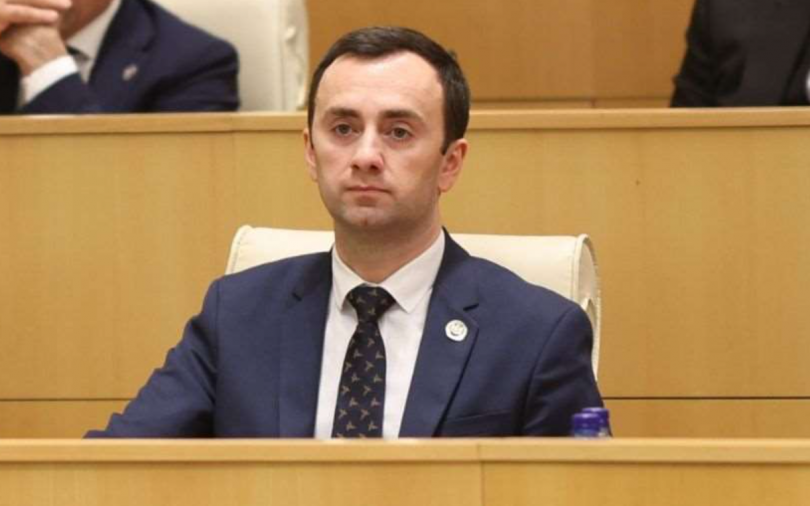
Levan Makhashvili, chairman of the Georgian Parliament’s European Integration Committee, has accused European officials of applying double standards in their assessment of political developments in Georgia, questioning why actions considered criminal offences in European countries are treated differently when they occur in Georgia.
Speaking on the television programme Debates, Makhashvili criticised the European Commission’s latest enlargement report, arguing that it failed to address what he described as inconsistencies in the EU’s approach to Georgia.
He said it was unacceptable that attacks on police officers and the use of Molotov cocktails were treated as serious acts of violence in European countries, while individuals involved in similar incidents in Georgia were described by some critics of the government as heroes or political prisoners.
“We had some hope, and remained optimistic, that this document would finally provide answers to the much-discussed questions: Why are the same events assessed differently in Europe and Georgia?” Makhashvili said.
“Why is someone who throws a Molotov cocktail considered a criminal and severely punished in Europe, while in Georgia such individuals are called heroes and political prisoners, with demands for their release? Why are attacks on police officers considered violence there, while in Georgia they are supposedly treated as freedom of expression?” he asked.
Makhashvili also drew comparisons between transparency legislation adopted in France and Georgia, accusing European officials of applying different political standards to similar regulatory measures.
“Why is it that when France adopts a transparency law that is stricter than ours, it is described as a shield for democracy, a defence of democratic values and a sign of progress, while Georgia’s considerably milder legislation is portrayed as democratic backsliding?” he said.
According to the committee chairman, the European Commission’s report should have provided a basis for substantive discussions on policy areas such as social welfare, agriculture, transport and labour rights.
Instead, he argued, the document contained politically motivated assessments that prevented constructive engagement.
“Unless we answer these questions once and for all, discussing other issues becomes little more than rhetoric. I would gladly engage in discussions on social policy, agriculture, transport and labour rights. That is precisely what this document should be about,” Makhashvili said.
“But instead of a healthy discussion, we are confronted with unfair and unsubstantiated accusations, which are unacceptable and deeply concerning to us,” he added.
Makhashvili further claimed that Georgian authorities had repeatedly sought dialogue with European counterparts over the past three to four years but had encountered political pressure rather than constructive engagement.
He questioned the participation of European officials in anti-government demonstrations in Georgia and referred to a former Swedish parliamentary counterpart whom he accused of encouraging protests resembling Ukraine’s Maidan movement shortly after Georgian elections.
“Should foreign ministers be sitting at the negotiating table or participating in anti-government demonstrations?” Makhashvili asked.
He said a former chairman of Sweden’s parliamentary committee on European integration had supported an election boycott and called for Maidan-style demonstrations in Georgia just days after an election.
“He was standing there calling for a Ukrainian Maidan, supporting a boycott and urging people to take to the streets. Meanwhile, we have been doing everything possible to resolve these issues through dialogue at the negotiating table,” Makhashvili said.
The Georgian lawmaker maintained that Tbilisi remained committed to resolving disagreements through diplomatic engagement, while criticising what he characterised as politically selective assessments by European institutions.
Tags:
Levan Makhashvili