European University launches Georgia's first experimental study of prehistoric stone tools

Author
Frontnews Georgia
European University is set to launch Georgia's first experimental archaeology project dedicated to the replication and functional study of prehistoric stone tools, marking a significant step in the development of archaeological research in the country.
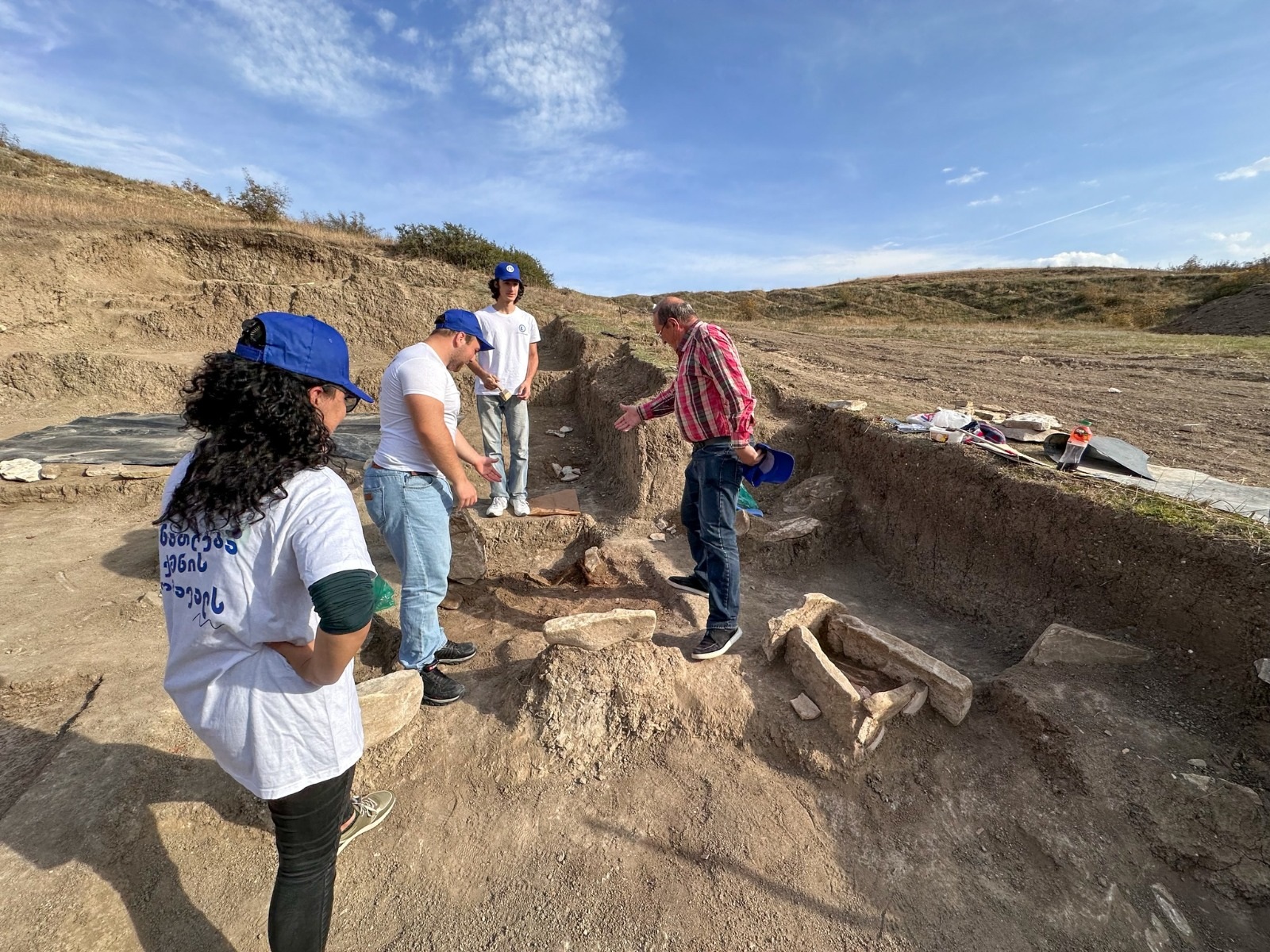
The project, which will run from 15 to 25 June, will involve undergraduate archaeology students and aims to investigate the original functions, intensity of use and wear patterns of prehistoric stone implements through a combination of practical experimentation and scientific analysis.
The university on Friday said the research was based on an interdisciplinary approach that combines typological classification, functional analysis, including use-wear studies, and experimental archaeology methods.
Researchers said that stone tool studies in Georgia have traditionally focused on typological classification, providing limited information about how the tools were actually used. The new initiative seeks to address that gap by creating and testing replicas of prehistoric implements, including scrapers, saws, perforators and cutting tools.
As part of the project, the replicated tools will be used on a range of materials, including wood, leather, bone, meat and antler, to determine how they functioned in practical tasks and how traces of wear developed over time.
Students will conduct experiments such as sawing wood, scraping hides, cutting meat and processing bone. Each stage of the research will be documented using binocular and digital microscopy, as well as detailed photographic and video records.
The programme will also include educational lectures, field-based experimental work, tool replication workshops, phased testing and the systematic collection and analysis of data.
At the conclusion of the project, researchers plan to create a bilingual database of use-wear traces and an experimental research journal that will be made available to the scientific community.
The university said the findings are expected to make an important contribution to prehistoric archaeology in Georgia by establishing the country's first systematic experimental reference base for studying the function and use of stone tools, while also helping to introduce new methodological approaches in the field.
The project is being carried out by archaeology students from European University under the supervision of Ana Tetruashvili, an associate professor at the university and chief specialist at the Georgian National Museum.
Tags:
European University