Georgian Parliament Speaker: Leuville Preserved the Memory of an Independent Georgia for Decades

Author
Frontnews Georgia
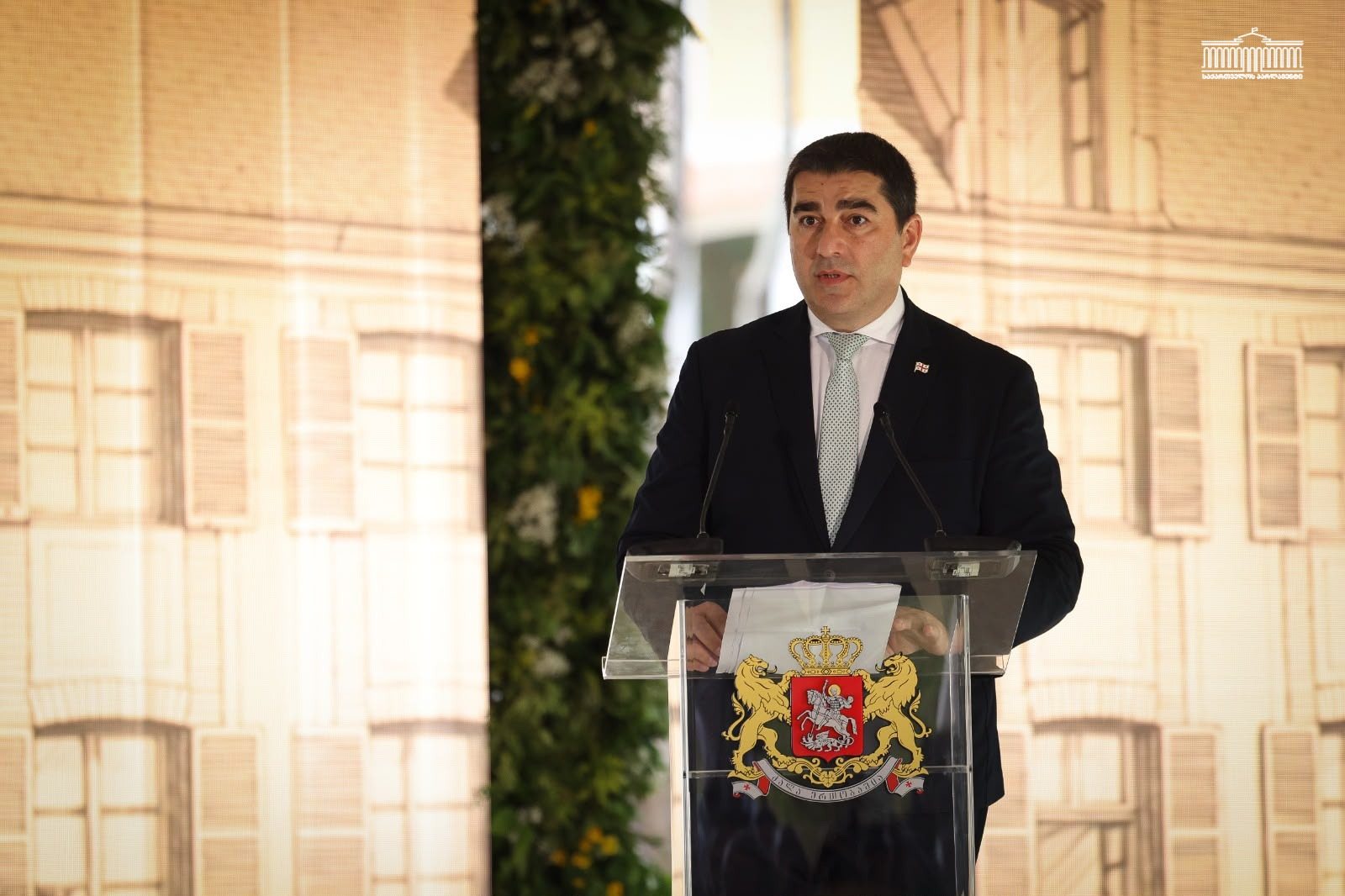
Georgian Parliament Speaker Shalva Papuashvili has thanked generations of people who preserved the historic Georgian estate in Leuville, France, saying the site safeguarded the memory of an independent Georgian state throughout decades of Soviet rule.
“Being in Leuville today carries a special sense of emotion. Located almost 4,000 kilometres from Georgia, this place has been part of Georgian political history for a century a chapter of that history that could no longer continue in Georgia and had to continue on foreign soil,” Papuashvili said at the official opening of the restored estate.
He recalled that after Soviet Russia took control of Georgia in 1921, members of the government of the Democratic Republic of Georgia went into exile, taking with them the hope that their struggle to restore the country’s freedom and independence would continue.
“Those who went into exile carried with them the political memory of an independent Georgia, its constitutional and state traditions, diplomatic ties and the belief that the 1921 occupation would not mark the end of Georgia’s history as an independent state,” he said.
Papuashvili described Leuville as one of the principal centres of Georgian political emigration, where leading figures of the First Republic lived, followed developments in their homeland and sought to remind Europe that an independent Georgian state had existed before Soviet Russia ended its independence by force.
‘Leuville was also a home’
The Parliament Speaker stressed that the history of Leuville was not solely one of high politics.
“It was also a home. Families lived here. Children and grandchildren grew up here. People worked, argued, celebrated and said goodbye to one another. Georgian books, the Georgian language and family memories were preserved here,” Papuashvili said.
He described the estate as “a small space in France where the memory of an independent Georgia was preserved for a long time.”
The estate also helped sustain members of the Georgian émigré community living in severe hardship, he said, recalling Nametia Berdzenishvili, who became known as a maternal figure of the Leuville community and looked after the estate for decades.
According to Papuashvili, Leuville’s significance lies in the way it brings together the history of Georgian statehood and the personal experience of exile.
“It reminds us that beyond historical names and dates, emigration is always a human experience the experience of losing one’s homeland, being separated from it and, at the same time, maintaining a connection with it,” he said.
‘What they preserved eventually returned to Georgia’
Papuashvili noted that most of the political figures of Georgia’s First Republic never returned to their homeland and that many are buried in Leuville.
“But what they preserved for all those years eventually returned to Georgia the idea of an independent state,” he said.
“For 70 years, each passing day made the fulfilment of the hope preserved in Leuville seem increasingly difficult to imagine. But that hope never disappeared.”
Georgia restored its independence in 1991 following the collapse of the Soviet Union.
“The country regained its freedom at the cost of great hardship, blood, tears and suffering,” Papuashvili said, adding that the wounds associated with the restoration of Georgian independence continue to require healing.
A century after Leuville became a centre of Georgian political exile, Papuashvili said, “independent Georgia itself has returned here.”
New role for Georgian diaspora
Papuashvili said the restoration, completed after nearly a decade of work, gives the estate a new mission while preserving its historical legacy.
“We are opening this estate with a renewed function, with the memory of the past and a focus on the future,” he said.
According to the Speaker, Leuville is intended to become a centre connecting members of today’s Georgian diaspora and Georgians temporarily living abroad both with one another and with their homeland. It will also provide younger generations with a place to learn about and maintain links with their Georgian roots.
“Historically, Georgia has always had spiritual, cultural and educational centres abroad. I believe the Leuville estate will become a modern continuation of this great tradition and a powerful centre connecting Georgia with the Georgian diaspora,” Papuashvili said.
Speaker thanks those who preserved Leuville
Papuashvili thanked everyone who helped preserve the estate over the decades and those involved in returning it to Georgian ownership and carrying out its restoration. He particularly highlighted the role of Georgian Parliament Vice Speaker Tea Tsulukiani.
“I would like to thank every person who preserved this place over the decades and ensured that it survived to the present day,” he said.
Reflecting on the legacy of the Democratic Republic of Georgia, which existed from 1918 until the Soviet takeover in 1921, Papuashvili noted that despite its brief existence, it established a constitution, parliamentary traditions, universal elections and state institutions, while laying the political foundations of an independent Georgian state.
“A significant part of this heritage was preserved for us by the émigré community,” he said.
Papuashvili added that respecting history also means critically understanding it studying failures alongside achievements and divisions alongside moments of agreement.
“This is how historical memory becomes experience. And Leuville preserves that history,” he said.
“Today, this estate once again belongs to Georgia. From this day forward, an independent and free Georgia is giving this place a new mission and a new life,” Papuashvili concluded.
The official opening ceremony was also attended by Georgian Prime Minister Irakli Kobakhidze and representatives of the country’s legislative and executive authorities.
Tags:
Shalva Papuashvili