MP Pagava: Georgia won’t become buffer zone or a tool to contain Russia

Author
Frontnews Georgia
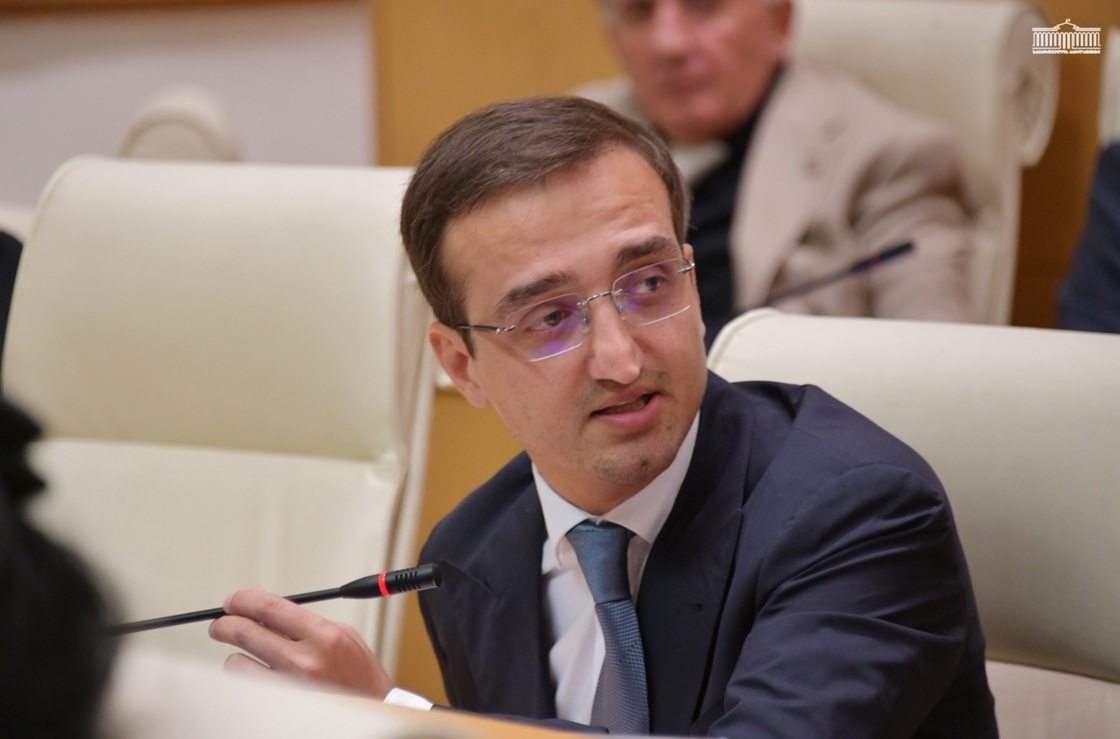
Georgian Dream MP Tornike Pagava has said Georgia will not become a buffer zone or a tool for containing Russia, insisting that the country will continue pursuing its own path towards European integration while safeguarding its sovereignty.
Speaking during a parliamentary plenary session on Tuesday, Pagava rejected suggestions that Georgia was falling behind Ukraine and Moldova on the path to EU membership. He argued that Georgia had its own strategic vision and could serve as a bridge between Europe and Asia rather than become a frontline in geopolitical confrontation.
“Georgia cannot become a buffer zone or a factor for containing Russia,” Pagava said, adding that the country would continue its European integration process “peacefully and with dignity”.
Pagava also criticised recent statements by EU officials about Georgia’s progress towards membership, claiming there were no objective state or economic indicators by which Georgia lagged behind Ukraine or Moldova. He said international studies, including those conducted by EU institutions, supported his position.
Referring to Finland’s president, who described Ukraine as a buffer zone for the EU and a factor in deterring Russia, Pagava said Georgia should not follow that model. He also referred to comments by Moldova’s president about the possibility of unification with Romania in the context of European integration.
Pagava said Georgia’s strategic role should instead be based on strengthening regional connectivity, linking Central Asia with European markets and facilitating the westward movement of energy resources and goods.
He also referred to a 2011 Georgian Dream manifesto, which he said rejected the idea of Georgia becoming an arena for confrontation between global powers and instead envisioned the country as a centre for international cooperation.
The MP outlined several infrastructure projects intended to reinforce that role, including the construction of Anaklia deep-sea port, the expansion of Poti port, the modernisation of the Georgian railway and the development of a subsea electricity cable linking Georgia with Europe.
Pagava also defended the government’s social policies, citing poverty reduction, pension increases and free education as evidence of its record. He said Prime Minister Irakli Kobakhidze had announced a 45-lari pension increase for people under 70 from 2027.
Georgia was granted EU candidate status in December 2023. However, the European Council concluded in June 2024 that the country’s accession process had been de facto halted over the Georgian government’s course of action. In November 2024, the government announced that it would not pursue the opening of accession negotiations before 2028.
Tags:
Tornike Pagava