Ruling party MP accuses Council of Europe report of undermining Georgia's sovereignty

Author
Frontnews Georgia
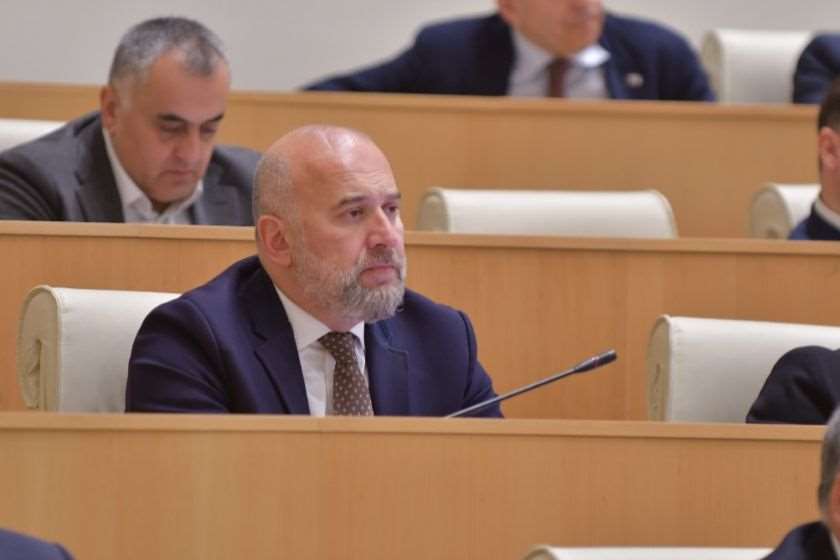
Zviad Shalamberidze, a ruling party lawmaker and First Deputy Chair of the Georgian Parliament's Regional Policy and Self-Government Committee, has criticised a draft report prepared for the summer session of the Parliamentary Assembly of the Council of Europe (PACE), describing it as a politically motivated attack on Georgia's sovereignty.
Speaking during a plenary session of parliament on Tuesday, Shalamberidze rejected claims of democratic backsliding in Georgia and argued that the report was not an objective assessment of developments in the country.
"I would like to respond directly, and without diplomatic pleasantries, to another political absurdity being prepared against our country," he said.
The lawmaker took particular issue with recommendations that he said called on the government to withdraw a case from the Constitutional Court, arguing that such demands amounted to interference in the country's judicial independence.
Shalamberidze said it would be inconceivable for external actors to instruct courts in countries such as France or Germany on which cases they should hear, describing the recommendation as a double standard and a direct challenge to Georgia's institutions.
He also criticised references in the draft report to specific political figures as alleged victims of political persecution, arguing that political affiliation should not place anyone above the law.
"There are no untouchable castes in Georgia," Shalamberidze said, adding that justice should apply equally to all citizens regardless of their political connections.
The ruling party MP also rejected assertions that Georgia lacks conditions for free and fair elections, claiming such allegations were designed to undermine confidence in future electoral processes and create conditions for political instability.
According to Shalamberidze, attempts to question the legitimacy of voters' choices suggest that critics are more interested in influencing political outcomes than promoting democratic standards.
Tags:
Zviad Shalamberidze