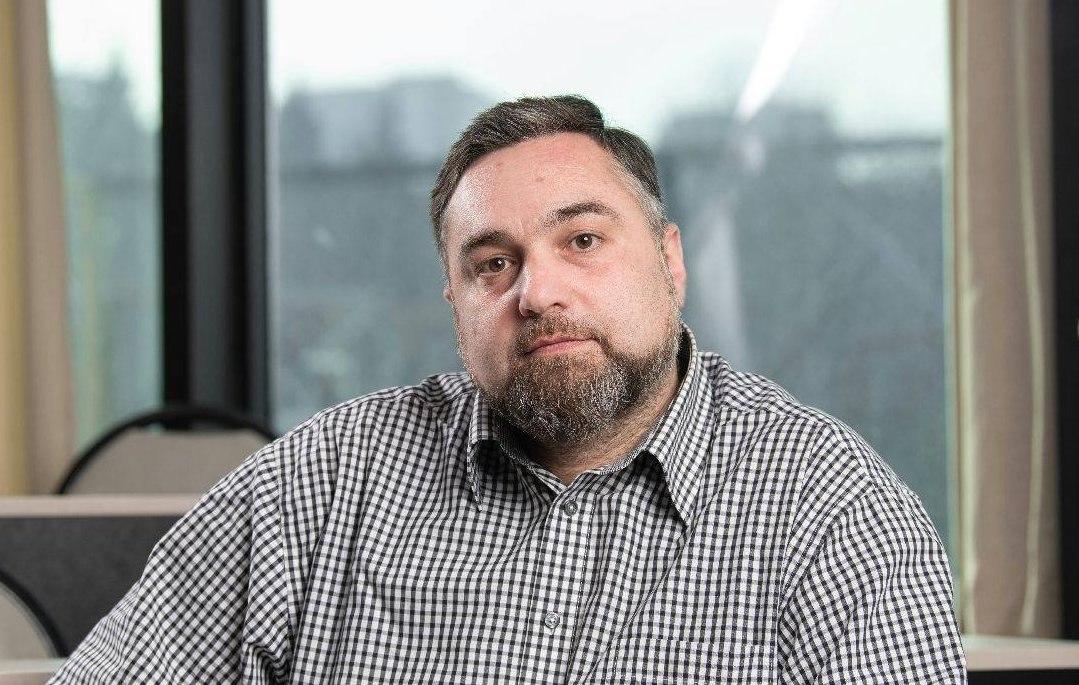
Archil Gamzardia: Ivanishvili and Kobakhidze are in ‘cold war’, but neither can do without the other

Author
Frontnews Georgia
Recent personnel changes within the government, possible tensions within the ruling team and mechanisms for the redistribution of power in Georgian Dream - the issues are discussed by philosopher and analyst Archil Gamzardia in an interview with Front News.
Gamzardia claimed the processes currently unfolding within the ruling team reflect less a systemic transformation than an internal backstage drama and a shifting balance of power. He says Bidzina Ivanishvili and Irakli Kobakhidze are engaged in a kind of “cold war”, although the two remain mutually dependent, making the situation increasingly complex and contradictory.
Q: What do the personnel changes that have begun in the government in recent days mean, and what kind of political decisions are behind them? There is a theory that this could be an attempt to reduce Prime Minister Irakli Kobakhidze’s influence and that the changes reflect tensions between different groups within the government. What is your assessment?
Archil Gamzardia: In my view, this is very basic restructuring, because, in itself, it does not have much significance for us. Power is no longer dependent on the individuals occupying positions within the government - on who leaves or who comes in - because people are appointed according to what role they are considered suitable for.
Moreover, from a functional perspective, we tend to perceive these positions as actual offices, whereas for the person making the appointments, that is not necessarily the case. These are highly symbolic functions assigned to individuals who are expected to exercise power. For the person making the appointments, it does not really matter who was the head and who became the deputy. It is essentially a demotion from nowhere to nowhere.
At most, this process represents a redistribution of power, and we can look for traces of internal intrigue within it.
Q: There is a view that Bidzina Ivanishvili is trying to isolate Kobakhidze and weaken his power. The dismissal and departure from politics of Mamuka Mdinaradze is cited as an example. These latest changes are also being linked to this. Do you think Ivanishvili is trying to leave Kobakhidze with as little power and as few trusted personnel as possible?
Archil Gamzardia: Yes, I subscribe to the theory that Bidzina Ivanishvili and Kobakhidze are engaged in a cold war. However, they are both dependent on one another. Just as Kobakhidze has no one other than Ivanishvili, Ivanishvili also has no one other than Kobakhidze.
Both are power-oriented figures. Obviously, Ivanishvili possesses a different type of power, but wherever Kobakhidze has opportunities, he uses them to the fullest.
For example, Ivanishvili is a very closed-off person and does almost everything through others, whereas Kobakhidze is active. That is why Kobakhidze is trying to build a kind of clan structure.
Ivanishvili cannot maintain this kind of communication because he is a closed person and maintains contact with only three or four people. A confrontation between them is inevitable, and I have been saying this for a long time. Getting rid of one another is also difficult - they obstruct each other, but they cannot accomplish anything without each other either.
Q: Why does Ivanishvili need Kobakhidze now? What is the reason he is not rushing to remove him?
Archil Gamzardia: First, because Kobakhidze has managed to become Ivanishvili’s only remaining pillar of support. There has to be someone who can provide a facade for his total power.
Previously, there were more such figures - Garibashvili, Liluashvili, Gomelauri and others. Now everything has been reduced to Kobakhidze. So if Ivanishvili gets rid of Kobakhidze, he has to ask himself: what does he do afterwards? And there is another question: can he actually get rid of Kobakhidze that easily?
I have always said that removing Kobakhidze is not that simple. At a time when people were constantly saying that Kobakhidze was a nobody and amounted to nothing, I stubbornly maintained that he had built influence across the entire system.
Unlike Bidzina, Kobakhidze moved through the parliamentary, judicial, legislative and executive branches - everywhere. He built his own networks of influence.
Kobakhidze created a system in which the mechanism for eliminating rivals was built around completely removing them from the equation.
Kobakhidze is also unique in the sense that the opposition does not attack him. The opposition looks down on him and recognises no one beyond Ivanishvili. But that is precisely an opportunity: you can do your work without becoming a suspect.
During the years when Kobakhidze was building his influence, his opponents simply dismissed him. As a result, he had a completely open field in which to build influence and eliminate his rivals.
In doing so, he isolated Ivanishvili. That is why the two are, in a sense, prisoners of one another.
Kobakhidze also has an extraordinary ability to regenerate politically - when he suffers a setback somewhere, he compensates for it elsewhere and manages to survive. Becoming prime minister was not really his original path, yet he managed to get there because he is quite a capable politician.
Q: However, questions have also emerged regarding Kobakhidze’s inner circle, including allegations of corruption and other problems. There are also questions surrounding the costs of the Patriarch’s funeral. How do you see these issues - could they represent a Damocles’ sword hanging over him?
Archil Gamzardia: Generally speaking, I think the Mdinaradze issue has been exaggerated. There is an approach suggesting that Mdinaradze was to Kobakhidze what Kobakhidze is to Ivanishvili - his single main pillar of support. I do not see it that way.
Of course, Mdinaradze made a mistake in allowing careerism to push him into taking responsibility for things that someone in government cannot sustain for long. In addition, Mdinaradze developed very strong ambitions.
We do not know what the invisible, lower layers of this iceberg of power look like or how they operate. I think that whenever things periodically become heated, there is a need to find a scapegoat.
Our society is currently in an extremely difficult situation, and we have thousands of problems. Just as we survived on television series in the 1990s, today we survive on political series. Ultimately, this is all internal backstage drama, in which an internal struggle is taking place.
Q: I definitely want to ask you about former State Security Service chief Grigol Liluashvili. He has been sentenced to 13 years, and the opposition has suggested that he may start talking. Prime Minister Kobakhidze said - “let him talk. He has nothing to talk about; let him say whatever he wants.” Is it possible that Liluashvili, like Garibashvili, could become politically active?
Archil Gamzardia: For someone to become a politically active figure, they must first have been a politically active figure - that is, someone with authority that matters to society, whether that is Garibashvili, Liluashvili or someone else.
The opposition does tend to do this: when they believe that someone can hurt the government, they try to bring that person under the opposition’s wing.
Overall, these are very limited and temporary resources that have not had any particularly significant impact. We saw this in the cases of Giorgi Gakharia and Garibashvili as well.
At most, such figures can cause some damage at the lower or upper levels. For example, Garibashvili’s statements did play some role in Mdinaradze’s departure.
Q: But Liluashvili is a figure who may have a great deal of compromising information about the government and Ivanishvili, or at least possess a great deal of inside information. Would his speaking out not be damaging to the ruling team and the honorary chairman of its party?
Archil Gamzardia: To be honest, there is one thing that surprises me both about Garibashvili and Liluashvili - especially given that Garibashvili was prime minister, interior minister and defence minister, while we are talking about a former head of the State Security Service.
When these people know how power is structured and how every individual is controlled, how did they fail to prevent the existence of compromising material against themselves? That is somewhat strange.
I am an entrepreneur. Last month, I received 10 lari and I declared even that. Why would they think that the same rules did not apply to them?
There is also the fact that people become gods of Olympus while they are in power and begin to believe that it will last forever. This self-illusion is probably also part of the explanation.
On the other hand, what compromising material would anyone actually leave behind for them? Liluashvili may know certain things and make statements, but then what?
We remember State Security Service employees who made high-profile statements in the past, talked about various meetings and addressed numerous issues. They may have created a small dramatic effect, but what was the overall result? Nothing.
That too is part of the drama.
I doubt that Liluashvili will start talking about anything. But even if he does, he would have to reveal something truly extraordinary - something society does not already know.
Second, why would even a Georgian Dream voter believe him? Neither former supporters nor opponents would necessarily accept what he says.
Q: Do you think Liluashvili lacks the political or authoritative standing in society, including among Georgian Dream supporters, that would make people believe him?
Archil Gamzardia: If Liluashvili says something, it will have an effect for a day or so - analysts will comment, television channels will discuss it, the press will write about it. And then what?
The point of all this would have to be to weaken the government. I do not even know what is left to expose about the authorities.
It seems to me that the whole technology of fighting the government is now in crisis. What is left? What could Liluashvili say?
The government itself acknowledges that there is corruption within the system and says, “look, we have arrested people.”
The only thing left would be for someone to say that a living person was killed and eaten alive.
Moreover, Bidzina Ivanishvili works very cautiously, and Kobakhidze does too. They are trying to damage Kobakhidze from various angles, but I do not think Kobakhidze is the kind of person who would easily allow someone to create an opportunity to attack him.
He is a highly organised politician and a highly disciplined figure. He does not easily give anyone a pretext.
That is why everything remains at the level of rhetoric.
Q: I also want to ask you about the situation on the opposition side. The confrontation within the opposition has become an everyday occurrence. There seemed to be an expectation that things would start moving in the autumn and that something new would emerge on the opposition field. However, apart from internal confrontation, we are not seeing any other process. What is happening within the opposition?
Archil Gamzardia: First, I no longer know whether the opposition has any resources left. I think it does not.
The level of trust in opposition actors and the value of their word - how much of either they retain in society - is no longer even a question, because in reality they have very little left.
What prospects do they have of possessing any reputational capital in society? I think the situation here is quite bleak.
The second issue is the illusions surrounding unity - this was absurd and impossible, something I have discussed many times.
In addition, this is an outdated opposition that lacks competitiveness and genuine competition. They seek their own benefit by discrediting one another.
By Elza Paposhvili
Tags: