Telasi and Telmico are effectively already sanctioned, Georgia's critical infrastructure at risk, Economist Khishtovani

Author
Frontnews Georgia
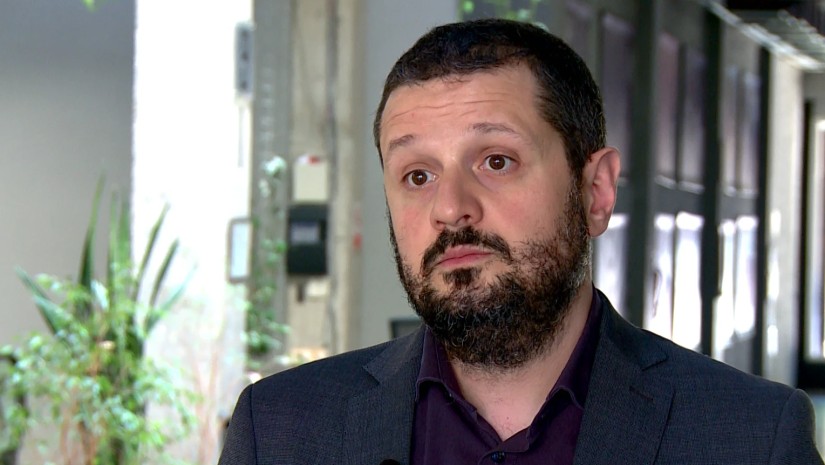
Against the backdrop of sanctions imposed on Inter RAO, Georgia's energy system and critical infrastructure are facing serious challenges. Despite the government's assurances that Telasi and Telmico face no immediate threat, economist Giorgi Khishtovani argues in an interview with Front News that both companies have, in practice, already become subject to sanctions because they can no longer conduct transactions in foreign currencies.
Khishtovani discusses the financial, logistical, and security risks that could arise if commercial banks suspend or restrict their services to these companies. He also assesses the consequences of the European Union's decision to include the Kulevi Oil Terminal in its sanctions package, describing it as a severe blow to Georgia's reputation as a reliable transit corridor.
Q: The government insists that neither Telasi nor Telmico is under threat and that the electricity system will continue operating without disruption. However, following the sanctions imposed on Inter RAO, how realistic is the possibility that Georgian commercial banks, fearing secondary sanctions, could completely halt financial transactions for these companies?
A: First of all, I believe we need to call things by their proper names.
Based on the statements made by both the National Bank of Georgia and the Georgian National Energy and Water Supply Regulatory Commission (GNERC), I have to point out an unfortunate reality: both Telasi and Telmico are, in effect, already sanctioned.
If Georgian companies are no longer able to conduct transactions in foreign currencies, that, in practical terms, amounts to being sanctioned. The discussion should not be limited to sanctions imposed on Inter RAO alone - it should focus on the actual consequences these sanctions have for Telasi and Telmico.
The second issue concerns the way the National Bank initially communicated its position, followed by the statements made by the regulatory commission.
For example, I interpreted the National Bank's comments as a signal directed at commercial banks, encouraging them to continue servicing these companies in Georgian lari. Apparently, the National Bank fully understands that banks will not carry out such transactions in US dollars, which is why issuing such guidance regarding foreign currency would have been meaningless.
Whether banks will continue servicing these companies in lari, however, is the million-dollar question.
It appears that, alongside informal communication, the National Bank also attempted to use its public statements to send a message to commercial banks encouraging them to maintain lari-denominated services for these companies.
What commercial banks ultimately decide is an entirely different matter.
We have seen similar situations before where the National Bank's public position differed from that of commercial banks. We saw this during the [former Prosecutor General] Otar Partskhaladze sanctions case, later when [ruling Georgian Dream founder and honorary chair] Bidzina Ivanishvili came under sanctions, and in relation to several other sanctioned individuals. During those cases, the National Bank and commercial banks often issued statements that differed both in substance and tone.
That is why it will be particularly important to hear the position of the Georgian Banking Association and learn whether commercial banks intend to continue providing services to these companies.
Q: What would happen if commercial banks refused to provide services to these companies?
A: If that were to happen, I believe both companies would face fundamental operational problems - and so would Georgia as a whole.
We are talking about the country's critical infrastructure. In practical terms, the reliability of Georgia's electricity supply could be called into question.
Even if banks ultimately decide to continue servicing these companies, I still see serious challenges.
We are not discussing a small business or a micro-enterprise. These are among the country's largest and most strategically important infrastructure operators.
Only a week ago, we witnessed significant damage affecting this infrastructure. Although the exact cause has not yet been established, we cannot rule out the possibility that it resulted from a cyberattack.
These are companies that require specialized equipment and advanced technologies that must be purchased abroad.
Therefore, the government's assertion that it will somehow help Telasi and Telmico mobilize the necessary infrastructure is simply not convincing.
A major question remains as to whether companies of this scale can realistically operate using only Georgian lari.
This is not merely about collecting utility payments from customers. These companies must also carry out large-scale international commercial transactions.
They need to procure security systems and other critical equipment from foreign suppliers.
How exactly are they expected to purchase such equipment using only Georgian lari?
That is a question for which I have serious concerns.
Q: The government says it has all the necessary instruments to keep the situation under control. If events follow the "Borjomi scenario" and the Russian shareholder refuses to surrender its stake at a discounted price, what economic or legal mechanisms does the government actually have to intervene in the management of these companies or acquire their assets?
A: First of all, the Borjomi case is, in fact, a perfect example of what can happen when a company's ability to continue operating is at risk. In that case, the shareholder transferred its stake free of charge to the Georgian state in order to ensure the company's continued operations.
I am not entirely sure in what context the ruling party is referring to this example, but the historical record is quite clear: if a company's operations are genuinely at risk, such an option should indeed be on the table.
The second issue is how such a process would actually take place and what legal instruments are available. I am not a lawyer, so I cannot comment on the legal specifics. However, it is evident that this is a highly regulated sector. That is precisely why there is an independent regulatory commission, which should have mechanisms in place to ensure the uninterrupted operation of such companies. Ultimately, this is about ensuring the uninterrupted functioning of the country itself, given the strategic importance of these enterprises.
Accordingly, if the regulator has not previously developed such instruments, it will now have to do so as a matter of urgency. Mechanisms must be put in place to guarantee business continuity should the operations of these companies become jeopardized.
One possible solution, of course, would be for the state to acquire the shares and assume ownership.
Generally speaking, I do not believe that state ownership of commercial assets is, in itself, an efficient model. However, the current situation is no longer a choice between a good option and a bad one - it is a choice between a bad option and an even worse one.
In my view, the worst-case scenario is one in which such a strategically important asset remains under Russian ownership while the continuity of its operations is placed in genuine doubt.
Q: You mentioned the recent nationwide power outage. Just a week ago, Georgia experienced a complete blackout that lasted several hours. The State Security Service has launched an investigation under the article concerning sabotage. Some have suggested that the outage may have been an attempt by these companies to pressure or blackmail the government. What scenarios do you consider plausible?
A: It would be difficult for me to provide a definitive answer while the investigation is still underway.
I cannot rule out the possibility that this was the result of a cyberattack, nor can I exclude the possibility of a technical failure.
However, I do not believe this was a deliberate act by the companies themselves. Such a course of action would have been tantamount to corporate suicide, as it would endanger the functioning of the entire country.
That said, it is entirely possible that the investigation could ultimately determine that the incident was an act of sabotage.
At this stage, I consider two primary scenarios: the first is a technical malfunction, and the second is a cyberattack.
Either scenario only reinforces the concerns I have already raised.
Protecting critical infrastructure against cyber threats and strengthening its technical resilience require modern equipment and advanced infrastructure. Procuring such technologies inevitably requires access to foreign currency.
Q: The European Union's decision to include the Kulevi Oil Terminal in its latest sanctions package directly affects Georgia's image as a transit corridor. What specific financial and logistical damage could this decision inflict on the country and on the transport corridor whose security the government frequently highlights?
A: Yes, this development is unquestionably very damaging.
It is important to emphasize that it could have been prevented. This did not come out of nowhere. The European Commission warned Georgia several months ago that such an outcome was possible.
The government assured the public that it would take these concerns into account and prevent such a development. Nevertheless, it happened.
To me, this indicates one of two things: either the ruling party deliberately accepted this outcome, or we are witnessing a serious failure of competence.
As for the reputational consequences, they are obvious.
On the one hand, Georgia presents itself as a strategic transit corridor. On the other, one of the country's most important strategic assets - one in which the Georgian state itself holds a stake - has now been sanctioned for supporting Russia in its war against Ukraine.
That inevitably devastates Georgia's reputation, particularly in the eyes of its Western partners.
The most unfortunate aspect of this situation is that it could have been avoided.
Instead, Georgia is now facing an outcome that is deeply damaging to the country's interests.
By Elza Paposhvili
Tags:
Giorgi Khishtovani