PM: dialogue with Moscow must continue, Russian people ‘dear’

Author
Frontnews Georgia
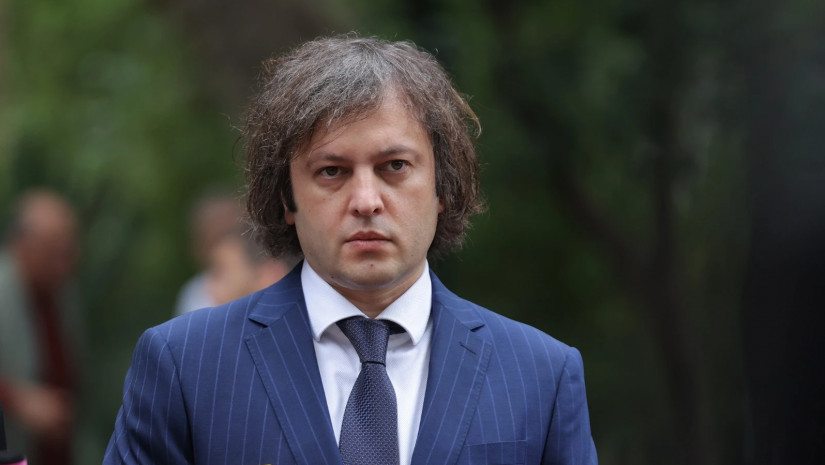
Georgian Prime Minister Irakli Kobakhidze has said dialogue with Russia must continue, arguing that the Russian people are “dear” to Georgia and that the two countries will remain neighbours regardless of political changes.
“Politics changes, but people remain people,” Kobakhidze told journalists, adding that dialogue should be based on clear principles and objective realities and interests, rather than what he described as the influence of the “deep state.”
His remarks follow the first meeting between Georgia’s Prime Minister’s Special Representative for Relations with Russia, Giorgi Zurabashvili, and Russian Deputy Foreign Minister Mikhail Galuzin, held in Minsk on November 19.
Zurabashvili said Galuzin cited allegations that Georgian companies were financing Ukraine’s war effort as one of the reasons for restrictions imposed on them. He also reportedly referred to the quality of Georgian wine and what he called the companies’ “anti-Russian narrative.”
Zurabashvili said he was surprised by the allegations and rejected them, stating that Galuzin had provided no evidence to support the claims. He also said the quality of Georgian wine was confirmed by international certification.
The Georgian representative said Tbilisi’s main concern was the return of Georgian wine to the Russian market. He had expected restrictions imposed in October to be lifted, but Galuzin reportedly told him that Russia planned to introduce restrictions on two more Georgian wine companies.
Zurabashvili, who also serves as Georgia’s First Deputy Foreign Minister, said the main disagreement between the two countries concerned Georgia’s sovereignty, internationally recognised borders and de-occupation. He noted that around 20% of Georgia’s territory remains occupied by Russia and said dialogue was necessary to address these issues.
He also said the Russian side raised around ten issues during the Minsk meeting, most of them humanitarian. One proposal reportedly concerned establishing a partnership between Don State University and a Georgian state university.
Zurabashvili described the proposal as seemingly harmless but argued that such initiatives could reinforce what he called false narratives portraying the Georgian Dream government as pro-Russian.
The meeting in Minsk was the first between Zurabashvili and Galuzin. Previously, the format had involved Zurab Abashidze, Georgia’s former special representative for relations with Russia, and Russian Deputy Foreign Minister Grigory Karasin, who mainly met in Prague.
Georgian Foreign Minister Maka Botchorishvili said Georgia had no objection to holding the meeting in Minsk and that the priority was to begin dialogue promptly. She stressed that the meeting was not connected to the partial restoration of diplomatic relations with Russia and would not replace the Geneva International Discussions.
On November 22, Galuzin told Russia’s state news agency TASS that direct dialogue would become regular. He said the sides had agreed, at Georgia’s initiative, to issue additional permits for road freight transport. Galuzin also said Russia had outlined steps to increase supplies of Georgian wine and other agricultural products to the Russian market, without mentioning the restrictions imposed in October.
Tags:
Irakli Kobakhidze