New military leadership marks Ukraine's shift to technology-driven warfare, Georgian Commander Mamulashvili

Author
Frontnews Georgia
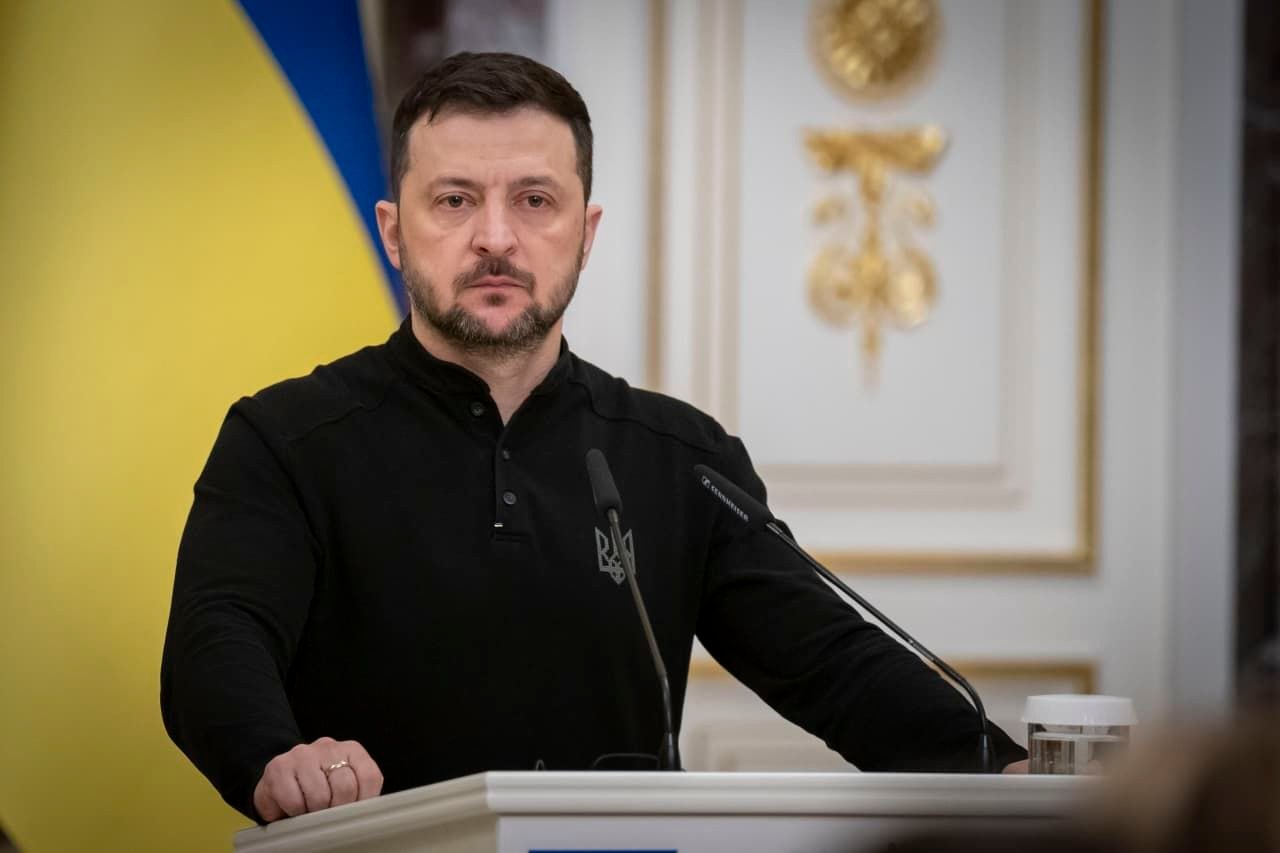
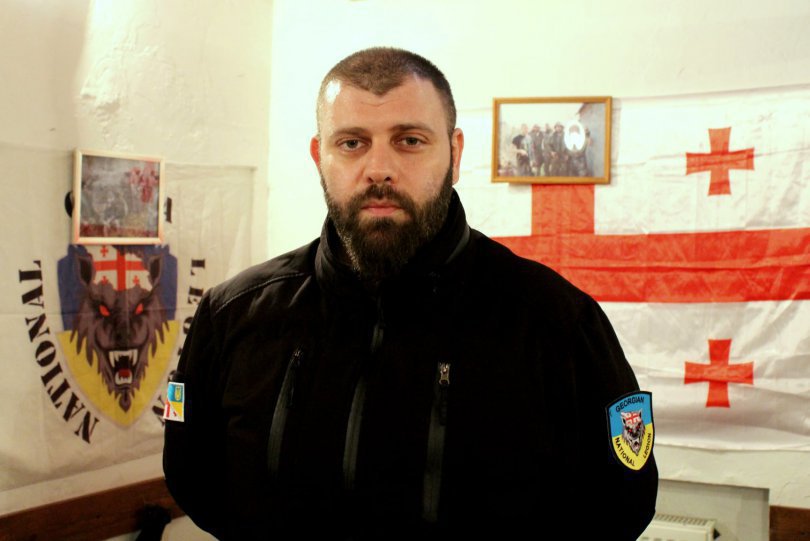
Recent personnel changes in Ukraine's military leadership signal a transition to a new, technology-driven phase of the country's defence strategy. In an exclusive interview with Front News, Mamuka Mamulashvili, commander of the Georgian Legion, discusses the appointments of the new Commander-in-Chief, Mykhailo Drapatyi, and Acting Defence Minister Yevhen Khmara.
Mamulashvili claimed unlike the previous leadership, which relied heavily on manpower, the new generation of commanders is focused on innovation, unmanned systems and long-range strike capabilities. He also discusses prospects for reforming Ukraine's mobilisation system, resolving tensions between the General Staff and the Ministry of Defence, and the military and political pressure that, in his view, will ultimately force the Kremlin into negotiations on equal terms and the withdrawal of Russian occupation forces.
Q: President Volodymyr Zelenskyy has identified reforming Ukraine's mobilisation system as one of the new military leadership's key priorities. In your view, what will these reforms mean in practice, and how can Ukraine avoid the shortcomings and public dissatisfaction that emerged under General Oleksandr Syrskyi?
Mamuka Mamulashvili: I believe these are positive changes because both the Commander-in-Chief and the Acting Defence Minister are career military officers. Both Khmara and Drapatyi have been fighting for Ukraine's sovereignty since 2014, and they are widely regarded as commanders of a new generation, unlike Syrskyi.
His approach was fundamentally different from that of the new commanders. Syrskyi relied primarily on manpower, whereas the new leadership will wage war through advanced technologies. There will be an even greater emphasis on innovation, and modern warfare is entering a far more technologically advanced phase.
The Commander-in-Chief has been fighting since the beginning of the war in 2014. He even served as an ordinary soldier. He understands first-hand what frontline troops need and is deeply familiar with the challenges soldiers face in combat.
Both of them fought alongside me. The Commander-in-Chief and I even received one of our military decorations together. We have maintained a good relationship, and he has great respect for Georgians.
Yevhen Khmara also rose through the ranks, starting from the lowest levels of military service. He understands exactly what the armed forces need. That will be extremely important in securing an advantage on the battlefield.
In my opinion, appointing these two men is strategically important for Ukraine, and we will soon begin to see positive changes throughout the military system.
Q: President Zelenskyy cited tensions surrounding Mykhailo Fedorov and General Syrskyi as one of the reasons for the leadership changes. How quickly do you think the new team, led by Yevhen Khmara, can overcome disagreements between the Ministry of Defence and the General Staff and improve the effectiveness of military command?
Mamuka Mamulashvili: Close coordination between the General Staff and the Ministry of Defence is absolutely essential. What was happening between Fedorov and Syrskyi was completely unacceptable within the defence system. Above all, such conflicts affect the armed forces and ultimately cost lives on the battlefield.
I believe that confrontation has now been neutralised because both individuals have left their positions. Regardless of how modern or capable Fedorov was considered as defence minister, that internal conflict made the entire system less effective.
Had those disagreements been resolved earlier, neither of them would have needed to leave office. Even so, I believe the situation is moving in the right direction because, ultimately, this was the correct decision.
In my view, Ukraine has never had commanders of this calibre within its defence system. Khmara most recently headed the Security Service and brings extensive experience from leading Ukraine's security apparatus.
Overall, Drapatyi and Khmara form a very strong tandem, and both approach their responsibilities with optimism.
As for reforming the mobilisation system, I believe Drapatyi will be able to achieve this much more easily because he also rose through the ranks from ordinary military service. He fully understands the problems faced by troops and, I am convinced, will be able to inspire people in the same way they were inspired during the first year of the full-scale war.
I believe Drapatyi is capable of recreating that spirit in Ukraine, helping people understand that they must remain mobilised and united in defending the country's sovereignty.
Q: It is impossible to discuss modern warfare without addressing unmanned systems. Ukraine has significantly increased both the intensity and range of its drone strikes in recent months. General Syrskyi was often criticised for being slow to introduce new technologies. How quickly do you expect drone units to become even more deeply integrated into conventional combat operations under Drapatyi and Khmara, and how effectively will the new leadership be able to expand Ukraine's strategy of striking targets deep behind Russian lines?
Mamuka Mamulashvili: First of all, it is important to understand that many of Ukraine's most successful operations have been carried out by the Security Service of Ukraine (SBU). A substantial number of long-range drone operations have been launched through the SBU, and Khmara was leading the agency during that period.
That means President Zelenskyy has brought someone with enormous operational and defence experience into the Ministry of Defence. As for Drapatyi, he is unquestionably a commander of the new generation. He has also received military education and training in the United States and is widely regarded as one of Ukraine's most forward-looking military leaders.
For that reason, I believe the two of them will play one of the most significant roles in shaping this new era of modern warfare.
Q: Turning to Russia, many observers argue that negotiations will remain largely symbolic unless military and political pressure on the Kremlin increases. Under the new military leadership, how realistic is it that Ukraine can regain the initiative in the coming months and change the dynamics on the battlefield?
Mamuka Mamulashvili: I am convinced that, within a relatively short period of time, Ukraine will be able to compel Russia to engage in negotiations on equal terms.
At present, Russia is demanding that Ukraine recognise and effectively legitimise the territories it has occupied. Even if an individual wanted to agree to such demands - I am referring to the President in this case - he simply has no legal authority to do so. Such a decision is legally impossible under Ukrainian law.
No one in Ukraine has either the authority or the legal basis to accept what Russia is demanding. The Kremlin understands this perfectly well. It knows that even if there were political will, such demands could not legally be fulfilled. That is precisely why Russia's demands are illegitimate.
In my view, Russia is not yet ready for genuine negotiations with Ukraine on equal terms.
What will change is Ukraine's new technologies, including the new generation of ballistic missiles that the country is already developing and bringing into production.
Those capabilities, I believe, will ultimately convince Russia that the only realistic option is to withdraw its occupation forces from Ukrainian territory.
By Elza Paposhvili
Tags:
Mamuka Mamulashvili